

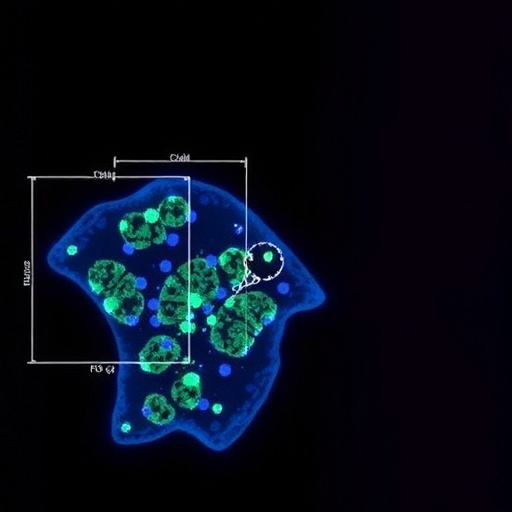
In a remarkable advance in the field of cancer pharmacology, researchers have unveiled a novel investigation into the cytotoxic effects of a unique platinum-based compound, Pt(O,O′-acac)(γ-acac)(DMS), on human glioma cells. Published in Cell Death Discovery in 2026, this study dives into the intricate biochemical cascades induced by this compound within the U251 glioma cell line, revealing unprecedented insights into mitochondrial dysfunction and autophagic impairment as critical mechanisms of cell death. The findings hold profound implications for the design of next-generation chemotherapeutics, particularly targeting resilient brain tumors.
Gliomas represent some of the most intractable cancers, notorious for their poor prognosis and resistance to conventional therapies. The evolution of platinum-based drugs over recent decades has been pivotal, yet challenges like drug resistance and systemic toxicity persist. This study pivots into exploring Pt(O,O′-acac)(γ-acac)(DMS), a chemically distinct platinum complex incorporating acetylacetonate and dimethyl sulfoxide ligands, hypothesized to enhance selective cytotoxicity via unique mitochondrial targeting actions.
At the heart of this investigation is the use of the U251 cell line, a well-characterized human glioma model widely adopted for neuro-oncological research. The toxicological assessment employed a battery of in vitro assays to profile cellular viability, apoptosis induction, mitochondrial membrane potential aberrations, and autophagic flux alterations. These methodologies permitted a comprehensive dissection of how Pt(O,O′-acac)(γ-acac)(DMS) subverts glioma cell survival.
A pivotal discovery was the pronounced mitochondrial dysfunction triggered by the platinum complex. The compound instigated a collapse of the mitochondrial membrane potential, a hallmark of mitochondrial distress that precipitates apoptotic signaling. This disruption compromises ATP synthesis, critically impairing cellular energy metabolism and setting off a cascade of oxidative stress events. The elevated reactive oxygen species (ROS) production observed substantiates the mitochondria as a chief target of this drug.
Mitochondrial impairment, however, was only part of a multi-faceted cytotoxic strategy. The study revealed that Pt(O,O′-acac)(γ-acac)(DMS) profoundly disturbs autophagy, a key cellular housekeeping and survival mechanism that recycles damaged organelles and proteins. Using markers such as LC3-II accumulation and p62 protein levels, evidence pointed to a blockage in autophagic flux, indicating that autophagosomes accumulate but fail to mature or degrade their contents. This autophagic disruption synergizes with mitochondrial damage to overwhelm cell survival pathways.
Intriguingly, the dual assault on mitochondrial integrity and autophagic processes distinguishes Pt(O,O′-acac)(γ-acac)(DMS) from traditional platinum drugs like cisplatin, which primarily induce nuclear DNA crosslinking. This dual mechanism could circumvent common resistance mechanisms wherein tumor cells upregulate autophagy to survive chemotherapeutic stress, thereby representing a strategic therapeutic advantage.
On a molecular level, the study posits that the DMS ligand contributes to the mitochondrial targeting capability. The lipophilic nature of dimethyl sulfoxide facilitates mitochondrial membrane permeation, allowing the platinum complex to preferentially accumulate in the organelle. Concurrently, acetylacetonate ligands may modulate redox activity, potentiating ROS generation and oxidative mitochondrial harm. Such chemical features underscore the tailored design of this compound for subcellular specificity.
Further molecular investigations employed fluorescence microscopy and flow cytometry to visualize mitochondrial morphology and assess apoptosis. The U251 cells treated with Pt(O,O′-acac)(γ-acac)(DMS) displayed fragmented mitochondria, increased annexin V staining, and activated caspase cascades, cementing apoptosis as the final cell death mode. These findings offer a mechanistic framework linking mitochondrial damage and autophagy blockade to apoptotic execution.
The translational potential of this work is significant. Gliomas notoriously develop resistance to cisplatin and carboplatin, partly through enhanced autophagy and mitochondrial adaptation. By targeting both mitochondrial dysfunction and autophagy impairment, Pt(O,O′-acac)(γ-acac)(DMS) represents a potential breakthrough agent capable of overcoming these resistance landscape features, providing a new weapon in the neuro-oncology arsenal.
While the current research was conducted in vitro, the detailed mechanistic insights provide a robust foundation for future in vivo validation and pharmacokinetic profiling. Establishing the safety, efficacy, and biodistribution of Pt(O,O′-acac)(γ-acac)(DMS) in animal models will be crucial next steps. Moreover, assessing synergies with existing treatment modalities such as radiotherapy or immune checkpoint inhibitors could pave the way toward combinatorial therapies with enhanced clinical impact.
This groundbreaking study also opens broader questions about the role of mitochondria-autophagy interplay in cancer biology. The demonstration that deliberate interference with these pathways can selectively eradicate malignant cells without directly targeting nuclear DNA heralds a paradigm shift in chemotherapeutic design. It suggests a tactical pivot toward exploiting cancer cell metabolic vulnerabilities and stress-response pathways.
Moreover, the innovative chemical architecture of Pt(O,O′-acac)(γ-acac)(DMS) sets a precedent for rational drug design, highlighting how modification of ligand environments around platinum centers can drastically alter biological activity and subcellular localization. This approach may inspire synthesis of a new class of metal-based anticancer agents with customizable organelle specificity and reduced off-target toxicity.
Given the compelling mechanistic elucidation provided, this study is poised to energize research communities focusing on metallodrug development, cancer metabolism, and autophagy modulation. It epitomizes the integration of chemistry, cell biology, and pharmacology to address stubborn clinical challenges, reflecting the future trajectory of precision oncology research.
In conclusion, the revelation of Pt(O,O′-acac)(γ-acac)(DMS) as a potent inducer of mitochondrial dysfunction and autophagy impairment in glioma cells introduces a promising new chapter in cancer therapeutics. By hijacking fundamental cellular survival mechanisms, this platinum complex challenges traditional drug paradigms and offers hope for more effective, targeted glioma treatment regimens. Continued exploration and translation of these findings could ultimately yield novel clinical interventions improving patient outcomes in notoriously therapy-resistant brain cancers.
Subject of Research: Investigation of the cytotoxic mechanisms of a novel platinum complex, Pt(O,O′-acac)(γ-acac)(DMS), on glioma cells focusing on mitochondrial dysfunction and autophagy impairment.
Article Title: In vitro cytotoxic mechanisms of Pt(O,O′-acac)(γ-acac)(DMS): mitochondrial dysfunction and impaired autophagy in U251 cell line.
Article References:
Gaiaschi, L., De Luca, F., Girelli, C.R. et al. In vitro cytotoxic mechanisms of Pt(O,O′-acac)(γ-acac)(DMS): mitochondrial dysfunction and impaired autophagy in U251 cell line. Cell Death Discov. (2026). https://doi.org/10.1038/s41420-025-02918-7
Image Credits: AI Generated


