


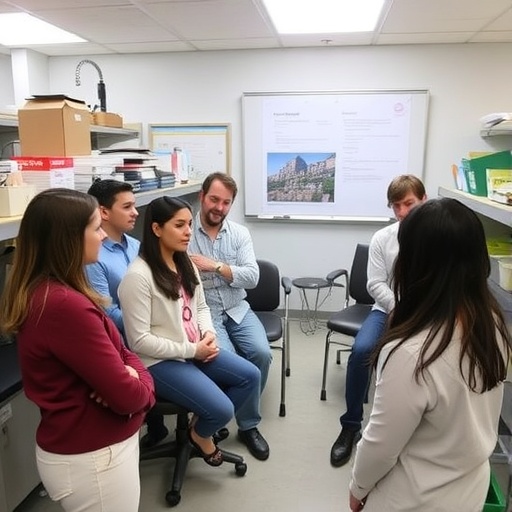
In a groundbreaking stride toward eradicating one of humanity’s deadliest scourges, a research team led by Portland State University has unveiled a novel chemical compound with the potential to revolutionize malaria treatment. Malaria, caused by Plasmodium parasites and transmitted through the bites of infected female Anopheles mosquitoes, continues to claim over half a million lives annually worldwide, despite decades of scientific battle. The new compound, known as T111, emerges as a beacon of hope due to its unprecedented ability to target every critical life stage of the malaria parasite within a single treatment encounter.
The malaria parasite’s complex lifecycle within the human host comprises three distinct stages: the liver stage, the blood stage, and the sexual stage. Upon being injected during a mosquito bite, the parasite initially invades liver cells, where it replicates silently and expands its numbers exponentially. Next, parasites re-enter the bloodstream, infecting red blood cells in vast quantities and manifesting the clinical symptoms of malaria, including chills, fever, and anemia. Finally, a subset of these parasites differentiate into gametocytes, the sexual form capable of infecting a new mosquito and perpetuating the transmission cycle.
Jane X. Kelly, the principal investigator at Portland State University and a seasoned researcher with three decades of expertise in antimalarial drug development, emphasizes the transformative potential of T111. Unlike current treatments, which often require multiple doses and target limited stages of the parasite lifecycle, T111 demonstrates radical curative activity—capable of eradicating blood-stage parasites, dormant liver forms, and gametocytes in a single administration. This mode of action could significantly simplify treatment protocols, reducing patient non-compliance and, crucially, interrupting transmission chains that sustain malaria’s global foothold.
Developed through a sustained 15-year research journey, the compound belongs to the acridone chemical class, a category that Kelly’s team has explored extensively since 2009. The innovation combines rigorous medicinal chemistry with biological insights to optimize a molecule that is potent against the most resilient forms of the parasite. Previous drugs, such as primaquine and tafenoquine, primarily target dormant liver stages but fall short of covering the full lifecycle and are accompanied by safety and efficacy limitations that hinder their universal adoption. T111 addresses these gaps effectively, positioning itself as a first-of-its-kind Single Encounter Radical Cure (SERC).
Mechanistic investigations revealed that T111 acts on each life cycle stage via distinct molecular interactions, exploiting vulnerabilities in the parasite’s metabolic and replication pathways. This multi-stage targeting strategy not only improves the therapeutic efficacy but also reduces the parasite’s chances of developing drug resistance, a pressing concern in malaria pharmacology. By halting the parasite’s progression at every critical point—from initial liver infection to blood cell invasion to sexual gametocyte formation—T111 offers a holistic approach to both cure and prevention.
The research team, comprising multitudes of collaborators across institutions—including the VA Portland Health Care System, Walter Reed Army Institute of Research, and others—has been rigorously advancing T111 through preclinical evaluation. Studies in non-human primates have demonstrated favorable pharmacokinetic properties and safety profiles, marking critical steps toward human clinical trials. These collaborations underscore the multidisciplinary and inter-institutional efforts needed to translate lab discoveries into public health solutions.
Beyond therapeutic efficacy, the team has prioritized manufacturing feasibility to ensure that T111 can be produced affordably and at scale. Papireddy Kancharla, the study’s first author and associate research professor, details their advancements in optimizing the synthesis route of T111. Modifications in the production process not only streamline synthesis but also enhance safety parameters and reduce costs. This is pivotal, as accessible pricing and scalable manufacturing are essential for impactful deployment in resource-limited settings where malaria is endemic.
Kelly and colleagues foresee T111 as a weapon capable of shifting the epidemiological landscape of malaria, transforming it from a chronic, relapsing disease requiring prolonged multi-drug regimens into one that is efficiently subdued through a single-dose treatment. Such innovation holds promise not only for improving patient outcomes but also for enabling public health systems to better allocate resources in malaria control programs. The potential to prevent relapses and block parasite transmission aligns directly with global malaria elimination goals articulated by the World Health Organization.
The findings of this extensive research were published in the prestigious journal Nature Communications, a testament to the scientific community’s recognition of T111’s significant promise. The article details the chemical optimization, biological validation, and preclinical testing that underpin the compound’s efficacy. The work has also been highlighted by the journal’s editorial board as a major advance in microbiology and infectious diseases, underscoring its broad relevance and impact.
Looking ahead, the team is preparing for investigational new drug (IND) enabling studies, a necessary precursor to clinical trials. The pathway involves comprehensive toxicology assessments, pharmacodynamics, and formulation studies to meet regulatory standards for human testing. Portland State University is also exploring partnerships with pharmaceutical companies to facilitate clinical development and expedite the journey from bench to bedside.
This discovery exemplifies how persistence in fundamental chemical research and collaborative scientific innovation can culminate in solutions with profound global health consequences. While T111’s journey towards market availability is ongoing, its potential to deliver a single, radical cure for malaria signifies a monumental leap forward in the fight against this devastating disease and illuminates new pathways in antimalarial drug design.
News Publication Date: 12-May-2026
Web References: http://dx.doi.org/10.1038/s41467-026-71708-1
References: Nature Communications, Volume and issue details per DOI link
Cite Scienmag News
Louis Brooks. (May 13, 2026). PSU-Led Team Advances Promising New Drug Candidate for Malaria Control and Eradication. Scienmag. https://scienmag.com/psu-led-team-advances-promising-new-drug-candidate-for-malaria-control-and-eradication/
Louis Brooks. "PSU-Led Team Advances Promising New Drug Candidate for Malaria Control and Eradication." Scienmag, 13 May 2026, https://scienmag.com/psu-led-team-advances-promising-new-drug-candidate-for-malaria-control-and-eradication/. Accessed 4 September 2026.
Louis Brooks. "PSU-Led Team Advances Promising New Drug Candidate for Malaria Control and Eradication." Scienmag. May 13, 2026. https://scienmag.com/psu-led-team-advances-promising-new-drug-candidate-for-malaria-control-and-eradication/


