

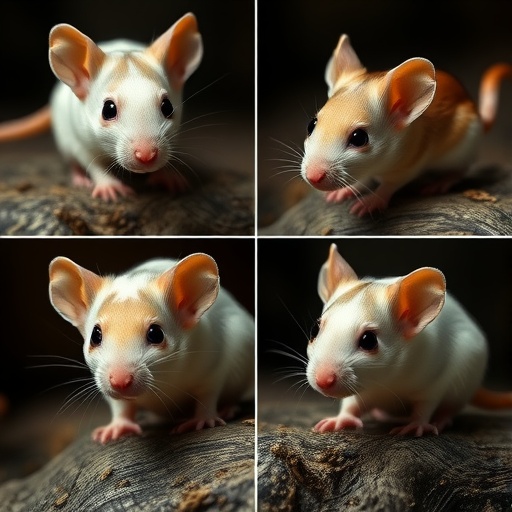
In groundbreaking research emerging from Monash University, a team led by Dr. Claire Foldi has unveiled nuanced insights into how psilocybin, the active component in psychedelic mushrooms, interacts with social behavior and immune responses under varying metabolic and exercise conditions in female mice. This study, published in the journal Psychedelics, represents a significant leap forward in understanding the compound’s multifaceted role, particularly within the context of activity-based anorexia (ABA), a validated preclinical model that replicates key aspects of anorexia nervosa.
Anorexia nervosa remains one of the deadliest psychiatric disorders, disproportionately affecting young women and marked by severe physical deterioration and complex psychosocial symptoms. Among these symptoms, social impairments including diminished social networks and impaired emotional empathy are pronounced, yet poorly understood on a mechanistic level. Given psilocybin’s serotonergic activity and anti-inflammatory properties, the Monash team sought to dissect how this compound might influence behaviors entwined with serotonin system dysfunction and inflammatory processes, which are implicated across several psychiatric conditions including anorexia.
Prevailing research has largely centered on male subjects, a significant limitation considering the dominant female prevalence of anorexia. Addressing this gap, the researchers utilized female mice subjected to four distinct conditions: a combination of food restriction and voluntary wheel running to simulate ABA, food restriction alone, unlimited food with running wheel access, and standard housing controls. This experimental design enabled a rigorous examination of how metabolic stress, voluntary exercise, and their interactions modulate psilocybin’s behavioral and immunological effects.
Psilocybin was administered when mice in the ABA model reached a critical weight loss threshold, aligning with clinical conditions of anorexia nervosa. The subsequent social preference assays revealed unexpected behavioral profiles—contrary to anticipated social withdrawal, ABA mice demonstrated increased novelty-seeking, favoring novel social partners consistently. This hyperexploratory behavior toward unfamiliar mice was not replicated in food-restricted subjects without exercise, underscoring a fascinating interplay between metabolic challenge and physical activity.
Conversely, mice granted only wheel access without food limitation showed delayed novelty preference emerging during choice tests rather than initial exploration, suggesting that exercise alone primes different social cognitive circuits. Intriguingly, psilocybin administration did not universally enhance sociability but instead inverted typical novelty preferences in control animals, equalizing interactions between familiar and novel partners. In food-restricted, psilocybin-treated mice, a strong correlation emerged between lower body weight and increased motivation toward novel objects rather than social novelty, implying a context-dependent shift potentially linked to heightened food-seeking drives.
Immunological outcomes added further complexity. Contrary to human clinical data indicating elevated inflammatory markers in anorexia, baseline interleukin-6 (IL-6) levels in mouse models did not differ significantly across groups. However, mice with wheel access receiving psilocybin showed a marked elevation in IL-6 compared to all other cohorts, a surprising finding given psychedelics’ traditionally reported anti-inflammatory effects. Even more compelling, this IL-6 increase correlated positively with social novelty preference, hinting at an intricate modulatory axis involving metabolic reward, immune activation, and behavioral output.
These immune-behavior relationships were absent in the ABA and food restriction groups, suggesting that prior metabolic stress blunts or modifies the immune-sensory pathways engaged by psilocybin in exercising animals. The researchers speculate that exercise-induced dopamine pathway activation may create a unique immunometabolic milieu, enabling psilocybin’s divergent effects. The acute timing of sample collection—only hours post-administration—may also capture transient inflammatory responses preceding the longer-term anti-inflammatory benefits documented in human trials.
This meticulous dissection of metabolic, behavioral, and immune parameters challenges simplistic notions of psychedelics as universally beneficial and highlights the necessity of considering individual physiological contexts in therapeutic applications. The absence of expected social deficits in ABA mice, a surprising deviation from clinical symptomatology, points to the limitations of acute or short-term animal models and raises questions about the influence of chronicity, environmental factors, and psychosocial variables unmodeled in rodents.
Clinically, these findings carry profound implications. Psilocybin’s variable effects contingent on exercise and metabolic state hint at biomarkers—such as physical activity patterns or inflammatory status—that could refine patient selection and personalize treatment strategies for anorexia nervosa and related disorders. Additionally, dynamic monitoring of immune markers post-treatment could offer mechanistic insights and prognostic signals for responsiveness, addressing variability observed in current clinical trials where only a subset of participants achieve symptom remission.
Looking forward, the study charts clear avenues for future investigation, advocating for longer duration exposure paradigms mimicking cyclical fasting and refeeding characteristic of chronic anorexia. Temporal profiling of cytokine trajectories and employing a panel of inflammatory and neuroplasticity markers across brain regions will be critical for unraveling the complex temporal and spatial dimensions of psychedelic action. Importantly, a dual-sex investigative strategy is warranted given sex-specific neuropharmacological and behavioral dynamics, a gap this study begins to fill through its exclusive focus on females.
The Monash team’s work exemplifies the power of controlled comparative experimental frameworks in psychedelic research, challenging canonical assumptions and underscoring the profound interplay between neurochemical, immune, and behavioral systems modulated by metabolic context. Their integrative approach, coupling detailed phenotypic assessments with immune profiling, sets a new standard for preclinical investigations and paves the way for translational breakthroughs in the treatment of eating disorders.
Sheida Shadani, who conducted the experiments as part of her doctoral research, alongside Erika Greaves and under the guidance of Professors Zane B. Andrews and Associate Professor Claire Foldi, have contributed an impactful study funded by a National Health and Medical Research Council Ideas Grant. Their findings usher in a new paradigm of personalized psychedelic medicine, emphasizing that understanding the patient’s physiological state—beyond mere diagnosis—may hold the key to unlocking therapeutic efficacy.
This transformative research, freely accessible through the journal Psychedelics as of February 3, 2026, not only advances fundamental science but also invigorates the quest for innovative treatments tailored to the complex neurobiological and immunological realities of disorders like anorexia nervosa. By marrying rigorous methodology with clinical relevance, the study heralds a future where psychedelic therapies are harnessed with precision, maximizing benefit while navigating the subtleties of human physiology.
Subject of Research: Animals
Article Title: Psilocybin exerts differential effects on social behavior and inflammation in mice in contexts of activity-based anorexia
News Publication Date: 3-Feb-2026
Web References: https://doi.org/10.61373/pp026a.0003
Image Credits: Claire J Foldi
Keywords: Psilocybin, Activity-Based Anorexia, Female Mice, Social Behavior, Inflammation, Interleukin-6, Metabolic Stress, Exercise, Novelty-Seeking, Psychedelic Therapy, Eating Disorders, Preclinical Model


