


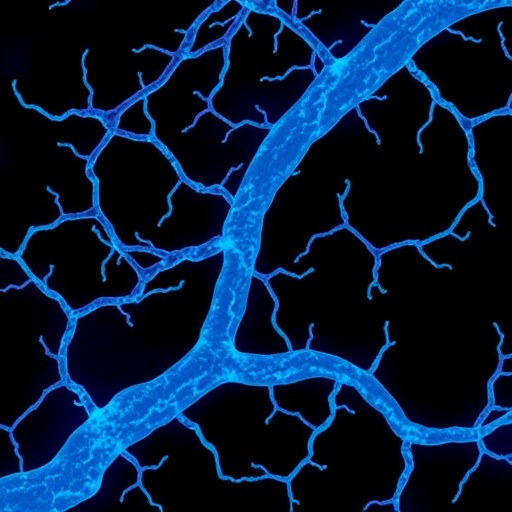
In a groundbreaking exploration of the complex molecular landscape that governs blood vessel formation, a new study published in “Angiogenesis” unveils the pivotal roles of proteoglycans and glycosaminoglycans in angiogenesis, vasculogenesis, and the burgeoning field of vascularized tissue engineering. This study, conducted by a team of experts including Lin, Sun, and Feng, delves deep into the biochemical interactions that underlie the formation and maintenance of vascular networks, highlighting how these essential macromolecules orchestrate a myriad of cellular processes that are critical for both health and disease.
Proteoglycans, which are comprised of a protein core and covalently attached glycosaminoglycan chains, serve as crucial components of the extracellular matrix (ECM). This matrix provides structural support to tissues and facilitates intricate cellular communications. The study illuminates that the intricate structure of proteoglycans allows them to bind various growth factors and cytokines, influencing their bioavailability and activity. Such interactions are essential in regulating cellular behaviors such as proliferation, migration, and differentiation, all of which are fundamental processes during angiogenesis.
As the researchers investigate glycosaminoglycans, they underscore their diverse roles in modulating cellular responses to growth factors. Heparan sulfate and chondroitin sulfate, for instance, are identified as key players in this process. They not only aid in the formation of gradients that guide migrating endothelial cells but also serve as co-receptors for several growth factors involved in vascular development. This intricate functionality signifies that glycosaminoglycans are not mere structural components; they actively participate in signaling pathways that drive vascularization.
Another fascinating aspect unveiled in this study is the dynamic interplay between proteoglycans and glycosaminoglycans in the context of pathological conditions such as cancer. Tumorigenesis often entails aberrant angiogenesis, wherein the tumor microenvironment solicits vascular support to sustain its rapid growth. The researchers emphasize that understanding how tumor cells manipulate these macromolecules could lead to novel therapeutic strategies aimed at inhibiting tumor-associated angiogenesis, thereby thwarting cancer progression.
Beyond their roles in pathological conditions, the authors also explore the potential applications of proteoglycans and glycosaminoglycans in regenerative medicine. The ability to engineer vascularized tissues holds great promise for applications ranging from organ transplantation to wound healing. The study discusses ongoing efforts to incorporate these macromolecules into biomaterials that mimic the natural ECM, facilitating appropriate cellular responses and promoting vascular networks’ formation in engineered tissues.
Moreover, the research emphasizes the significance of glycosaminoglycans in modulating interactions between cells and the ECM, which can influence cell fate decisions. For instance, during vascular remodeling, the alteration in glycosaminoglycan composition can dictate whether cells undergo differentiation towards a specific lineage or proliferate. This versatility is indispensable for maintaining homeostasis in various tissues and could be strategically manipulated to enhance tissue repair mechanisms.
The team further delves into how signaling pathways such as the Vascular Endothelial Growth Factor (VEGF) signaling cascade are influenced by these macromolecules. Proper functioning of the VEGF pathway is crucial for angiogenesis; any dysregulation can lead to inadequate blood supply and contribute to various diseases. The study’s findings underscore the intricate relationship between proteoglycans, glycosaminoglycans, and VEGF, suggesting that maintaining a balanced microenvironment could be essential for effective vascular development and healing.
In the domain of tissue engineering, the integration of proteoglycans and glycosaminoglycans represents a paradigm shift. The researchers advocate for a multidisciplinary approach, blending insights from molecular biology, materials science, and bioengineering to create scaffolds that not only support cell attachment but also provide the necessary cues for sprouting new blood vessels. This innovation could pave the way for creating fully functional tissue constructs that can be implanted into patients, significantly improving outcomes in tissue repair and regeneration.
The study also highlights the necessity of further elucidating the complex signaling networks that proteoglycans and glycosaminoglycans are involved in. As the field continues to evolve, mapping out these interactions will enrich our understanding of both normal physiological conditions and the pathological states that result from their dysregulation. This knowledge could lay the groundwork for developing targeted therapies aimed at modulating angiogenesis in various clinical settings, from chronic wounds to cardiovascular diseases.
The authors conclude that while substantial progress has been made in elucidating the roles of proteoglycans and glycosaminoglycans, many questions remain unanswered. Future research should focus on establishing clearer connections between the structure and function of these macromolecules in vivo, particularly in complex tissue environments. By bridging the existing knowledge gaps, scientists can leverage these insights to foster enhanced strategies for therapeutic angiogenesis.
As the field of vascular biology rapidly progresses, studies like this serve as beacons of hope for innovative therapies that harness the body’s ability to heal itself. The strategic manipulation of proteoglycans and glycosaminoglycans presents an exciting frontier in regenerative medicine, offering the potential to unlock new avenues for treating a variety of ailments that afflict millions globally.
In conclusion, Lin, Sun, and Feng’s research elucidates the cardinal roles of proteoglycans and glycosaminoglycans as regulators of angiogenesis and vasculogenesis. Their findings not only contribute to our understanding of vascular biology but also pave the way for exciting advancements in tissue engineering. As we continue to explore the intricacies of these molecular players, the potential for developing innovative therapies increases, promising better health outcomes and improved quality of life for patients worldwide.
Cite Scienmag News
Nathaniel Bowman. (January 24, 2026). Proteoglycans: Key Players in Vascular Development. Scienmag. https://scienmag.com/proteoglycans-key-players-in-vascular-development/
Nathaniel Bowman. "Proteoglycans: Key Players in Vascular Development." Scienmag, 24 January 2026, https://scienmag.com/proteoglycans-key-players-in-vascular-development/. Accessed 4 September 2026.
Nathaniel Bowman. "Proteoglycans: Key Players in Vascular Development." Scienmag. January 24, 2026. https://scienmag.com/proteoglycans-key-players-in-vascular-development/


