


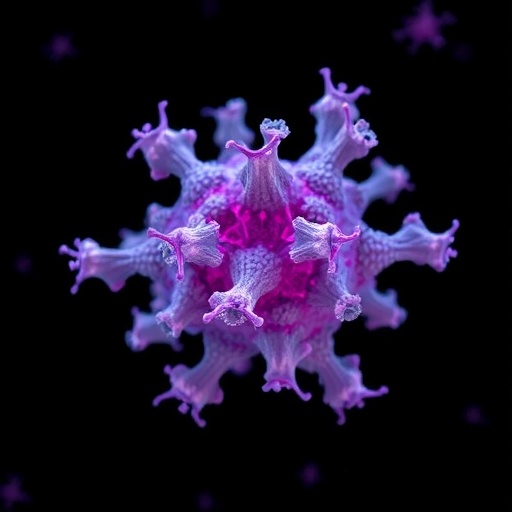
In the relentless pursuit of more efficient and safer intracellular delivery platforms for therapeutic biomacromolecules, a groundbreaking advancement has emerged from a team of bioengineers and molecular biologists. The formidable barriers posed by cellular membranes and endosomal entrapment have long hindered the effective delivery of nucleic acids and proteins into the cytosol—a critical step for enabling gene editing, RNA interference, and protein-based therapeutics. Addressing this perennial challenge, researchers have unveiled a novel system known as ENTER (Elastin-based Nanoparticles for Therapeutic Delivery), a sophisticated recombinant elastin-like polypeptide (ELP)-based platform that self-assembles into micellar nanoparticles with pH-responsive properties tailored for efficient cytosolic access.
This innovative delivery system capitalizes on the intrinsic biocompatibility and modularity of elastin-like polypeptides, which mimic the resilience and versatility of natural elastin. Through a meticulous iterative design process, the team engineered fourth-generation ELPs covalently fused with strategically selected cationic endosomal escape peptides (EEPs). These specialized peptides dynamically respond to the acidic milieu of endosomes, triggering conformational changes that facilitate the destabilization of endosomal membranes, thereby enabling the cargo payload to breach into the cytosol intact and functional.
Central to the development of this platform was a comprehensive in silico screening campaign of thousands of α-helical peptide candidates. Utilizing advanced computational modeling and peptide structure-function predictions, the researchers identified a particularly potent EEP, designated EEP13, which demonstrated a remarkable 48% enhancement in protein delivery efficiency over established benchmark peptides. This computational approach underscores the power of integrating bioinformatics with synthetic biology to expedite the identification of functional peptide motifs with superior performance.
ENTER’s novel self-assembling architecture results in nanoparticles that respond to the subtle pH gradients encountered during endosomal maturation. Upon cellular uptake, these nanoparticles capitalize on the transition from a neutral extracellular environment to increasingly acidic endosomal compartments, prompting their micellar structure to disassemble and expose the embedded EEP domains. This exposure triggers membrane disruption events finely tuned to minimize nonspecific cytotoxicity—a significant improvement over conventional cationic lipid-based delivery systems known for their inflammatory and cell-viability liabilities.
The therapeutic versatility of ENTER was rigorously tested across a broad spectrum of biomolecular cargoes, including mRNA-encoded proteins, plasmid DNA, purified proteins, and short interfering RNAs (siRNAs). The platform excelled in intracellular delivery efficiency and functional activity in multiple immortalized cell lines as well as challenging primary cell types that typically resist transfection. Notably, the delivery of Cre recombinase—an enzyme widely utilized in genomic editing scenarios—was achieved with efficiency comparable to, or surpassing, commercial lipid reagents, thus validating the system’s translational potential for gene therapy applications.
In addition to in vitro demonstrations, ENTER’s performance was corroborated in vivo through intranasal administration in reporter mouse models. The nanoparticle system successfully mediated precise genomic editing within lung epithelial cells—a tissue traditionally difficult to target—by effective delivery of Cre protein. This result highlights the promise of ENTER for non-invasive therapeutic interventions in pulmonary diseases and epitomizes how protein-based nanoparticle formulations can circumvent the limitations of viral vectors and lipid nanoparticles, especially for mucosal tissue targeting.
Technically, the ELP backbone provides a highly tunable scaffold, allowing precise control over nanoparticle size, surface charge, and stability by adjusting polypeptide length and fusion motifs. This modularity enables the customization of delivery vehicles tailored to specific cargo types and therapeutic contexts. Moreover, the EEP domains are designed to adopt stable α-helical conformations that facilitate membrane interaction, a property systematically optimized through computational peptide design to balance potency with biocompatibility.
Compared to conventional delivery platforms, ENTER offers a robust safety profile, minimizing adverse effects commonly associated with cationic lipids and viral vectors such as immunogenicity, off-target interactions, and payload degradation. The self-assembling nature of these nanoparticles reduces the necessity for complex chemical formulations or toxic solvents, paving the way for streamlined manufacturing and scalability, essential features for clinical translation.
The significance of this discovery extends beyond immediate therapeutic applications. It also provides a versatile platform for basic biomedical research, enabling more efficient intracellular delivery of genome editors such as CRISPR-Cas systems, thereby expediting functional genomics studies and drug discovery pipelines. The combinatorial approach of machine learning-guided peptide design and protein engineering embodied by ENTER exemplifies a forward-thinking paradigm in nanoparticle therapeutics.
Furthermore, the intranasal delivery modality explored in vivo opens exciting avenues for treating respiratory illnesses through direct targeting of lung epithelial tissues. Diseases such as cystic fibrosis, chronic obstructive pulmonary disease, and viral infections could potentially benefit from this innovative technology by facilitating localized and controlled therapeutic payload release without systemic exposure.
This landmark study also underscores the growing importance of biomimetic and stimuli-responsive materials in drug delivery. By leveraging the elastic properties and environmental responsiveness of elastin-like sequences, the researchers demonstrated how bioinspired polymers can recapitulate nature’s sophisticated mechanisms for cellular entry and intracellular trafficking, overcoming classical bottlenecks that have plagued the field for decades.
While the current results are highly promising, further investigations will likely focus on long-term biocompatibility, biodistribution, and immunological profiling in larger animal models. Additionally, tailoring the platform for targeted delivery to diverse cell types and organs through surface modification or ligand conjugation could further enhance its therapeutic versatility.
In conclusion, the advent of ENTER represents a transformative step forward in protein-based nanomedicine, offering a novel, safe, and efficient system for the cytosolic delivery of a wide array of therapeutic biomacromolecules. This leap is poised to accelerate the pace at which gene editing and biomolecular therapies transition from bench to bedside, heralding a new era of precision medicine with broad-reaching impacts across genetic, infectious, and inflammatory diseases.
—–
Cite Scienmag News
Juliet Wilcox. (May 15, 2025). Protein Nanoparticles Revolutionize Cytosolic Delivery of Biomolecules. Scienmag. https://scienmag.com/protein-nanoparticles-revolutionize-cytosolic-delivery-of-biomolecules/
Juliet Wilcox. "Protein Nanoparticles Revolutionize Cytosolic Delivery of Biomolecules." Scienmag, 15 May 2025, https://scienmag.com/protein-nanoparticles-revolutionize-cytosolic-delivery-of-biomolecules/. Accessed 4 September 2026.
Juliet Wilcox. "Protein Nanoparticles Revolutionize Cytosolic Delivery of Biomolecules." Scienmag. May 15, 2025. https://scienmag.com/protein-nanoparticles-revolutionize-cytosolic-delivery-of-biomolecules/


