


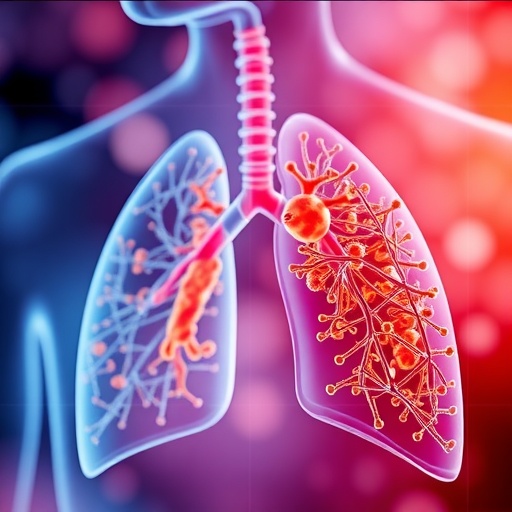
Pulmonary arterial hypertension (PAH) is a complex cardiovascular condition that continues to challenge medical experts and researchers across the globe. As we delve into the latest revelations detailed by the groundbreaking research led by Niu, Tian, and Provencher, it becomes increasingly evident how the landscape of PAH diagnosis and treatment is evolving. Their extensive study, which addresses the critical role of protein biomarkers, showcases not only the scientific advances but also the potential clinical implications that can redefine patient outcomes.
The central theme of this research revolves around the identification and validation of protein biomarkers in PAH. Biomarkers are biological indicators that provide significant information regarding health status and disease progression. In PAH, a condition characterized by elevated blood pressure within the pulmonary arteries, early detection and accurate diagnosis are vital. Traditional diagnostic methods have often been invasive, necessitating significant advancements in less intrusive techniques. This is where biomarkers come into play, representing a promising future for PAH diagnostics.
One of the noteworthy findings of this research is the emphasis on specific protein biomarkers that exhibit a correlation with disease severity and progression. These proteins can be detected through simple blood tests, which could potentially allow for faster and more reliable assessments of patients at risk for developing PAH. By correlating these biomarkers with clinical data, researchers are not merely cataloging a list of proteins; they are forging vital connections that could lead to significant changes in clinical practices for diagnosing and monitoring PAH.
Moreover, the research highlights the translational challenges associated with implementing these biomarkers into routine clinical settings. While the science behind biomarker discovery is advancing rapidly, the path from bench to bedside is fraught with obstacles. These hurdles include regulatory requirements, the need for extensive validation studies, and the integration of such biomarkers into existing healthcare frameworks. Addressing these challenges is crucial for the effective translation of research findings into practical applications that can directly benefit patients.
In exploring the clinical relevance of these biomarkers, the authors discuss various forms of PAH, noting that understanding the distinct biological underpinnings can aid in tailoring more personalized treatment strategies. Patients present a variety of symptoms and etiologies, necessitating a one-size-fits-all treatment approach that often falls short. By utilizing protein biomarkers to stratify patients according to their disease characteristics, clinicians can optimize therapeutic interventions which can lead to improved patient care and quality of life.
The implications of this research extend beyond mere diagnosis. An understanding of protein biomarkers not only enhances the ability to monitor disease progression but also opens up new avenues for therapeutic targets. The relationship between specific proteins and PAH highlights potential pathways that can be manipulated for treatment purposes. For instance, if a particular protein is found to be consistently elevated in patients with severe PAH, it may serve as an actionable target for new therapies.
A key aspect of the study lays in the promise that accurate biomarker profiles can bring to clinical trials for new PAH treatments. Traditionally, such trials have been hampered by challenges in patient selection and variability in responses to therapy. By integrating biomarker analysis into the recruitment and monitoring processes, the scientific community can enhance trial design, making them more focused and potentially more successful in discovering effective treatments.
Furthermore, public health awareness surrounding PAH and its risk factors is equally important. Often, symptoms are overlooked or attributed to less serious conditions, leading to delayed diagnoses. The establishment and promotion of protein biomarkers as key indicators can aid in raising awareness about the disease, allowing for earlier intervention – which is critical for better health outcomes.
As the scientific community begins embracing these findings, it can lead to a multidisciplinary approach in the management of PAH, integrating cardiologists, pulmonologists, and primary care providers in the collaborative care of patients. The resulting comprehensive care ecosystem would not only improve disease management but also enhance overall patient support, addressing both medical and emotional needs.
Moreover, as we look to the future, it’s essential to engage patients and advocacy groups in the conversation around these biomarkers and their implications. Empowering patients with knowledge about their health can promote an active role in managing their condition. Furthermore, partnerships between researchers, clinicians, and patient organizations can foster an environment where patient-centric biomarkers steer the direction of future research efforts.
In conclusion, the pivotal research conducted by Niu, Tian, and Provencher marked not just an academic achievement but a beacon of hope for individuals grappling with pulmonary arterial hypertension. The advances in understanding protein biomarkers may ultimately transform the landscape of PAH, providing new pathways for diagnostics, treatment, and patient engagement. As research continues to evolve, the real-world implications of these findings could lead to a profound impact on the lives of many suffering from this debilitating condition.
The future holds promise, underscoring the urgent need for further studies and collaborations. Only with a committed and collective effort can the full potential of these biomarkers be realized, leading to innovations in both understanding and treating pulmonary arterial hypertension. Through continued dialogue, research, and patient involvement, the dream of better health outcomes for those affected by PAH inch closer into reality.
Niu, Y., Tian, J., Provencher, S. et al. Protein biomarkers in pulmonary arterial hypertension: advances, clinical relevance, and translational challenges. J Transl Med 23, 1288 (2025). https://doi.org/10.1186/s12967-025-07257-w
Cite Scienmag News
Ophelia Keating. (November 15, 2025). Protein Biomarkers: A New Era in Pulmonary Hypertension. Scienmag. https://scienmag.com/protein-biomarkers-a-new-era-in-pulmonary-hypertension/
Ophelia Keating. "Protein Biomarkers: A New Era in Pulmonary Hypertension." Scienmag, 15 November 2025, https://scienmag.com/protein-biomarkers-a-new-era-in-pulmonary-hypertension/. Accessed 4 September 2026.
Ophelia Keating. "Protein Biomarkers: A New Era in Pulmonary Hypertension." Scienmag. November 15, 2025. https://scienmag.com/protein-biomarkers-a-new-era-in-pulmonary-hypertension/


