


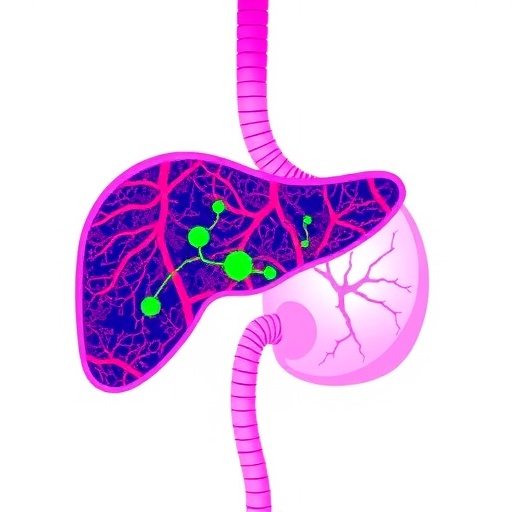
In the ongoing battle against advanced hepatocellular carcinoma (HCC), a formidable liver cancer with high mortality rates, recent research has illuminated the critical role of the prognostic nutritional index (PNI) in guiding treatment outcomes. A groundbreaking study published in BMC Cancer has meticulously dissected how PNI—a composite measure derived from serum albumin levels and lymphocyte count—can serve as a potent biomarker to predict survival and therapy response in patients receiving first-line treatments. This revelation may transform clinical decision-making, enabling oncologists to tailor therapies more precisely and improve patient prognoses.
Hepatocellular carcinoma remains one of the deadliest malignancies worldwide, often diagnosed at advanced stages when curative options are limited. Traditional prognostic markers have struggled to capture the intricate interplay between tumor biology and host immunity. However, PNI, reflecting both nutritional status and immunological competence, offers a promising window into patients’ systemic conditions, which are increasingly recognized as integral to cancer progression and response to treatment.
The study enrolled a cohort of 234 patients diagnosed with advanced HCC, all receiving standard first-line therapies such as lenvatinib—a multi-kinase inhibitor—and the combination therapy of atezolizumab plus bevacizumab, an immunotherapy paired with angiogenesis inhibition. Researchers stratified participants into two groups based on a median PNI threshold of 46.2: those with high PNI and those with low PNI. This bifurcation provided a critical framework to explore the correlations between nutritional and immune states with clinical outcomes.
Advanced statistical analyses, including Kaplan–Meier survival curves and multivariate Cox proportional hazards modeling, uncovered compelling associations. Patients exhibiting higher PNI values demonstrated significantly prolonged overall survival (OS) and progression-free survival (PFS), underscoring PNI’s prognostic power. The hazard ratios (HR) indicated a robust protective effect of elevated PNI, with HRs well below 1 for both OS and PFS, signaling reduced risk of mortality and disease progression.
Delving deeper, subgroup analyses focusing on patients receiving lenvatinib or the immunotherapy combination echoed these findings. Across treatment modalities, higher PNI consistently predicted better patient trajectories, highlighting the index’s versatility and reliability as a prognostic tool. This consistency suggests that PNI captures fundamental host factors influencing therapeutic efficacy, regardless of drug mechanism.
A particularly striking finding was the association between PNI and objective response rate (ORR), a clinical indicator of tumor shrinkage and treatment effectiveness. Patients with high PNI not only lived longer but also responded more vigorously to first-line therapies. This dual benefit reinforces PNI’s potential utility in identifying candidates who may derive maximal benefit from aggressive treatments versus those who might require alternative approaches.
Importantly, the study did not observe significant differences in the incidence of adverse reactions between high and low PNI groups. This indicates that enhanced nutritional and immunologic status, as reflected by PNI, does not increase treatment toxicity, thereby affirming the safety of administering potent therapies to well-nourished patients without exacerbating side effects.
The clinical implications of integrating PNI into routine assessment protocols are profound. By quantifying a patient’s nutritional and immune reserves, oncologists can better stratify risk, optimize treatment plans, and perhaps even implement supportive interventions to improve PNI before initiating therapy. Nutritional rehabilitation and immune support may therefore emerge as adjunctive strategies to heighten therapeutic success.
Moreover, this study contributes to the evolving paradigm underscoring the tumor microenvironment and host systemic factors as pivotal in cancer progression. PNI serves as a surrogate marker for host resilience, linking nutrition, immunity, and inflammation—domains increasingly harnessed in oncology to deepen understanding and improve interventions.
Methodologically, the study’s rigorous approach enhances the credibility of its findings. The balanced cohort sizes, well-defined treatments, and robust statistical methods provide compelling evidence, although future prospective trials are warranted to validate PNI as a predictive biomarker and to explore causality.
Beyond clinical prognostication, these insights beckon further exploration into the biological underpinnings of how nutrition and immune competency modulate tumor behavior and treatment sensitivity. Research into molecular pathways linking albumin synthesis, lymphocyte activity, and tumor microenvironment interactions may unlock new therapeutic targets and strategies.
In the broader context of cancer care, this research aligns with precision medicine initiatives focused on individualized patient profiles rather than solely tumor-centric factors. It exemplifies the value of holistic assessment integrating systemic health metrics into oncologic care delivery.
As healthcare systems grapple with rising cancer burdens and escalating treatment costs, biomarkers like PNI that afford simple, cost-effective risk stratification could streamline resource allocation and enhance patient quality of life. Nutritional and immunological assessments are readily accessible in routine clinical settings, facilitating rapid incorporation into practice.
Looking ahead, integrating PNI evaluation with advanced imaging, genomic profiling, and liquid biopsies could forge powerful multimodal prognostic models, guiding truly personalized therapy selection and monitoring.
In summary, the elucidation of PNI’s prognostic significance in patients with advanced hepatocellular carcinoma receiving first-line therapy represents a major stride forward. It opens avenues for refining treatment paradigms by embedding host systemic health into the prognostic equation, offering hope for improved survival outcomes in a formidable cancer landscape.
Cite Scienmag News
Nathaniel Bowman. (August 4, 2025). Prognostic Nutrition Index Predicts Liver Cancer Outcomes. Scienmag. https://scienmag.com/prognostic-nutrition-index-predicts-liver-cancer-outcomes/
Nathaniel Bowman. "Prognostic Nutrition Index Predicts Liver Cancer Outcomes." Scienmag, 4 August 2025, https://scienmag.com/prognostic-nutrition-index-predicts-liver-cancer-outcomes/. Accessed 4 September 2026.
Nathaniel Bowman. "Prognostic Nutrition Index Predicts Liver Cancer Outcomes." Scienmag. August 4, 2025. https://scienmag.com/prognostic-nutrition-index-predicts-liver-cancer-outcomes/


