


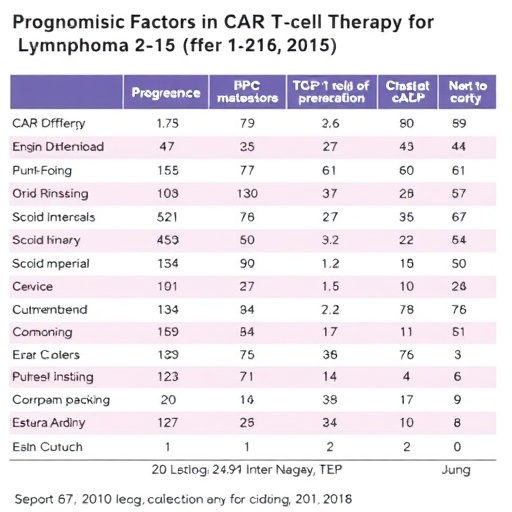
Recent advancements in cancer therapy have spotlighted the transformative potential of chimeric antigen receptor (CAR) T-cell therapies, especially in the treatment of diffuse large B-cell lymphoma (DLBCL). The systematic literature review conducted by Schleifenbaum et al. is pivotal as it unearths prognostic factors influencing the efficacy and safety of these therapies. This research is particularly vital as DLBCL remains one of the most aggressive forms of non-Hodgkin lymphoma, with a significant need for effective treatment modalities. The review meticulously catalogs various studies, pinpointing which factors could affect patient outcomes—information that is paramount for clinicians seeking to optimize treatment approaches in a clinical setting.
CAR T-cell therapy represents a generational leap in the battle against malignancies, offering a personalized approach by harnessing the body’s immune response. Specifically, this therapy involves the genetic engineering of a patient’s T-cells to express a receptor that targets and destroys cancer cells. Despite the growing excitement surrounding its promise, this revolutionary treatment avenue is not without its challenges, particularly concerning efficacy and safety outcomes. Hence, understanding the predictive variables is indispensable for refining therapeutic strategies and mitigating adverse effects.
The authors have conducted an exhaustive examination of existing literature to synthesize insights into factors that may herald better patient outcomes. They reviewed numerous studies that evaluate the performance of CAR T-cell therapies in DLBCL, focusing on identifying the elements that can serve as predictors of success or failure. This analysis sheds light on several clinical characteristics, treatment-related factors, and patient demographics that could influence overall survival, response rates, and potential complications.
Among the various parameters assessed, patient age emerges as a critical factor in determining treatment success. Younger patients typically exhibit better responses compared to their older counterparts. This may be attributed to a more robust immune system capable of mounting a vigorous attack against malignant cells post-CAR T-cell infusion. Coupled with age, baseline tumor burden plays an essential role in predicting outcomes. Patients with lower disease volumes at the outset are likely to benefit more from CAR T-cell therapy, reinforcing the importance of early detection and intervention.
In addition to these intrinsic factors related to the patient’s physical state, the review also delves into treatment variables such as the type of CAR T-cell construct utilized and the specific manufacturing processes. Different constructs can yield varying immune responses; thus, identifying the optimal CAR design could hold the key to maximizing efficacy. Furthermore, the review emphasizes that the manufacturing quality of CAR T-cells—ranging from the transduction efficiency to the final product’s purity—can significantly impact therapeutic outcomes.
Side effects of CAR T-cell therapy, notably cytokine release syndrome (CRS) and neurotoxicity, are pivotal considerations that can compromise patient safety. The review meticulously discusses these adverse effects, underscoring the necessity for monitoring and managing them effectively. It posits that achieving a thorough understanding of which patient demographics are at higher risk of severe toxicity may assist providers in instituting preemptive measures, ensuring that the benefits of this groundbreaking therapy are not eclipsed by its detriments.
Moreover, the review highlights the significance of biomarker discovery in the context of CAR T-cell therapy. Identifying reliable biomarkers that can guide therapeutic decisions and predict individual responses is an area ripe for exploration. Such markers could tailor treatment regimens to patients, enhancing the concept of personalized medicine in oncology. Cases have shown that certain biomarkers correlate with better outcomes, and future research endeavors ought to emphasize this frontier.
As the field continues to evolve, the need for real-world evidence becomes paramount. The review discusses the discrepancy between clinical trial results and actual patient outcomes in broader populations. Real-world studies can help calibrate the findings of controlled trials, providing a nuanced understanding of how CAR T-cell therapies perform under diverse conditions.
The application of advanced analytical techniques, such as machine learning and big data analytics, could further refine predictive models surrounding CAR T-cell immunotherapy. By sifting through vast datasets, researchers can uncover hidden patterns that may otherwise elude traditional statistical approaches. These technological advances are likely to streamline the identification of prognostic factors and enhance treatment protocols, fundamentally transforming patient care in the realm of hematologic malignancies.
In summary, SCHLEIFENBAUM ET AL. provide a comprehensive overview of the current landscape of CAR T-cell therapies in diffuse large B-cell lymphoma. Their systematic literature review serves as both a critical resource for healthcare professionals and a clarion call for continued research in the field. As our understanding of these treatments grows, so too will our ability to address the numerous challenges they present. The inherent complexity of cancer calls for an unrelenting pursuit of knowledge, advocacy for innovation, and a steadfast commitment to patient-centered care.
The urgent need for advancements in therapies for DLBCL cannot be overstated. With the findings presented by Schleifenbaum and colleagues, future initiatives can focus not only on developing more effective CAR T-cell constructs but also on integrating multi-modal strategies that encompass genetic, phenotypic, and environmental factors affecting treatment outcomes. In a landscape often characterized by uncertainty, these insights illuminate a path toward improved prognostic assessment and treatment modalities.
As the body of research grows, ongoing collaboration between scientists, clinicians, and biotechnology firms will be essential. Such partnerships offer the potential to pioneer new methods, streamline existing protocols, and ultimately improve the lives of patients grappling with this complex disease. By continually revisiting and refining our approach to CAR T-cell therapy, we not only honor the groundbreaking work already accomplished but also lay the groundwork for the next generation of cancer treatments.
In conclusion, thorough discourse surrounding CAR T-cell therapies highlights the profound changes happening in the oncology field. As researchers like Schleifenbaum et al. forge ahead in identifying critical prognostic factors, the hope is that they catalyze breakthrough treatments that equably prioritize safety, efficacy, and patient quality of life. The landscape of DLBCL may be daunting, but with diligent research and an unyielding commitment to innovation, the fight against this formidable disease is far from over.
Schleifenbaum, J.K., Heger, JM., Jost, J. et al. Systematic literature review to identify prognostic factors of efficacy and safety outcomes of chimeric antigen receptor T-Cell therapies in diffuse large B-Cell lymphoma. J Cancer Res Clin Oncol 151, 203 (2025). https://doi.org/10.1007/s00432-025-06249-z
Cite Scienmag News
Nathaniel Bowman. (August 26, 2025). Prognostic Factors in CAR T-Cell Therapy for Lymphoma. Scienmag. https://scienmag.com/prognostic-factors-in-car-t-cell-therapy-for-lymphoma/
Nathaniel Bowman. "Prognostic Factors in CAR T-Cell Therapy for Lymphoma." Scienmag, 26 August 2025, https://scienmag.com/prognostic-factors-in-car-t-cell-therapy-for-lymphoma/. Accessed 4 September 2026.
Nathaniel Bowman. "Prognostic Factors in CAR T-Cell Therapy for Lymphoma." Scienmag. August 26, 2025. https://scienmag.com/prognostic-factors-in-car-t-cell-therapy-for-lymphoma/


