


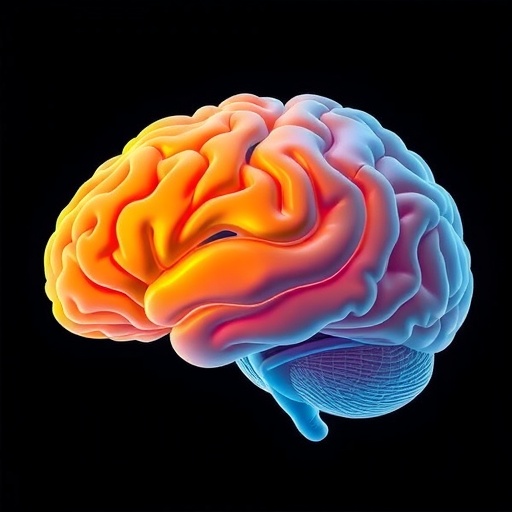
The classical understanding of sensory perception has long portrayed the flow of sensory information as a straightforward, hierarchical process. Sensory inputs are thought to be first processed in the sensory periphery before being relayed to the primary sensory cortex, where static representations of stimuli are formed. From there, signals move to downstream brain regions responsible for decision-making and initiating actions. However, contemporary research is challenging this traditional framework, revealing a far more adaptive, flexible, and dynamic role for the primary sensory cortex than previously recognized.
Central to this evolving understanding is the growing body of evidence suggesting that the primary sensory cortex is not merely a passive recipient of sensory information. Instead, it actively participates in shaping behavior, with its function molded by behavioral context and environmental conditions. This signifies a paradigm shift in neuroscience, one that moves away from viewing sensory cortex as a static processor and towards appreciating its capacity for plasticity and behavioral relevance at multiple levels within the early sensory pathway.
One critical approach to probing the functionality of the primary sensory cortex involves assessing its sufficiency to predict behavior. Traditional models imply that activity within the primary sensory cortex should correlate strongly with perceptual decisions. Recent empirical work, using advanced imaging and electrophysiological recording techniques, supports such a correlation but also reveals its complexities. Neural activity within primary sensory areas does not just encode stimulus properties; it can also encode context-dependent behavioral variables, underscoring the cortex’s integrative role in sensory-guided behaviors.
Moreover, studies employing inactivation and lesioning techniques have provided important insights into the necessity of the primary sensory cortex in sensory-driven behaviors. These interventions reveal that while the cortex is often crucial for fine discrimination tasks, certain sensory behaviors remain intact even when primary sensory cortex function is abolished. Such findings argue against a rigid hierarchical model and indicate that other brain regions or redundant pathways can compensate or even bypass primary cortex under some circumstances.
The degree of cortical involvement appears to vary with task demands and environmental context, suggesting that the primary sensory cortex operates flexibly depending on the behavioral relevance and complexity of the sensory information. For example, during tasks requiring rapid, reflexive responses, subcortical circuits may sufficiently mediate sensory processing, while more deliberative or nuanced perception engages the cortical representation in a context-dependent manner.
Experience and learning also play essential roles in shaping primary sensory cortex function. Neural representations within these regions demonstrate remarkable plasticity, adapting with repetitive exposure to stimuli or behavioral training. This adaptability is visible not only in changes to receptive field properties but also in how sensory cortex activity interfaces with motor planning and decision-making circuits. The shifting relationship between sensory input and behavioral output highlights the cortex’s role as an interface rather than a mere relay station.
Interestingly, this plasticity extends to recovery processes following injury. In cases of sensory cortex damage, compensatory reorganization within the remaining sensory structures has been observed, enabling partial restoration of perceptual function. This rewiring evidences the resilient and adaptive nature of early sensory pathways, which dynamically redistribute processing demands in response to altered sensory input or cortical availability.
The growing consensus is that sensory processing operates as a distributed and flexible system, rather than through a fixed, serial flow. Primary sensory cortex participates as one node within a network that dynamically reconfigures itself based on context, behavioral goals, and prior experience. This networked architecture supports efficient sensory discrimination, prediction, and adaptation to complex and changing environments.
Technological advances, particularly in optical imaging, optogenetics, and machine learning-driven neural decoding, have catalyzed these insights. These techniques allow researchers to examine real-time activity across extensive populations of neurons during behavior and manipulate specific circuits to test causality. The convergence of these tools reveals that sensory cortex doesn’t just represent physical stimuli but also encodes latent variables like expectation, attention, and action plans.
Such a reappraisal of primary sensory cortex paints a more nuanced picture where the cortex’s function is not static or purely sensory but dynamically shaped by interaction with broader brain systems. It challenges long-held notions within sensory neuroscience and demands experimental paradigms embracing the complexity of animal behavior in naturalistic settings.
Growing evidence also highlights the role of top-down signals in modulating sensory cortex responses. Feedback from higher-order brain regions contributes to shaping cortical sensory representations, tailoring them according to task context, motivational state, and anticipated outcomes. This bidirectional flow complicates simplistic feedforward assumptions and emphasizes a collaborative computation between cortex and other brain networks.
Understanding adaptive sensory cortex function has profound implications beyond basic neuroscience. It offers new perspectives on neurorehabilitation strategies, potentially guiding therapies that harness cortical plasticity after injury or neurodegenerative disease. Furthermore, it challenges computational models of perception and cognition, encouraging frameworks that account for fluctuating sensory representations shaped by ongoing experience and behavior.
In sum, the primary sensory cortex emerges as a flexible, vital node integrating sensory information with behaviorally relevant context, rather than a mere static representation center. Its role is both sufficient and, under many conditions, necessary for sensory-guided behavior. Yet, it is also adaptable, capable of dynamic reconfiguration in response to learning, injury, and environmental demands.
To fully grasp the function of sensory cortex, neuroscientists ahora push towards holistic methodologies that integrate multi-level circuit analysis with ethologically valid behavioral tasks. This approach embraces the complexity of real-world sensory processing and will no doubt reveal further surprises about how brains perceive and act within their environments.
Ultimately, the evolving picture redefines primary sensory cortex as a dynamic, flexible hub whose function transcends classical sensory coding, woven intricately into the fabric of perception, learning, and adaptive behavior in an ever-changing world.
Cite Scienmag News
Cassandra Pierce. (November 27, 2025). Primary Sensory Cortex: Adaptive and Flexible Functions. Scienmag. https://scienmag.com/primary-sensory-cortex-adaptive-and-flexible-functions/
Cassandra Pierce. "Primary Sensory Cortex: Adaptive and Flexible Functions." Scienmag, 27 November 2025, https://scienmag.com/primary-sensory-cortex-adaptive-and-flexible-functions/. Accessed 4 September 2026.
Cassandra Pierce. "Primary Sensory Cortex: Adaptive and Flexible Functions." Scienmag. November 27, 2025. https://scienmag.com/primary-sensory-cortex-adaptive-and-flexible-functions/


