

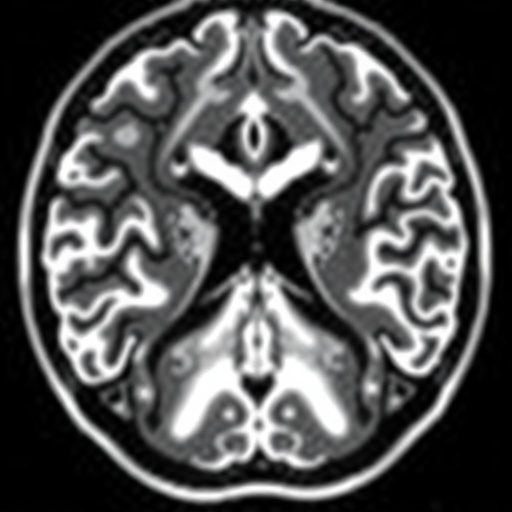
In a groundbreaking study published in npj Parkinson’s Disease, researchers have unveiled a critical insight into the predictive value of preoperative nigrosome integrity on motor outcomes following deep brain stimulation (DBS) in Parkinson’s disease (PD) patients. This study calls into question the longstanding assumption that the structural preservation of nigrosomes—a subset of dopamine-producing neurons within the substantia nigra—can reliably forecast motor improvements after DBS, a revolutionary surgical treatment increasingly used to alleviate motor symptoms of PD.
Parkinson’s disease, a progressive neurodegenerative disorder characterized primarily by the loss of dopaminergic neurons in the substantia nigra, results in debilitating motor symptoms including tremor, rigidity, and bradykinesia. Deep brain stimulation, involving the implantation of electrodes that deliver targeted electrical impulses to brain regions such as the subthalamic nucleus or globus pallidus, has became a beacon of hope for patients with advanced motor complications. However, the variability in patient outcomes post-DBS remains an ongoing challenge, prompting intense investigation into predictive markers that might forecast treatment efficacy.
The concept of nigrosome integrity has emerged as a promising neuroanatomical biomarker. Nigrosomes, particularly nigrosome-1, are clusters of dopaminergic neurons whose degeneration correlates with the severity of Parkinson’s pathology. Advanced MRI techniques have enabled visualization of these nigrosomes in vivo, creating an opportunity for non-invasive assessment before surgery. The research team sought to critically assess whether the intactness of nigrosomes, observable prior to DBS, could serve as a reliable predictor of motor outcome improvements.
Employing cutting-edge imaging combined with meticulous clinical evaluations, the scientists analyzed preoperative nigrosome status in a cohort of PD patients scheduled for DBS. This comprehensive approach extended to post-surgical monitoring of motor function using standardized scales such as the Unified Parkinson’s Disease Rating Scale (UPDRS). Contrary to prevailing expectations, their data revealed that preoperative nigrosome integrity exhibited limited predictive power regarding the motor benefits patients experienced following DBS.
This revelation challenges clinicians and researchers to reconsider the weight assigned to nigrosome imaging when formulating prognostic assessments for Parkinson’s patients contemplating DBS. It suggests that factors beyond the anatomical preservation of dopaminergic clusters—potentially including neurochemical dynamics, circuit plasticity, or other neurobiological complexities—may critically shape an individual’s responsiveness to DBS therapy. These insights could reshape preoperative evaluation protocols, urging a more multifaceted approach to patient selection and outcome prediction.
Further delving into the nuances of the findings, the study demonstrated that while nigrosome imaging might still hold diagnostic value in confirming the presence of Parkinsonian pathology, it lacks robustness as a solitary predictor for DBS efficacy. This nuanced distinction underscores the heterogeneous nature of Parkinson’s disease and the multifactorial determinants of therapeutic success. The researchers advocate for integrating additional biomarkers—perhaps electrophysiological, genetic, or metabolomic data—to build a more holistic and precise framework for prognosis.
Moreover, the study raises important questions regarding the pathophysiological underpinnings of DBS responsiveness. It posits that DBS may exert its motor benefits through mechanisms not strictly dependent on the remaining integrity of nigrosomes. Instead, modulation of broader neural networks and circuits might play a pivotal role, suggesting that DBS’s therapeutic actions are distributed and complex rather than localized solely to dopaminergic neuronal preservation.
The clinical implications of these conclusions are profound. Given the substantial risks and costs associated with DBS surgery, refining patient selection criteria remains urgent to maximize therapeutic outcomes and minimize adverse effects. This research encourages clinicians to integrate a more comprehensive preoperative assessment paradigm, moving beyond singular anatomical markers to explore dynamic functional and molecular indicators that can better forecast patient-specific responses.
In the context of future research, this study opens avenues for exploring alternative or complementary imaging modalities, such as functional MRI or PET scans targeting different neurotransmitter systems or metabolic pathways. Investigations into the differential impact of DBS on neural circuits across varying stages and subtypes of Parkinson’s will be crucial in tailoring personalized treatment protocols. Additionally, longitudinal studies examining the interplay between neurodegeneration, DBS modulation, and clinical outcomes will enhance the temporal understanding of therapeutic trajectories.
On a broader scientific level, this research enriches the dialogue about biomarkers in neurodegenerative diseases, highlighting the pitfalls of overreliance on single-dimensional indicators. The heterogeneity and complexity inherent in disorders like Parkinson’s necessitate a multidimensional diagnostic and prognostic framework, combining anatomical, functional, biochemical, and genetic data. Such integrative strategies hold promise not only for DBS outcomes but also for advancing disease-modifying therapies and patient-centric care.
As deep brain stimulation continues to evolve and expand its indications, ensuring that patient benefit remains paramount requires ongoing vigilance and innovation in preoperative assessments. This study’s findings caution against simplistic reliance on nigrosome integrity imaging as a standalone tool and pave the way for a richer, more nuanced understanding of the interplay between disease pathology and surgical treatment effectiveness.
In conclusion, while preoperative nigrosome imaging remains a valuable component in unraveling the neuropathology of Parkinson’s disease, its limited predictive power for motor outcomes post-DBS surgery necessitates a recalibration of clinical expectations and strategies. Future interdisciplinary research efforts must prioritize the identification and validation of composite biomarkers that can more accurately forecast therapeutic responses, ultimately optimizing patient outcomes and resource allocation in the management of Parkinson’s disease.
This paradigm shift in understanding DBS efficacy anchors itself in an evolving landscape of neurotherapeutics, where precision medicine approaches are increasingly recognized as essential to addressing the unique and multifactorial nature of neurological disorders. Patients, clinicians, and researchers alike stand to benefit from these insights as they collectively navigate the challenges and promises presented by deep brain stimulation in Parkinson’s disease.
Subject of Research: Predictive value of preoperative nigrosome integrity for motor outcomes in Parkinson’s disease deep brain stimulation.
Article Title: Limited predictive value of preoperative nigrosome integrity for motor outcomes in Parkinson’s disease deep brain stimulation.
Article References:
Hu, CK., B. Mohammed, W., Bai, Y. et al. Limited predictive value of preoperative nigrosome integrity for motor outcomes in Parkinson’s disease deep brain stimulation. npj Parkinsons Dis. 11, 343 (2025). https://doi.org/10.1038/s41531-025-01191-w
Image Credits: AI Generated


