

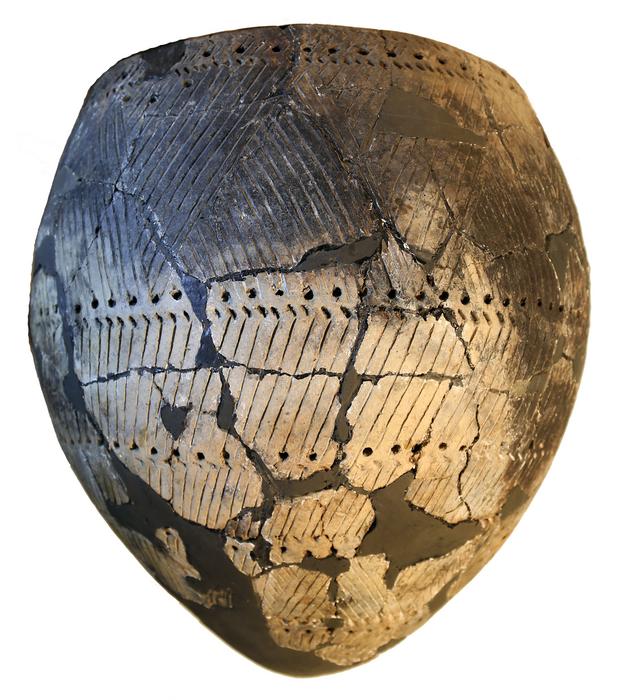
Thousands of years ago, the culinary landscape of Northern and Eastern Europe was far more intricate and diverse than previously believed. A groundbreaking study published in PLOS One on March 4, 2026, by Lara González Carretero and her team from the University of York, U.K., radically reshapes our understanding of Mesolithic diets. By employing advanced microscopic and chemical techniques, the research reveals that prehistoric hunter-gatherer-fishers selectively utilized a broad range of plant foods alongside animal resources, creating complex and nuanced dietary habits.
Traditionally, the study of ancient diets has hinged on fatty residue analysis from pottery shards. This methodology has predominantly highlighted animal-based contributions, as lipids from meat and fish tend to preserve well in ceramic matrices. While insightful, such chemical analyses have largely overlooked the presence of plant materials, which often degrade more rapidly. This study breaks new ground by integrating multipronged analytical strategies that detect even microscopic remnants of plant tissues preserved in food crusts on pottery.
The research team analyzed 58 pottery fragments excavated from 13 archaeological sites across Northern and Eastern Europe, dating from approximately the 6th to the 3rd millennium BCE. These shards encapsulate frozen moments of culinary experimentation and practice, their surface residues providing a rare window into the preparation and consumption patterns of prehistoric populations. Using a combination of scanning electron microscopy, lipid biomarker analysis, and molecular identification methods, the scientists identified plant remains such as grasses, seeds, leaves, and berries—components long suspected but rarely confirmed in such ancient contexts.
Remarkably, the evidence demonstrated that these ancient communities did not subsist solely on animal protein. Instead, their diets reflected a deliberate and selective incorporation of diverse botanical ingredients, often processed in combination with fish and other seafood. This selective use indicates a sophisticated understanding of local ecosystems, seasonal resource availability, and perhaps even culinary preferences or symbolic practices embedded within each culture’s foodways.
The discovery of plant residues alongside marine animal fats challenges the conventional narrative that Mesolithic peoples relied primarily on hunting and fishing. The findings underscore the culinary versatility and adaptability of these societies, revealing that plant gathering and processing were integral to their sustenance strategies. This multidimensional diet would have provided nutritional balance and seasonal resilience, enhancing their capacity to thrive in diverse environments over millennia.
Furthermore, the study highlights the ubiquity and importance of pottery technology in food preparation among hunter-gatherers, a detail sometimes overshadowed by the association of ceramics with agricultural societies. The presence of intricate food crusts on these vessels reveals their role not merely as passive storage artifacts, but as active tools for cooking and recipe creation. This insight redefines pottery’s cultural significance in prehistoric Europe, positioning it as a facilitator of complex culinary traditions.
From a methodological perspective, the study sets a benchmark by demonstrating the value of combining microscopic imaging with chemical residue analysis. By transcending the limitations of single-method analyses, the researchers reconstructed a more holistic picture of prehistoric gastronomy, capturing botanical details traditionally invisible to lipid-based studies alone. This integrative approach opens new avenues for archaeological science, encouraging reinvestigation of existing pottery assemblages worldwide with refined analytical lenses.
Importantly, the results suggest culinary customs varied considerably between regions, reflecting local resource availability and possibly cultural distinctions in taste, preparation techniques, and food symbolism. Such variability challenges homogenizing interpretations of prehistoric diets and social practices, instead suggesting dynamic, localized cuisines with their own unique botanical and faunal signatures.
This research provides crucial evidence for the cognitive and cultural complexity of Mesolithic communities. The selective procurement and processing of diverse plant foods imply knowledge systems regarding seasonal cycles, plant properties, preparation methods, and nutritional balancing. These insights help reconstruct past human-environment interactions and deepen appreciation of how early Europeans adapted innovatively to their landscapes.
The authors emphasize that previous dietary reconstructions, which tended to prioritize animal residues, have obscured the full spectrum of prehistoric eating habits. Their nuanced approach brings these ancient culinary recipes “back into focus,” illustrating that these hunter-gatherer-fishers were far from subsisting on fish alone. Their results affirm the significance of a plant-inclusive perspective in understanding ancestral diets, health, and social identity.
Moreover, the revelation that plant and aquatic foods were consumed in complex, culturally embedded recipes challenges simplistic views of Mesolithic subsistence. These communities demonstrated remarkable culinary ingenuity and diversification. Pottery served as more than a container—it was an essential ingredient in a broader cultural system concerned with food transformation, presentation, and consumption.
By showcasing how multidisciplinary research can overcome traditional biases and yield a richer understanding of the past, this study encourages a paradigm shift in archaeological dietary studies. It invites scholars to apply similar combinatory techniques to other ancient contexts, potentially uncovering further hidden dimensions of prehistoric lifeways.
In conclusion, the work by González Carretero and colleagues offers a compelling narrative that reshapes our conception of early European diets. Through the lens of advanced scientific analysis, it exposes the sophisticated interplay of plants and animals woven into prehistoric culinary traditions and reinforces the power of innovative methodologies in unveiling humanity’s ancient relationship with food.
Subject of Research: People
Article Title: Selective culinary uses of plant foods by Northern and Eastern European hunter-gatherer-fishers
News Publication Date: 4-Mar-2026
Web References: https://plos.io/4ryU2Ha
References: González Carretero L, Lucquin A, Robson HK, McLaughlin TR, Dolbunova E, Lundy J, et al. (2026) Selective culinary uses of plant foods by Northern and Eastern European hunter-gatherer-fishers. PLoS One 21(3): e0342740. https://doi.org/10.1371/journal.pone.0342740
Image Credits: Credit: Lara González Carretero (CC-BY 4.0, https://creativecommons.org/licenses/by/4.0/)
Keywords: Mesolithic diets, prehistoric pottery, plant food residues, hunter-gatherer-fishers, chemical analysis, microscopic examination, ancient culinary traditions, Northern and Eastern Europe, food crust analysis, archaeological science, lipid biomarkers, plant-animal dietary integration


