


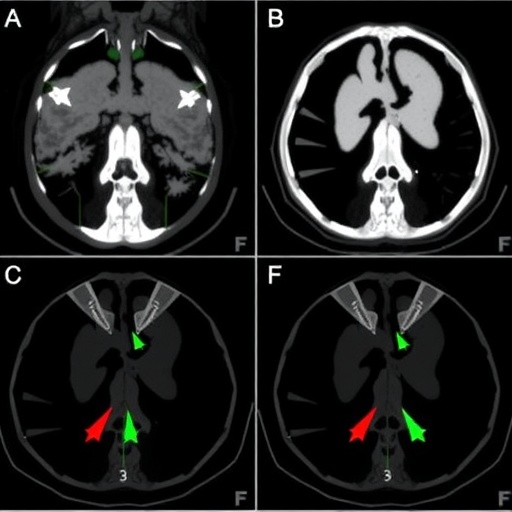
In an era where precision medicine is at the forefront of cancer treatment, a groundbreaking study has emerged, potentially changing the diagnostic landscape for Hodgkin’s Lymphoma. The work, conducted by an international team led by researchers Jajroudi, Jamalirad, and Enferadi, delves deep into the predictive capabilities of a specific imaging biomarker—18F-FDG PET/CT. This research paper, titled “A Quantitative Approach to Predict Therapeutic Response in Hodgkin’s Lymphoma Using 18FDG PET/CT,” published in the Journal of Medical Biology and Engineering, presents a compelling narrative on how quantitative imaging can enhance treatment outcomes.
Hodgkin’s Lymphoma, once a curse of ambiguity in prognosis and treatment efficacy, is now being scrutinized under the lens of advanced imaging technologies. The study outlines how traditional methods of assessing treatment response often fall short, leading to delays in the necessary adjustments of therapeutic strategies. By utilizing 18F-FDG PET/CT scans, which are high-resolution imaging techniques that illuminate metabolic activities within cancerous tissues, the team posits that clinicians can gain unprecedented insights into patient responses early in the treatment protocols.
The research team meticulously designed their study to ensure rigorous validation of their methods. By analyzing patient data collected before and after treatment interventions, they were able to correlate specific metabolic changes in the regions affected by Hodgkin’s Lymphoma with overall therapeutic success. The quantitative approach leveraged advanced statistical analyses, aiming to eliminate the subjectivity often found in qualitative evaluations. Hence, a more reliable outcome measure is generated, allowing oncologists to make data-driven decisions relatively swiftly.
One of the most intriguing aspects of this research is its potential to tailor therapy at a patient-specific level. It goes beyond simply identifying who will respond to a particular drug, tapping into the necessity of personalizing treatment plans based on individual tumor metabolic metrics. As outlined by the authors, this advancement means that oncologists could explore alternative therapies sooner for patients showing poor initial responses, ultimately improving patient survival rates and quality of life.
Moreover, this study shines a light on the significant gap in existing methodologies and how they can be bridged by advanced imaging. The traditional biopsies that have long been considered the gold standard for diagnosis and treatment monitoring carry risks, including infection and bleeding, alongside being invasive. The use of 18F-FDG PET/CT not only minimizes such risks but also enhances patient comfort, emphasizing a need for its broader adoption in clinical settings.
As part of their research, the authors meticulously compared the efficacy of their quantitative imaging strategies against standard approaches. The findings showcased a transition from mere observation of disease progression to a more rigorous, objective measurement of treatment efficacy. Their work highlighted how metabolic changes, visualized through high-resolution PET scans, paint a clearer picture than conventional imaging methods.
The implications of this research reach beyond Hodgkin’s Lymphoma, opening the door to exploring the potential of 18F-FDG PET/CT in other malignancies. Oncologists across various specializations could potentially adopt this advanced modality in predicting responses, thus creating a paradigm shift in how cancer care is approached. The flexibility and adaptability of quantitative imaging methods suggest a future where such predictive analytics could enhance patient outcomes in multiple contexts.
The authors’ passion for improving oncology practices shines through the rigorous data collection and analysis presented in the paper. They provide a call to action for the medical community to embrace advancements in imaging technologies and adapt them into routine clinical practices. By publishing this seminal piece, they assert their commitment to fostering innovation that leads to life-saving outcomes.
In summary, their research transcends mere academic inquiry; it embodies a transformative step towards achieving a more scientifically backed, patient-centric approach in treating Hodgkin’s Lymphoma. The integration of quantitative imaging with imaging biomarkers heralds a new era of oncology, one where treatment is not a one-size-fits-all formula but rather a precise science based on measurable metabolic responses.
As Hodgkin’s Lymphoma continues to challenge clinicians worldwide, the insights provided by Jajroudi and colleagues could very well illuminate pivotal pathways towards more effective treatment regimens. Their study not only contributes to the academic canon but also resounds with urgency and applicability for clinical practice. The looming promise is clear: decoding cancer through the lens of quantitative imaging may soon lead us to brighter, healthier tomorrows.
This publication is a testament to a time when technology and medicine converge to redefine our understanding and management of life-threatening diseases. By merging sophisticated imaging techniques with a quantitative lens, we stand on the brink of revolutionary advancements that may change countless lives.
Cite Scienmag News
Nathaniel Bowman. (August 30, 2025). Predicting Hodgkin’s Lymphoma Response with PET/CT. Scienmag. https://scienmag.com/predicting-hodgkins-lymphoma-response-with-pet-ct/
Nathaniel Bowman. "Predicting Hodgkin’s Lymphoma Response with PET/CT." Scienmag, 30 August 2025, https://scienmag.com/predicting-hodgkins-lymphoma-response-with-pet-ct/. Accessed 4 September 2026.
Nathaniel Bowman. "Predicting Hodgkin’s Lymphoma Response with PET/CT." Scienmag. August 30, 2025. https://scienmag.com/predicting-hodgkins-lymphoma-response-with-pet-ct/


