


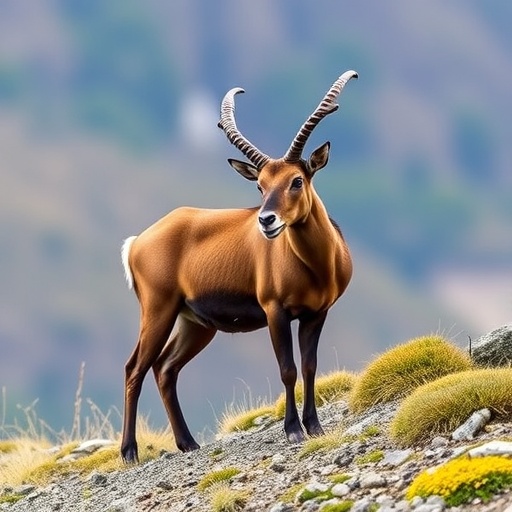
In the fascinating realm of ecological dynamics, the intricate relationship between predators and prey remains a captivating focus for researchers. Recent studies have shed light on the significant role antipredator behavior plays in shaping the altitudinal movements of prey species. A groundbreaking study, “Antipredator behaviour as a major determinant of prey altitudinal movements: the wolf and the chamois,” conducted by a team of researchers including Orazi, Panaccio, and Lovari, delves into this complex interaction. Exploring the behaviors of chamois in the presence of their primary predator, the wolf, this research offers transformative insights into wildlife behavior and predator-prey dynamics.
The research begins by establishing the foundational concept of antipredator behavior and its evolutionary significance. Antipredator behavior encompasses a wide range of actions that prey species, including chamois, exhibit to evade detection, stalking, and capture by predators like wolves. These behaviors are not merely instinctual reactions but are shaped by countless generations of natural selection, resulting in finely-tuned responses to predation risk. Understanding these behaviors is critical, as they ultimately dictate how prey navigate their environment, including their altitudinal movements.
In mountainous terrains where both wolves and chamois exist, the interplay between these species creates a unique ecological tapestry. Wolves, as apex predators, exert significant pressure on chamois populations. Their presence alters the prey’s spatial distribution, often forcing them to ascend to higher altitudes where predator encounters are less frequent. This altitudinal migration is not simply a one-time reaction; it is a behavioral strategy that evolves over time in response to predation risk and environmental changes. The study meticulously tracks these movements, revealing patterns that bolster our understanding of animal behavior amidst ecological pressures.
Furthermore, the researchers employed sophisticated tracking technology to monitor the movements of chamois across varied altitudinal gradients. By deploying GPS collars equipped with advanced tracking systems, the team was able to gather empirical data on the spatial movements of these animals relative to wolf activity. The results were illuminating; chamois exhibited a marked preference for higher elevations when wolves were present in their vicinity. This behavioral adaptation not only enhances the survival prospects of the chamois but also highlights the predator’s role in shaping the ecological landscape.
Diving deeper into the nuances of antipredator behavior, the study categorizes the various strategies employed by chamois. These include vigilant scanning of their surroundings, strategic use of the terrain for cover, and flocking behavior that enhances safety in numbers. Each of these behaviors contributes to the chamois’ ability to minimize the risks incurred from wolf predation. Moreover, the researchers observed that the intensity of these antipredator behaviors varied in relation to the perceived threat level, which can fluctuate due to factors such as seasonality and wolf pack dynamics.
What is particularly compelling about this research is its potential implications for wildlife management and conservation. Understanding the responses of prey species to predation can inform conservation strategies aimed at maintaining balanced ecosystems. For instance, if predator populations are managed effectively, prey species like chamois could experience less stress and stabilizing population numbers. Consequently, this could lead to more ecologically sustainable practices in habitats where these species coexist.
As the study continues to be discussed in scientific communities, its findings resonate beyond the realms of ecology and wildlife biology. They underline the intricate connections within ecosystems, where even subtle shifts in behavior can have cascading effects on community structure and biodiversity. The results serve as a powerful reminder of the delicate balance that exists within nature, urging us to consider how our actions impact these relationships.
The implications of this study extend to broader discussions about climate change and habitat modification. Altitudinal shifts in prey behavior may reflect ongoing environmental changes driven by global warming. As habitats transform, understanding how species adapt becomes ever more critical. This research provides essential insights into the adaptability and resilience of prey species, crucial traits that could determine their survival in an era of rapid ecological change.
Moreover, the exploration of predator-prey dynamics in the study fosters a sense of appreciation for the complexity of ecological relationships. Every interaction is a testament to the intricate web of life, where each species has a role to play. This holistic approach is essential for fostering a deeper understanding of our natural world, inspiring conservation efforts, and driving educational initiatives aimed at protecting wildlife.
In conclusion, the work conducted by Orazi, Panaccio, Lovari, and their colleagues represents a significant contribution to our understanding of antipredator behaviors and their impact on prey altitudinal movements. The insights gleaned from their research not only deepen our appreciation for wildlife but also provide vital knowledge necessary for effective conservation strategies in a changing world. As we navigate the challenges posed by human activities and climate change, studies like this remind us of the resilience of nature and the importance of preserving the delicate balance that sustains our ecosystems.
With ongoing discussions in the scientific community, the study of antipredator behavior will undoubtedly continue to evolve, shedding light on new dimensions of predator-prey interactions and their implications for ecological science. The findings challenge us to think critically about our relationship with the natural world, emphasizing the need for informed actions that uphold the intricate connections that bind us to wildlife and the environments they inhabit.
As we forge a path toward a more sustainable future, the lessons learned from these predator-prey dynamics will remain relevant, influencing conservation practices across the globe. The call to action is clear: as stewards of the Earth, we must strive to understand, respect, and protect the complexities that define our ecosystems, ensuring that both predators and prey can coexist for generations to come.
Cite Scienmag News
Gavin Prescott. (November 26, 2025). Predator Avoidance Drives Chamois Altitude Shifts. Scienmag. https://scienmag.com/predator-avoidance-drives-chamois-altitude-shifts/
Gavin Prescott. "Predator Avoidance Drives Chamois Altitude Shifts." Scienmag, 26 November 2025, https://scienmag.com/predator-avoidance-drives-chamois-altitude-shifts/. Accessed 4 September 2026.
Gavin Prescott. "Predator Avoidance Drives Chamois Altitude Shifts." Scienmag. November 26, 2025. https://scienmag.com/predator-avoidance-drives-chamois-altitude-shifts/


