

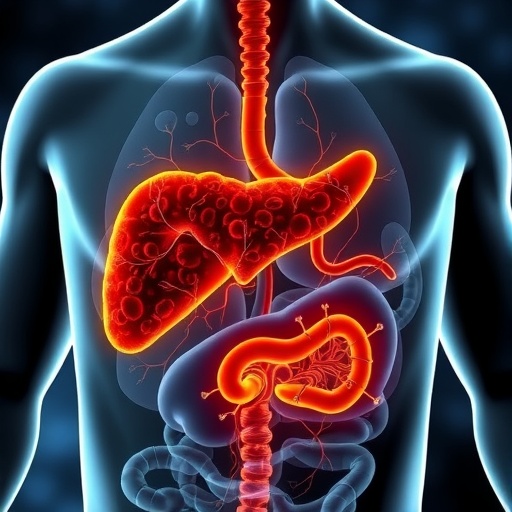
In an era where metabolic disorders continue to escalate globally, the search for novel therapeutic strategies has become an urgent priority for the scientific community. Among these disorders, metabolic dysfunction-associated steatotic liver disease (MASLD) — once commonly known as non-alcoholic fatty liver disease (NAFLD) — has emerged as a predominant cause of chronic liver pathology, paralleled by escalating obesity and diabetes rates worldwide. Recently, an intriguing study by Chen and Shan, published in Scientific Reports (2026), sheds light on the promising role of prebiotic xylooligosaccharides (XOS) in alleviating MASLD by modulating gut microbiota and their metabolites. This breakthrough not only underscores the complex, yet profound, gut-liver axis but also provides a mechanistic foundation for developing targeted interventions addressing metabolic liver diseases through diet-based modulation of microbiota.
The pathogenesis of MASLD is multifaceted, involving a web of metabolic disruptions such as insulin resistance, chronic low-grade inflammation, and lipid accumulation in hepatic cells. Central to recent research paradigms is the gut microbiota, an intricate ecosystem of bacteria, archaea, and fungi residing within our gastrointestinal tract. These microbial communities have been recognized as pivotal modulators of host metabolism, immune responses, and energy homeostasis. Disturbances in gut microbiota composition—termed dysbiosis—are closely linked with the progression of liver steatosis and inflammation. Chen and Shan’s work explores this pivotal relationship by focusing on the potential of prebiotics — non-digestible dietary fibers that selectively enhance beneficial microbiota — particularly xylooligosaccharides, as therapeutic agents.
Xylooligosaccharides are oligomers of xylose molecules, derived from plant hemicellulose, known for their capacity to foster the growth of beneficial bacteria such as Bifidobacteria and Lactobacilli. Unlike probiotics, which introduce live microorganisms, prebiotics like XOS serve as metabolic substrates that reshape the gut microbiota’s architecture and functional output. The study delves into how oral administration of XOS induces marked improvements in MASLD symptoms by restructuring the microbiome’s metabolic activities and ameliorating the hepatic lipid overload and inflammatory milieu.
The experimental design employed by Chen and Shan involved murine models exhibiting metabolic dysfunction and liver steatosis mimicking human MASLD pathology. Administering XOS led to significant phenotypic improvements, including decreased hepatic triglyceride accumulation, reduced inflammatory cytokines, and enhanced insulin sensitivity. Notably, these health benefits were accompanied by a clear shift in the gut microbiota composition, with increased populations of short-chain fatty acid (SCFA)-producing bacteria and restoration of microbial diversity. These changes corroborate the growing evidence suggesting that SCFAs—such as acetate, propionate, and butyrate—serve as essential signaling molecules orchestrating systemic metabolic homeostasis.
A particularly compelling aspect of Chen and Shan’s findings is the elucidation of gut-derived metabolites as mediators in the gut-liver interaction. Using targeted metabolomics coupled with 16S rRNA sequencing, the researchers identified an upregulation of beneficial metabolites post-XOS treatment. SCFAs contribute to fortifying the intestinal barrier, suppressing pro-inflammatory pathways in the liver, and promoting lipid oxidation. Additionally, modulation of bile acid metabolism was observed, highlighting the intricate crosstalk between gut microbes and hepatic function. This multifactorial influence emphasizes how manipulating the microbiome orchestrates a systemic physiological recalibration combating the deleterious effects of MASLD.
Beyond microbial ecology, the study delves into molecular pathways impacted by the prebiotic intervention. Inflammatory signaling cascades such as NF-κB and TLR4 were notably dampened following XOS administration, correlating with decreased hepatocellular inflammation and fibrosis markers. Importantly, regulatory pathways involved in lipid metabolism exhibited beneficial modulation, including upregulated expression of PPARα and CPT1A, key regulators of fatty acid oxidation. These molecular insights substantiate the hypothesis that XOS-induced microbiota shifts confer metabolic improvements via systemic immunometabolic reprogramming.
Chen and Shan’s research also emphasizes the translational potential of XOS supplementation as an adjunct therapeutic avenue. The safety profile of prebiotic fibers is well-established, with minimal adverse effects and high patient compliance potential. The prospect of strategically exploiting dietary interventions to recalibrate the gut microbiome presents a compelling alternative or complement to pharmacological treatments that often involve significant side effects or cost. Furthermore, the study’s implications extend beyond liver disease, considering the systemic nature of metabolic dysfunction linking obesity, type 2 diabetes, and cardiovascular diseases.
Intriguingly, the authors discuss how future research could optimize the therapeutic efficacy of XOS by integrating precision microbiome modulation strategies. Personalized approaches accounting for individual microbiota variance and host genetics may unlock more robust and tailored metabolic improvements. Moreover, identifying synergistic combinations of prebiotics with probiotics or postbiotics could magnify beneficial effects, offering a multi-pronged microbiome-based therapeutic arsenal.
The study’s integration of advanced high-throughput sequencing, metabolomics, and histopathological evaluations presents a comprehensive systems biology approach to understanding MASLD’s microbial underpinnings. This methodology sets a new benchmark in the field, encouraging further mechanistic explorations into host-microbiota-metabolite networks. The strong correlation between microbial metabolites and hepatocellular health paves the way for developing novel biomarkers capable of early diagnosis and monitoring therapeutic responses in metabolic liver diseases.
Despite its promising findings, Chen and Shan acknowledge limitations warranting cautious interpretation. While animal models provide invaluable mechanistic insights, human clinical trials remain essential to validate efficacy and optimal dosing regimens. The complexity of the human microbiome and differing environmental exposures introduce variability that may influence response to prebiotics. Additionally, long-term safety and potential interactions with existing therapies require thorough evaluation.
The implications of this research transcend the clinical domain, offering insights into the broader concept of the gut-liver axis and systemic metabolic regulation. Recognizing the gut microbiota as a modifiable environmental factor influencing chronic diseases expands the horizon for novel preventive and therapeutic interventions. As metabolic disorders continue to strain healthcare systems globally, interventions such as XOS supplementation offer hope for safer, accessible, and lifestyle-integrated disease management.
In sum, Chen and Shan’s pioneering study elucidates the therapeutic potential of prebiotic xylooligosaccharides in ameliorating metabolic dysfunction-associated steatotic liver disease via targeted modulation of the gut microbiome and its derived metabolites. This work not only deepens our understanding of MASLD pathophysiology but also invigorates the growing paradigm of microbiome-centered personalized medicine. As the scientific community advances toward unraveling the gut microbiota’s intricate dialogue with host metabolism, such research positions dietary prebiotics at the forefront of innovative, non-invasive metabolic disorder management solutions.
Future investigations building upon these findings may ultimately transform clinical strategies for MASLD and related metabolic syndromes, marking a significant stride toward harnessing the microbiome’s untapped therapeutic potential. The convergence of microbiology, metabolomics, and hepatology in this context epitomizes the frontier of multidisciplinary biomedical research, heralding a new epoch where diet and microbiota modulation intertwine at the core of disease prevention and health restoration.
Subject of Research: The therapeutic effects of prebiotic xylooligosaccharides in ameliorating metabolic dysfunction-associated steatotic liver disease via modulation of gut microbiota and metabolites.
Article Title: Prebiotic xylooligosaccharides ameliorate metabolic dysfunction-associated steatotic liver disease via modulating gut microbiota and metabolites.
Article References: Chen, L., Shan, TD. Prebiotic xylooligosaccharides ameliorate metabolic dysfunction-associated steatotic liver disease via modulating gut microbiota and metabolites. Sci Rep (2026). https://doi.org/10.1038/s41598-026-48643-8
Image Credits: AI Generated


