

Thursday, June 11, 2026
Science
No Result
View All Result
  • Login
  • HOME
  • SCIENCE NEWS
  • CONTACT US
  • HOME
  • SCIENCE NEWS
  • CONTACT US
No Result
View All Result
Scienmag
No Result
View All Result
Home Science News Medicine

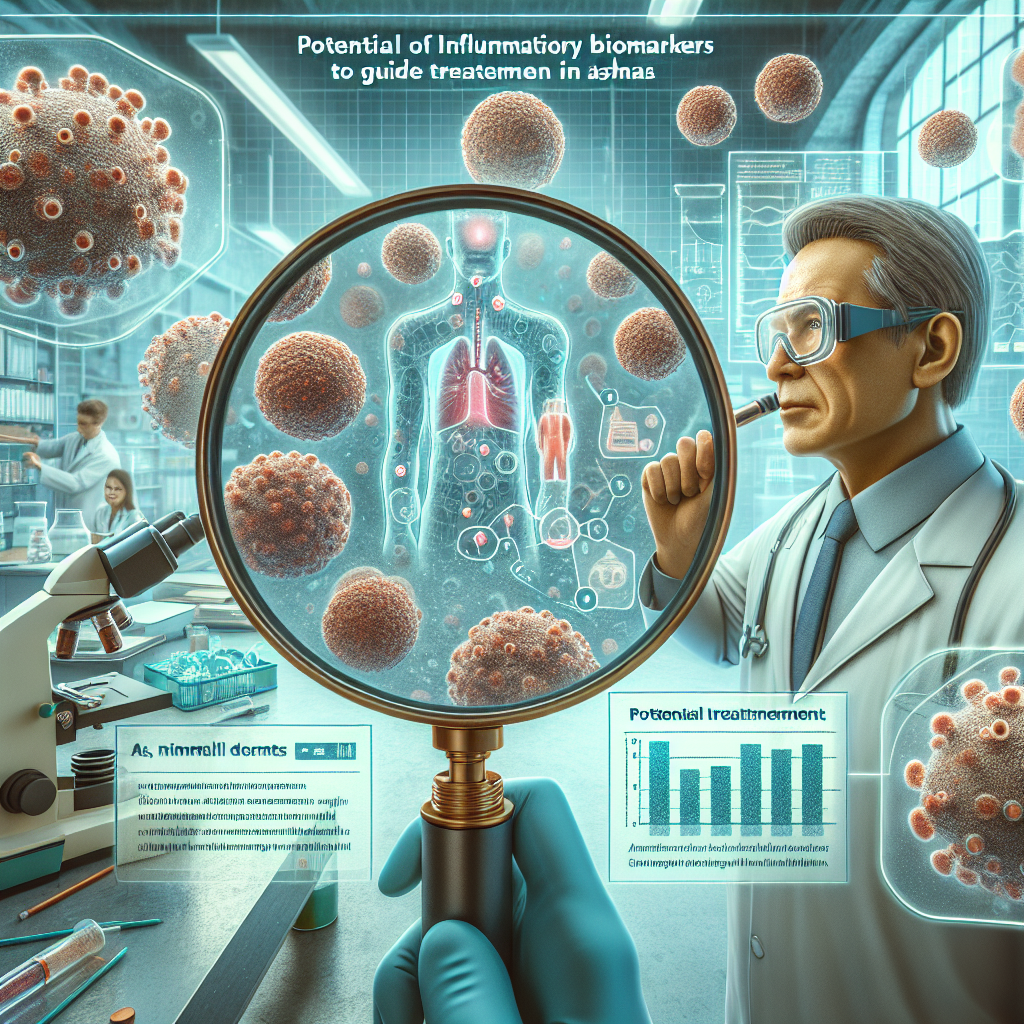
Potential of inflammatory biomarkers to guide treatment in mild asthma

June 26, 2024
in Medicine
Reading Time: 2 mins read
0
Potential of inflammatory biomarkers to guide treatment in mild asthma
66
SHARES
603
VIEWS
Share on FacebookShare on Twitter
ADVERTISEMENT

June 26, 2024

DENVER — National Jewish Health researchers are looking for ways to identify patients with untreated mild persistent asthma who might benefit from daily inhaled treatment based on inflammatory biomarkers. Their results were published in April in the Journal of Allergy and Clinical Immunology (JACI) In Practice(Opens in a new window).

“Patients with severe asthma can be prescribed biologic therapy based on inflammatory phenotypes.  Yet, patients with mild persistent asthma are treated based on symptoms and exacerbations,” said lead author on the study Ronina Covar, MD, a pediatric allergist and immunologist at National Jewish Health. “If we can characterize these patients based on their inflammatory biomarkers, this would give us the ability to know which treatments would be most effective.”

Researchers have found that patients with mild persistent asthma who had eosinophils (a type of white blood cell) in their sputum (phlegm and spit), responded better to inhaled corticosteroids than to a placebo. In their new report, the majority of these patients have non-eosinophilic sputum, but other inflammatory biomarkers were identified in their blood and exhaled samples. Therefore, sputum eosinophilia does not seem to be an adequate target for most patients with mild persistent asthma. Other biomarkers, along with clinical features, may be the best available option to consider a trial of inhaled corticosteroid.

“These findings potentially provide another clinical tool to help clinicians consider the use of inhaled corticosteroids in certain mild asthma cases,” said Dr. Covar. “It also paves the way for more research to identify patients with this type of mild asthma, who comprise the majority of asthma patients seen in clinic that could benefit from inhalers.”

Dr. Covar added that further research should be done to study blood eosinophil count (blood lab work) and fractional exhaled nitric oxide (exhaled nitric oxide test) to determine if they can help further identify patients that can benefit from inhaler treatment.

National Jewish Health is the leading respiratory hospital in the nation. Founded 125 years ago as a nonprofit hospital, National Jewish Health today is the only facility in the world dedicated exclusively to groundbreaking medical research and treatment of children and adults with respiratory, cardiac, immune and related disorders. Patients and families come to National Jewish Health from around the world to receive cutting-edge, comprehensive, coordinated care. To learn more, visit the media resources page.

Share26Tweet17
Previous Post

Two studies show mixed progress against EoE

Next Post

New study shows alcohol rehabilitation and abstinence reduce the risk of alcohol-associated cancers

Related Posts

Psychosocial Support for Hospitalized Patients’ Relatives Reviewed — Medicine
Medicine

Psychosocial Support for Hospitalized Patients’ Relatives Reviewed

June 11, 2026
SIRT7 Controls Dosage and Protects Female X — Medicine
Medicine

SIRT7 Controls Dosage and Protects Female X

June 11, 2026
Creating User-Focused Climate Adaptation Tools — Medicine
Medicine

Creating User-Focused Climate Adaptation Tools

June 11, 2026
Resistive Memory Boosts Neural-Field Reconstruction Efficiency — Medicine
Medicine

Resistive Memory Boosts Neural-Field Reconstruction Efficiency

June 11, 2026
Next-Gen Sequencing Reveals Hidden Drug Resistance in Eswatini — Medicine
Medicine

Next-Gen Sequencing Reveals Hidden Drug Resistance in Eswatini

June 11, 2026
Gene Ancestries Trace Diverse Microbial Origins — Medicine
Medicine

Gene Ancestries Trace Diverse Microbial Origins

June 11, 2026
Next Post
New study shows alcohol rehabilitation and abstinence reduce the risk of alcohol-associated cancers

New study shows alcohol rehabilitation and abstinence reduce the risk of alcohol-associated cancers

  • Mothers who receive childcare support from maternal grandparents show more parental warmth, finds NTU Singapore study

    Mothers who receive childcare support from maternal grandparents show more parental warmth, finds NTU Singapore study

    27653 shares
    Share 11058 Tweet 6911
  • University of Seville Breaks 120-Year-Old Mystery, Revises a Key Einstein Concept

    1058 shares
    Share 423 Tweet 265
  • Bee body mass, pathogens and local climate influence heat tolerance

    681 shares
    Share 272 Tweet 170
  • Researchers record first-ever images and data of a shark experiencing a boat strike

    545 shares
    Share 218 Tweet 136
  • Groundbreaking Clinical Trial Reveals Lubiprostone Enhances Kidney Function

    530 shares
    Share 212 Tweet 133
Science

Embark on a thrilling journey of discovery with Scienmag.com—your ultimate source for cutting-edge breakthroughs. Immerse yourself in a world where curiosity knows no limits and tomorrow’s possibilities become today’s reality!

RECENT NEWS

  • Psychosocial Support for Hospitalized Patients’ Relatives Reviewed
  • Community-Led Visual Storytelling and Sharing Circles Illuminate Pathways to Indigenous Heart Health
  • Acidophilic Fungi: Potential Life in Venus Clouds
  • SIRT7 Controls Dosage and Protects Female X

Categories

  • Agriculture
  • Anthropology
  • Archaeology
  • Athmospheric
  • Biology
  • Biotechnology
  • Blog
  • Bussines
  • Cancer
  • Chemistry
  • Climate
  • Earth Science
  • Editorial Policy
  • Marine
  • Mathematics
  • Medicine
  • Pediatry
  • Policy
  • Psychology & Psychiatry
  • Science Education
  • Social Science
  • Space
  • Technology and Engineering

Subscribe to Blog via Email

Enter your email address to subscribe to this blog and receive notifications of new posts by email.

Join 5,146 other subscribers

© 2025 Scienmag - Science Magazine

Welcome Back!

Login to your account below

Forgotten Password?

Retrieve your password

Please enter your username or email address to reset your password.

Log In
No Result
View All Result
  • HOME
  • SCIENCE NEWS
  • CONTACT US

© 2025 Scienmag - Science Magazine

Discover more from Science

Subscribe now to keep reading and get access to the full archive.

Continue reading
