

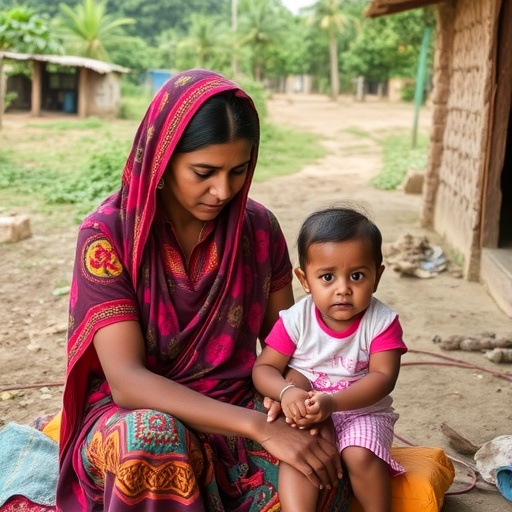
In the heart of rural India, a groundbreaking study has shed new light on the complex interplay between postpartum depression and its far-reaching consequences on both maternal mental health and child development. This research, emanating from the SPRING study cohort, provides the first integrated analysis examining the risk factors faced by mothers 12 months postpartum and how these potentially shape the developmental trajectories of their children at 18 months. Nestled within a socio-cultural landscape marked by economic challenges and healthcare disparities, the findings reveal nuanced insights into postpartum depression’s persistent impact beyond the immediate postnatal period.
Postpartum depression (PPD) is a well-documented yet often underrecognized condition that significantly affects mothers worldwide, with rural populations facing heightened vulnerability due to limited mental health resources and sociocultural stigmas. This study meticulously tracked over a year of postpartum experiences among rural Indian mothers, utilizing validated psychological assessment tools and longitudinal developmental evaluations of their children. The innovative use of an integrated analysis framework allowed researchers to disentangle the multiple layers of risk factors, ranging from socioeconomic stressors and lack of social support to nutritional deficits and household dynamics.
The complexity of PPD in rural India is compounded by overlapping factors such as gender bias, entrenched patriarchy, and the economic hardships faced by rural households. These compounded adversities contribute to elevated stress levels in new mothers, exacerbating depressive symptoms that often remain untreated or unacknowledged. The SPRING study’s comprehensive approach highlighted that maternal mental health cannot be siloed from the broader family and community context. Detailed data collection at the 12-month mark postpartum revealed a spectrum of risk profiles that cautioned against a one-size-fits-all approach to interventions.
What makes this research particularly revolutionary is its forward-looking design, bridging maternal mental health at one year postpartum with child developmental outcomes assessed six months later. The evidence gathered points to a critical window wherein ongoing maternal depression tangibly influences cognitive, emotional, and motor growth in infants. By 18 months, infants of mothers experiencing persistent depressive symptoms were more likely to show delayed developmental milestones, revealing a tangible intergenerational transmission of mental health challenges underpinned by environmental stressors.
The methodical analytic techniques employed, including multivariate regression and path analysis, allowed for a granular understanding of causal pathways. The data demonstrated how psychosocial stressors operate indirectly through maternal depressive symptoms to impair the nurturing environment essential for optimal child development. For instance, mothers grappling with depressive symptoms reported less engagement in stimulating activities with their children, reduced healthcare-seeking behavior, and heightened household tensions—all factors contributing to suboptimal developmental outcomes.
From a public health perspective, the ramifications are profound. Addressing postpartum depression solely as an individual psychiatric concern misses the broader ecosystem of influences and impacts outlined by this research. The study advocates for an integrated health delivery model that encompasses maternal mental health screening, socioeconomic support structures, and child developmental monitoring as inseparable components of postpartum care. This holistic approach can better capture the diverse needs of rural mothers and their children, who often fall through the cracks of fragmented health services.
Adding a layer of urgency, the findings indicate that untreated postpartum depression is not a transient phase but a condition with persistent and escalating impacts if left unaddressed. The longitudinal data noted that depressive symptoms frequently persisted or worsened between six to twelve months postpartum, underscoring the importance of sustained intervention beyond the immediate postpartum period. This temporal extension challenges conventional healthcare paradigms and calls for community-based mental health programs tailored to rural challenges.
One of the most striking aspects of this study is the contextual richness of the data, which accounts for cultural norms around motherhood, family roles, and mental health perceptions. Recognizing these socio-cultural dynamics is crucial for crafting culturally sensitive interventions that respect local beliefs while promoting evidence-based mental health care. Engagement with community leaders, traditional birth attendants, and family members emerged as key strategies that could amplify the reach and acceptance of postpartum mental health services.
The implications for child development are equally eye-opening. The findings suggest that early-life adversity linked to maternal depression predisposes children to delayed language acquisition, impaired motor skills, and socio-emotional difficulties. This early developmental lag can cascade into longer-term educational and social challenges, perpetuating cycles of poverty and ill health in rural communities. Thus, maternal mental health interventions may represent a strategic leverage point for breaking intergenerational cycles of disadvantage.
In terms of policy, the research highlights the critical need for integrating maternal mental health into national child health programs. India’s existing maternal and child health initiatives have traditionally prioritized physical health and nutrition, often sidelining psychological well-being. The SPRING study’s evidence supports expanding policy frameworks to embed mental health metrics, ensuring that postpartum care encompasses the full spectrum of maternal and infant health needs.
The technology and tools used in this study demonstrate the value of innovative, scalable assessment modalities tailored for low-resource settings. Mobile health platforms, community health worker training, and simple screening instruments provided a pathway for effective data gathering and continuous monitoring. These advances bring hope for replicating such integrated mental health surveillance in comparable rural settings globally, where mental health infrastructure remains a critical gap.
As the global community grapples with the silent toll of mental health disorders, the SPRING study from rural India stands out as a beacon highlighting practical solutions grounded in local realities. It underscores the necessity of moving beyond one-dimensional biomedical models towards interdisciplinary strategies that knit together mental health, child development, and social sciences. Only through such nuanced approaches can we hope to improve outcomes for mothers and infants in the most vulnerable communities.
In conclusion, this research invites a paradigm shift in how postpartum mental health is conceptualized and addressed, particularly in low-resource rural settings. By illuminating the embedded nature of postpartum depression and its ripple effects on early child development, the study calls for urgent action to develop multifaceted, culturally informed interventions. The future of maternal and child health in rural India—and similar contexts worldwide—hinges on our ability to recognize and respond to these intertwined challenges with compassion, science, and ingenuity.
Subject of Research: Postpartum depression in rural India and its impact on child development outcomes.
Article Title: Unpacking postpartum depression in rural India: an integrated analysis of risk factors at 12 months and child development outcomes at 18 months of age – findings from the SPRING study.
Article References:
Kumar, D., Soremekun, S., Roy, R. et al. Unpacking postpartum depression in rural India: an integrated analysis of risk factors at 12 months and child development outcomes at 18 months of age – findings from the SPRING study. BMC Psychol 14, 79 (2026). https://doi.org/10.1186/s40359-025-03746-1
Image Credits: AI Generated
DOI: https://doi.org/10.1186/s40359-025-03746-1
Keywords: Postpartum depression, maternal mental health, child development, rural health, India, SPRING study, psychosocial risk factors, longitudinal analysis, integrated health care


