


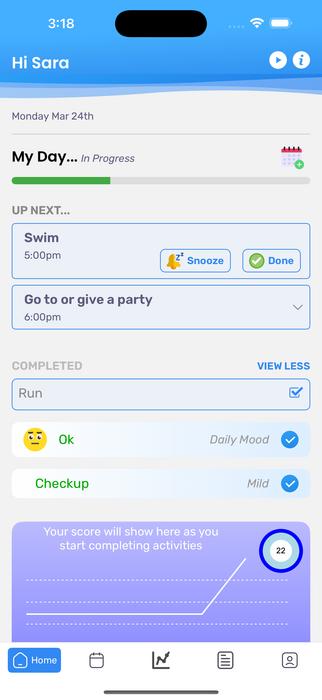
In a groundbreaking study led by Dr. Jennifer Dahne from the Medical University of South Carolina, the Moodivate app has emerged as a revolutionary tool in the fight against depression. This digital application, designed to facilitate behavioral activation therapy, has been shown to deliver results far superior to traditional care methods during a recent clinical trial across 22 primary care practices in Charleston, South Carolina. The app caters to the pressing need for accessible mental health interventions, especially among populations grappling with depression.
The trial demonstrated that users of the Moodivate app experienced clinically significant reductions in depressive symptoms—twice that of standard therapy. Among participants, app users were three times more likely to achieve meaningful improvements in their depression and 2.3 times more likely to reach remission. The findings from this study, which involved 649 primary care patients, highlight the potential of technology to bridge the gap in psychological care and offer hope to individuals who might otherwise be left without adequate support.
An essential component of the Moodivate app is its self-directed nature, which equips users to manage their mental health independently. Unlike conventional therapy that necessitates regular appointments with a therapist, Moodivate allows individuals to set their goals, track activities, and report on their mood changes autonomously. This design not only renders the intervention scalable but is also cost-effective, critically important in a healthcare landscape often overburdened with demand and limited resources.
Dr. Dahne’s motivation for developing the Moodivate app stems from a keen recognition of the treatment gap that exists in primary care settings. While primary care providers routinely screen for depression, they often lack the resources necessary for effective intervention beyond prescribing medication. The app’s behavioral activation model encourages patients to engage in enjoyable or meaningful activities to boost their mood, directly challenging the misconception that they must first “feel better” to initiate change in their behavior.
The trial results are particularly striking, considering that many patients in the study had been using psychiatric medications for extended periods, with over 80% of participants reporting ongoing treatment. This aspect underscores the pressing need for complementary interventions like Moodivate that can enhance patients’ overall wellbeing and psychological resilience. A crucial takeaway from the findings is that the app fosters a type of self-efficacy among users, empowering them to take charge of their mental health and proactively make lifestyle changes.
Dahne emphasized the app’s role as a flexible tool that patients can integrate into their routines. Users manage their mental health on their terms with features like scheduling prompts for daily activities and digital rewards that reinforce positive behavior changes. This encouragement to engage in regular mental health check-ins is a pivotal aspect of the app’s functionality, addressing a common struggle for individuals battling depression who may otherwise find it challenging to maintain motivation.
The significance of addressing depression is underscored by alarming statistics from the World Health Organization, which highlights it as the leading cause of disability worldwide. In the United States alone, millions of adults reported experiencing major depression every year. Alarmingly, young adults aged 18 to 25 constitute a significant demographic severely impacted, with nearly 20% affected. Dr. Dahne’s vision through Moodivate is not only to provide immediate assistance to those suffering from depression but also to generate long-term strategies that bolster resilience and prevent future episodes of depression.
Building partnerships with healthcare institutions, insurers, and corporate wellness programs is a strategic goal for the Moodivate app as it seeks to broaden its accessibility. By collaborating with these entities, the app aims to reach a larger population, particularly individuals with advanced illnesses, such as metastatic cancer, who often experience elevated rates of depression. Increasing access to effective mental health resources for these vulnerable groups is paramount in making a significant inroad into national mental health statistics.
Utilizing technology in mental health treatment represents a paradigm shift, with the potential to reshape how we understand and address psychological conditions. The urgency necessitates innovative solutions that align with the current realities of healthcare delivery, such as limited therapist availability and an overwhelmed mental health system. The success of the Moodivate app could herald a new era in mental health interventions marked by enhanced accessibility, affordability, and effectiveness.
The clinical trial’s outcomes, which are set to be published in the Journal of the American Medical Association (JAMA) Internal Medicine, not only validate the app’s efficacy but also pave the way for future studies exploring the application of similar interventions across diverse healthcare settings. This important research serves as a foundation for further exploration into how technology can supplement existing psychological treatment modalities and offer new pathways to recovery for patients.
In an era where mental health is increasingly recognized as a critical component of overall health, the introduction of tools such as Moodivate reflects a positive trend toward integrating technology into therapeutic practices. The app not only serves as a pivotal resource for individuals with depression but also embodies a forward-thinking approach in tackling one of the most pressing health challenges of our time. By empowering patients to engage actively with their mental health, Moodivate represents a promising frontier in the ongoing battle against depression.
As Dr. Dahne continues to advocate for the use of Moodivate in various contexts, its potential for broad adoption becomes clear. The journey from conception to clinical application illustrates the importance of innovation in mental health care and signals a hopeful path forward for individuals seeking relief from depression. The app stands as a testament to the power of technology in transforming the landscape of mental health resources, ultimately aiming for a future where access to emotional wellbeing is within everyone’s reach.
By channeling expert knowledge and technological advancement, Dr. Dahne and her team have crafted a revolutionary solution poised to change the narrative on depression treatment. The integration of mood management within a digital platform allows a more democratic approach to access, potentially inspiring similar solutions in the mental health field that further enhance the reach and impact of behavioral therapies.
The Moodivate app embodies a significant advancement in the mental health arena, enabling users to harness the principles of behavioral activation at their own pace, fostering a proactive stance against depression while broadening the horizons for future mental health innovations.
Cite Scienmag News
Glenn Wilkins. (April 14, 2025). Portable Therapy: A Handy Solution for Alleviating Depression in Primary Care Patients. Scienmag. https://scienmag.com/portable-therapy-a-handy-solution-for-alleviating-depression-in-primary-care-patients/
Glenn Wilkins. "Portable Therapy: A Handy Solution for Alleviating Depression in Primary Care Patients." Scienmag, 14 April 2025, https://scienmag.com/portable-therapy-a-handy-solution-for-alleviating-depression-in-primary-care-patients/. Accessed 4 September 2026.
Glenn Wilkins. "Portable Therapy: A Handy Solution for Alleviating Depression in Primary Care Patients." Scienmag. April 14, 2025. https://scienmag.com/portable-therapy-a-handy-solution-for-alleviating-depression-in-primary-care-patients/


