Friday, October 30, 2026
Science
No Result
View All Result
  • Login
  • HOME
  • SCIENCE NEWS
  • CONTACT US
  • HOME
  • SCIENCE NEWS
  • CONTACT US
No Result
View All Result
Scienmag
No Result
View All Result
Home Science News Technology and Engineering

Porous amorphous nickel phosphate electrode boosts supercapattery capacity

October 28, 2026
in Technology and Engineering
Denise Maddox
By Denise Maddox Scienmag Editorial Profile - Mechanical Engineering
Reading Time: 2 mins read
0
Porous amorphous nickel phosphate electrode boosts supercapattery capacity

Porous amorphous nickel phosphate electrode boosts supercapattery capacity

65
SHARES
587
VIEWS
Share on FacebookShare on Twitter
ADVERTISEMENT

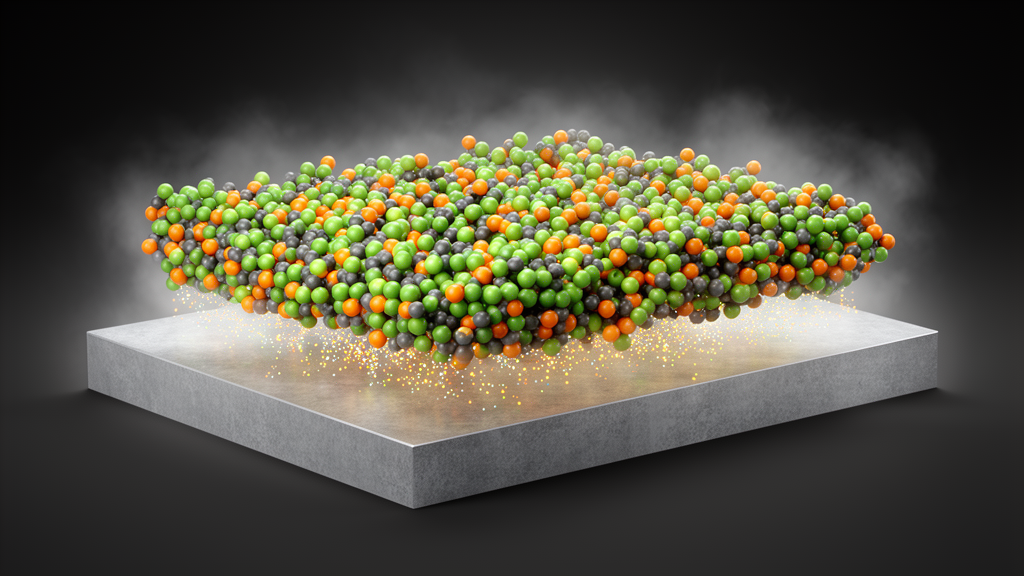
Amorphous nickel phosphate has emerged as a promising electrode material for supercapatteries, but a new study argues that the field has been looking in the wrong place for performance gains. Rather than simply maximizing surface area or shrinking particles, researchers report that the internal structure of the particles themselves—pores inside particles, alongside the disorder of the amorphous framework—plays a decisive role in how well the electrode performs.

The team synthesized nickel phosphate using ethylene glycol as a structural modifier, a choice that turned out to do two jobs at once. Ethylene glycol acted as a capping agent, restricting how large the particles could grow, and simultaneously as a templating agent, inducing a porous structure within them. As the ethylene glycol concentration increased, structural analysis showed a transition from dense blocks to smaller, irregular spheres that contained co-existing intraparticle pores.

What distinguishes this work, according to the authors, is the effort to separate the effects of interparticle mesopores, intraparticle pores, particle size, and structural disorder on electrochemical behaviour, instead of correlating performance solely with surface area or particle size. Electrochemical testing identified nickel phosphate prepared with an 18.75 percent ethylene glycol concentration as the optimal configuration, delivering a specific capacity of 386.7 C g⁻¹ at 0.8 A g⁻¹.

A full supercapattery device built with the optimized electrode delivered a maximum specific capacity of 13 C g⁻¹ at 0.8 A g⁻¹ and retained approximately 75 percent of its post-activation capacity after 5000 cycles. The authors emphasize that maximizing surface area or minimizing particle size does not necessarily produce the best electrode; instead, the intermediate ethylene glycol concentration struck a balance between pore accessibility, hydroxide ion transport, internal active-site utilization, and electronic connectivity.

The findings suggest that electrode engineering for supercapatteries should look beyond nanoscale particle engineering and interparticle porosity, which are established strategies for facilitating electrolyte-ion transport, and consider how the internal architecture of amorphous materials can be deliberately designed and exploited.

Subject of Research: Synthesis of porous amorphous nickel phosphate supercapattery electrodes using ethylene glycol as a structural modifier

Article Title: Balancing intraparticle porosity and structural disorder in amorphous nickel phosphate for enhanced supercapattery performance

Article References: Rosli, A., Omar, F. S., Khairudin, A., Mohd Akhiri, A. S., & Abu Hassanisazin, N. I. A. (2026). Balancing intraparticle porosity and structural disorder in amorphous nickel phosphate for enhanced supercapattery performance. Ionics. https://doi.org/10.1007/s11581-026-07588-8

Image Credits: AI Generated

DOI: 10.1007/s11581-026-07588-8

Keywords: supercapattery, nickel phosphate, amorphous materials, ethylene glycol, porosity, electrode design, specific capacity, energy storage, structural disorder, nanomaterials, Balancing, intraparticle

Cite Scienmag News

Denise Maddox. (October 28, 2026). Porous amorphous nickel phosphate electrode boosts supercapattery capacity. Scienmag. https://scienmag.com/porous-amorphous-nickel-phosphate-electrode-boosts-supercapattery-capacity/

Denise Maddox. "Porous amorphous nickel phosphate electrode boosts supercapattery capacity." Scienmag, 28 October 2026, https://scienmag.com/porous-amorphous-nickel-phosphate-electrode-boosts-supercapattery-capacity/. Accessed 30 October 2026.

Denise Maddox. "Porous amorphous nickel phosphate electrode boosts supercapattery capacity." Scienmag. October 28, 2026. https://scienmag.com/porous-amorphous-nickel-phosphate-electrode-boosts-supercapattery-capacity/


Tags: amorphous materialsbalancingelectrode designenergy storageethylene glycolethylene glycol as structural modifierinfluence of particle morphology on electrochemical behaviorinternal pore structure in electrode materialsintraparticleintraparticle versus interparticle poresnanomaterialsnanoparticle size control in electrode synthesisnickel phosphateoptimization of nickel phosphate for energy storageporosityPorous amorphous nickel phosphate electrodesrole of amorphous framework disorderseparating effects of pore types on electrochemical performancespecific capacityspecific capacity improvements in supercapatteriesstructural disordersupercapatterysupercapattery performance enhancementtemplating and capping effects of ethylene glycol
Share26Tweet16
Previous Post

Rat study maps gene and protein shifts in brown fat during cold acclimatization

Next Post

Blood sugar markers glycated albumin and fructosamine show moderate accuracy for diabetes diagnosis

Related Posts

Hydrogen Fuel Cells Aim for the Sky in New Aviation Research Push
Technology and Engineering

Hydrogen Fuel Cells Aim for the Sky in New Aviation Research Push

October 30, 2026
Machine learning and water quality indices reveal monsoon pollution hotspots in Odisha’s Baitarani River
Climate

Machine learning and water quality indices reveal monsoon pollution hotspots in Odisha’s Baitarani River

October 30, 2026
Prototype Silicon Photon-Counting CT Produces Virtual Unenhanced Images Close to True Scans
Biotechnology

Prototype Silicon Photon-Counting CT Produces Virtual Unenhanced Images Close to True Scans

October 30, 2026
Ohmic heating could make dried foods faster, greener and more nutritious
Chemistry

Ohmic heating could make dried foods faster, greener and more nutritious

October 30, 2026
Winter Field Study Maps Thermal Comfort Across Hangzhou’s Residential Neighborhood Types
Technology and Engineering

Winter Field Study Maps Thermal Comfort Across Hangzhou’s Residential Neighborhood Types

October 30, 2026
New Loop-Tracing Algorithm Speeds Up Optimal Solutions to Transportation Problems
Technology and Engineering

New Loop-Tracing Algorithm Speeds Up Optimal Solutions to Transportation Problems

October 30, 2026
Next Post
Blood sugar markers glycated albumin and fructosamine show moderate accuracy for diabetes diagnosis

Blood sugar markers glycated albumin and fructosamine show moderate accuracy for diabetes diagnosis

  • Mothers who receive childcare support from maternal grandparents show more optimized

    Mothers who receive childcare support from maternal grandparents show more parental warmth, finds NTU Singapore study

    27656 shares
    Share 11059 Tweet 6912
  • University of Seville Breaks 120-Year-Old Mystery, Revises a Key Einstein Concept

    1061 shares
    Share 424 Tweet 265
  • Bee body mass, pathogens and local climate influence heat tolerance

    682 shares
    Share 273 Tweet 171
  • Researchers record first-ever images and data of a shark experiencing a boat strike

    546 shares
    Share 218 Tweet 137
  • Groundbreaking Clinical Trial Reveals Lubiprostone Enhances Kidney Function

    531 shares
    Share 212 Tweet 133
Science

Embark on a thrilling journey of discovery with Scienmag.com—your ultimate source for cutting-edge breakthroughs. Immerse yourself in a world where curiosity knows no limits and tomorrow’s possibilities become today’s reality!

RECENT NEWS

  • Giant Aurora Ripples Reveal Plasmapause Waves During Record May 2024 Superstorm
  • Non-coding RNAs Fine-Tune Innate Immunity Against Influenza and Coronaviruses
  • Simple Prompt Makes Teacher Feedback More Detailed but Also Surfaces Subtle Bias
  • Alcohol Kills Esophageal Cells Mostly Through Ferroptosis, Lab Study Finds

Categories

  • Agriculture
  • Anthropology
  • Archaeology
  • Athmospheric
  • Biology
  • Biotechnology
  • Blog
  • Bussines
  • Cancer
  • Chemistry
  • Climate
  • Earth Science
  • Editorial Policy
  • Marine
  • Mathematics
  • Medicine
  • Pediatry
  • Policy
  • Psychology & Psychiatry
  • Science Education
  • Science News
  • Social Science
  • Space
  • Technology and Engineering

Subscribe to Blog via Email

Enter your email address to subscribe to this blog and receive notifications of new posts by email.

Join 5,151 other subscribers

© 2025 Scienmag - Science Magazine

Welcome Back!

Login to your account below

Forgotten Password?

Retrieve your password

Please enter your username or email address to reset your password.

Log In
No Result
View All Result
  • HOME
  • SCIENCE NEWS
  • CONTACT US

© 2025 Scienmag - Science Magazine

Discover more from Science

Subscribe now to keep reading and get access to the full archive.

Continue reading