


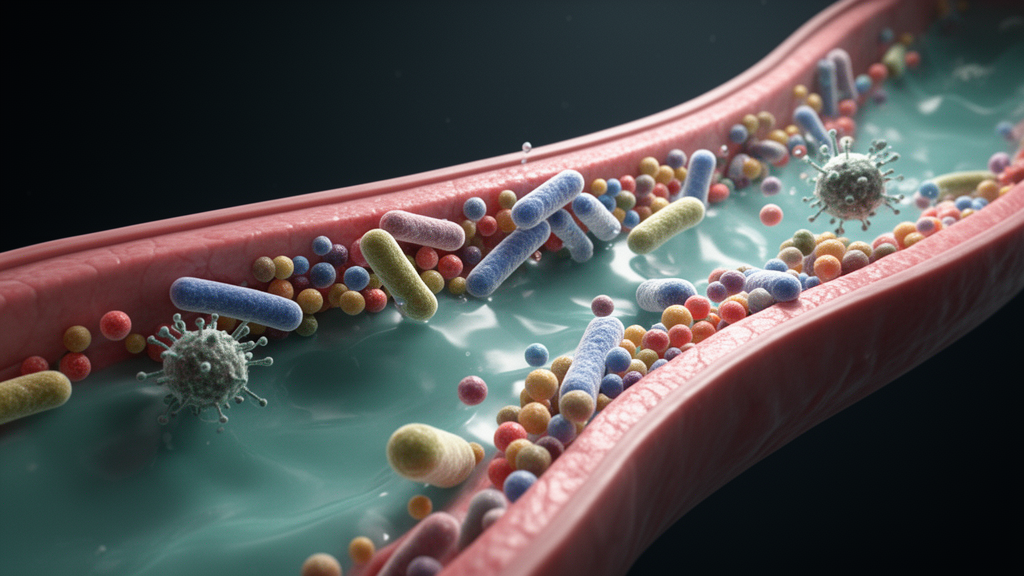
Patients with acute biliary infection who harbor more than one bacterial species in their bile had significantly higher rates of systemic inflammatory response syndrome (SIRS) and sepsis than patients with single-species infections, according to a retrospective study conducted at the General Hospital of Ningxia Medical University in Yinchuan, China. The research, published in the journal Frontiers in Cellular and Infection Microbiology, also found that polymicrobial infections carry a heavier burden of antimicrobial resistance, and that a history of biliary surgery was identified as an independent risk factor for having multiple pathogens in the bile.
The study drew on patients treated between August 2020 and August 2023 who underwent either endoscopic retrograde cholangiopancreatography (ERCP) or percutaneous transhepatic gallbladder drainage (PTGD) with bile culture. Of the 208 patients with acute biliary infection included in the analysis, 61, or 29.3 percent, had polymicrobial infection as defined by their bile culture results, while the remainder had monomicrobial infections dominated by a single organism.
Gram-negative bacteria predominated in both groups, with Escherichia coli identified as the most common pathogen overall. However, the polymicrobial group showed a relatively higher proportion of Gram-positive organisms compared with the monomicrobial group, indicating that mixed infections involved a broader spectrum of bacterial types.
The clinical consequences of this microbial diversity were pronounced. Patients with polymicrobial infection had significantly higher rates of SIRS and significantly higher rates of sepsis. Using multivariate logistic regression analyses, the researchers found that polymicrobial infection was independently associated with both SIRS and sepsis, meaning the association held after accounting for other patient characteristics included in the models.
Antimicrobial resistance told a parallel story. Resistance was significantly more common in the polymicrobial group than in the monomicrobial group. When the researchers examined resistance patterns pathogen by pathogen, the differences were concentrated in Escherichia coli: resistance rates to several commonly used antibiotics were higher among E. coli isolates from polymicrobial infections. By contrast, no significant differences in resistance were observed for Klebsiella pneumoniae or Enterococcus faecium between the two groups.
Notably, antimicrobial resistance itself was not independently associated with SIRS or sepsis in the regression analyses. This separation is analytically important: within this cohort, the severity of illness tracked with the presence of multiple pathogens rather than with the resistance profiles of those pathogens. The authors conclude that polymicrobial infection was independently associated with both more severe clinical manifestations and a greater antimicrobial resistance burden, framing these as linked but distinct dimensions of the same phenomenon.
The search for risk factors yielded one clear signal. A history of biliary surgery was identified as an independent risk factor for polymicrobial infection. The authors suggest that this history could help clinicians identify patients at increased risk of polymicrobial infection and inform early risk stratification and empirical antimicrobial selection.
As with all retrospective, single-center studies, the findings carry limitations that shape their interpretation. The analysis included only patients who underwent ERCP or PTGD with bile culture, a population that may not represent all presentations of acute biliary infection, and the observational design identifies associations rather than proving that polymicrobial infection causes severe outcomes. The authors note that the final, formatted version of the article will be published soon. Even so, the study adds quantitative weight to the observation that in acute biliary infection, the number of species in the bile is associated with both disease severity and resistance, and a patient’s surgical history may be one of the earliest available clues to elevated risk.
Subject of Research: Polymicrobial infection in acute biliary infection and its association with SIRS, sepsis, and antimicrobial resistance
Article Title: Polymicrobial infection in acute biliary infection: clinical impact, resistance, and risk factors
Article References: Luo, Q., Hua, Y., Zhao, C., Yao, W., & Wang, Z. (2026). Polymicrobial infection in acute biliary infection: clinical impact, resistance, and risk factors. Frontiers in Cellular and Infection Microbiology, 16, Article 1893457. https://doi.org/10.3389/fcimb.2026.1893457
Image Credits: AI Generated
DOI: 10.3389/fcimb.2026.1893457
Keywords: acute biliary infection, polymicrobial infection, bile culture, sepsis, SIRS, antimicrobial resistance, Escherichia coli, ERCP, biliary surgery, risk factors, Gram-negative bacteria, retrospective study
Cite Scienmag News
Kristina Jarvis. (October 24, 2026). Polymicrobial Bile Infections Linked to Sepsis Risk and Antibiotic Resistance. Scienmag. https://scienmag.com/polymicrobial-bile-infections-linked-to-sepsis-risk-and-antibiotic-resistance/
Kristina Jarvis. "Polymicrobial Bile Infections Linked to Sepsis Risk and Antibiotic Resistance." Scienmag, 24 October 2026, https://scienmag.com/polymicrobial-bile-infections-linked-to-sepsis-risk-and-antibiotic-resistance/. Accessed 24 October 2026.
Kristina Jarvis. "Polymicrobial Bile Infections Linked to Sepsis Risk and Antibiotic Resistance." Scienmag. October 24, 2026. https://scienmag.com/polymicrobial-bile-infections-linked-to-sepsis-risk-and-antibiotic-resistance/


