


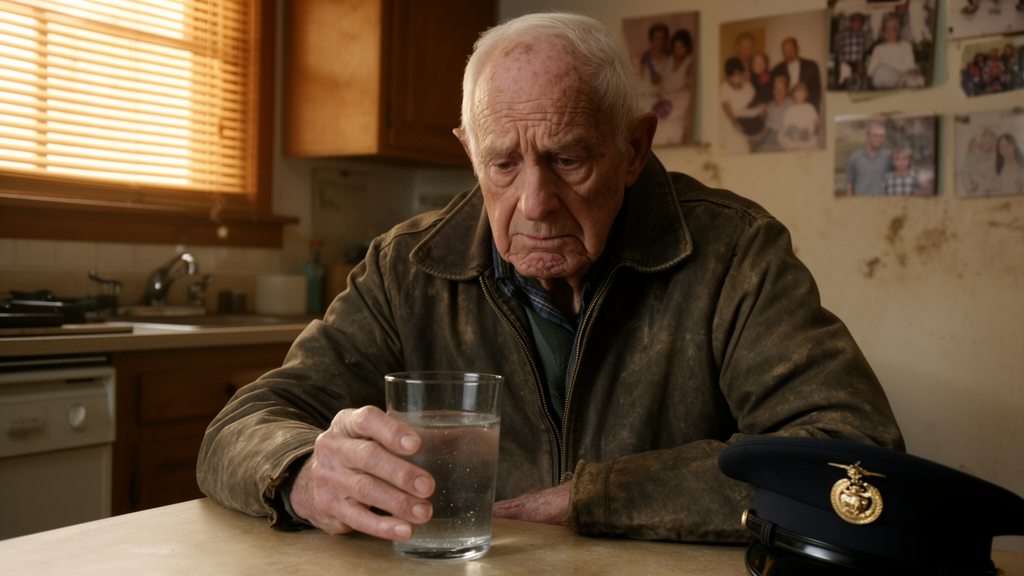
Between 1953 and 1987, more than one million Marines, their families, and civilian workers at Camp Lejeune in Jacksonville, North Carolina, drank, cooked with, and bathed in water contaminated with industrial solvents from a nearby dry-cleaning facility and with benzene leaking from underground fuel storage tanks. Both groups of chemicals are recognized by the International Agency for Research on Cancer as human carcinogens. Decades later, many of those exposed continue to face serious health conditions presumed to be linked to the contamination, and Congress has responded with successive waves of legislation offering healthcare coverage and monetary relief. But a new qualitative study published in the Journal of General Internal Medicine suggests that the deepest wound left by the contaminated water may not be physical at all: it is a complicated, fragile, and deeply personal erosion of trust in the very institutions charged with caring for those harmed.
The research team, led by Stephanie Hayes of Northwestern University Feinberg School of Medicine and colleagues affiliated with the VA and several universities, conducted semi-structured telephone interviews between February and May 2024 with 22 Veterans who served at Camp Lejeune during the officially recognized contamination period. Participants were predominantly male (68.2 percent), White (72.7 percent), and had a mean age of 63 years. The team recruited interviewees from a previous survey of more than a thousand Camp Lejeune Veterans and by posting invitations on two private, monitored Camp Lejeune Facebook pages, a strategy designed to reach Veterans who might not use VA care at all. Each interview lasted roughly 30 to 45 minutes and explored three areas: the Veterans’ awareness and perceptions of the toxicants, their resulting health issues and healthcare experiences, and how those experiences shaped their trust in the Veterans Health Administration, the branch of the Department of Veterans Affairs that delivers medical care.
To analyze the transcripts systematically, the researchers turned to the Health Systems Trust Content Area Framework, a taxonomy derived from a systematic review of trust measurement in health systems. The framework defines eight domains: competence, honesty, communication, confidence, fidelity, fairness, confidentiality, and systems trust. The team adapted these general definitions into operational definitions specific to Camp Lejeune Veterans and developed a codebook inductively, coding transcripts in Dedoose until no new themes emerged and saturation was reached. This framework-based approach matters because it transforms scattered personal stories into standardized, comparable constructs, potentially creating a reusable blueprint for studying trust among future cohorts of Veterans exposed to military environmental toxicants, including those affected by burn pits in Iraq and Afghanistan, Agent Orange, and Gulf War illnesses covered under the broader PACT Act.
The analysis produced three central themes. The first describes genuine, hard-won trust rooted in positive experiences with VHA services and perceived transparency about the exposure. Veterans in this theme praised the competence of clinicians, the reliability of the system, and the quality of communication at their facilities. One Veteran recounted how effective treatment of pneumonia after COVID-19 reinforced his confidence in VA care. Others described staff who were friendly and knew their names, and some recalled receiving mailed letters alerting them to the water contamination, an act of honesty that counted for something. Several Veterans highlighted the fidelity of the system in tangible financial terms: one man with cancer explained that the VA covered diagnostic care and repeat testing that his private insurance would not have routinely paid for, without what he called insurance hoops, possibly catching his cancer at an earlier, more treatable stage.
The second theme, and the one that dominated most interviews, was a lack of trust driven by limited access to or poor experiences with healthcare, perceived secrecy, and a punishingly complicated claims process. Within the competence domain, Veterans described clinicians who seemed unable to provide correct or timely diagnoses, a problem many attributed to high turnover. One Veteran reported having five different primary care doctors at the VA in five years, reasoning that physicians who do not stay cannot know their patients. Fidelity failures surfaced as beliefs that the VA prioritized cost savings over care, evidenced by long claim delays and high denial rates. Honesty complaints centered on the decades-long delay in disclosing the contamination at all. As one female Veteran put it, they took 20 years to tell Veterans about the water, then gave them only a two-year window to file claims under the Camp Lejeune Justice Act of 2022, accompanied by what she described as bureaucratic paperwork demands and no communication.
The claims process emerged as a kind of engine of mistrust, corroding the systems trust domain, which concerns belief in the processes and policies of an institution. Veterans described submitting disability claims and then waiting indefinitely, a dynamic one captured in the phrase hurry up and wait. Others reported multiple denials that led them to conclude paperwork quality was irrelevant to the outcome. Several expressed frustration that benefits seemed to apply only once conditions became severe, with one Veteran saying he felt he had to be dying before anyone cared about him. Perceived unfairness extended to eligibility rules: some Veterans argued that everyone exposed, including dependents and those stationed at the base for fewer than the required 30 consecutive days, deserved equal compensation, suspecting the threshold existed mainly to limit institutional responsibility.
The third and perhaps most novel theme revealed that Veterans’ trust in the VHA is filtered through their perceptions of entirely separate institutions: the United States Marine Corps and the federal government itself. Researchers describe this as a trickle-down effect of institutional betrayal, a concept referring to situations in which the institutions people depend upon for safety and well-being cause them harm. Veterans reported that the government’s handling of the COVID-19 pandemic colored their expectations of federal healthcare competence, and that the Marines’ apparent effort to hide the contamination, in the words of one Veteran who said it was swept under the rug, poisoned their view of every downstream agency. Communication failures at the government level compounded the problem, with Veterans encountering broken links, outdated phone numbers, and dense legal and legislative jargon on official websites.
Bureaucratic loss of records dealt a particularly bitter blow. Some Veterans reported that their active-duty records had been lost or burned in the 1973 fire at the National Personnel Records Center, a well-documented archival disaster, and that these losses led directly to denied disability claims. Veterans interpreted this as a failure of confidentiality and protection by the very institutions that had also failed to protect their bodies from the water. Fairness concerns echoed again here: Veterans noted that they never consented to being poisoned, and that their families, including children who lived on base, suffered lasting harm from a government-run installation. The study’s authors emphasize that these external influencers mean trust in the VHA cannot be fully repaired by the VHA acting alone, a finding with substantial policy implications.
Why does this matter clinically? Prior research shows that low trust predicts poorer health habits, delayed checkups, missed appointments, and unmet medical needs, while Veterans with higher trust in VHA physicians are more than twice as likely to choose VHA care over non-VHA alternatives. Trust is not a soft sentiment; it is a functional determinant of whether exposed Veterans seek potentially life-saving screening and treatment. The authors propose a three-part path forward: applying community-engaged research principles such as community advisory boards that include Camp Lejeune Veterans as partners; leveraging Veterans’ camaraderie, since 82 percent of surveyed Veterans report that perceptions of the VA are shaped by people they know personally, and Veterans who value peer bonds are nearly 1.5 times more likely to choose VA care; and learning from historical environmental health disasters such as the Minamata Bay methylmercury poisoning in Japan, where accountability, acknowledgement, expanded relief, and sustained research proved essential to rebuilding community confidence.
The study has limitations the authors acknowledge candidly. Volunteers for interviews may hold more extreme views than the broader population, introducing non-response bias, and most participants were reached through VA data systems, meaning Veterans who seek care outside the VA are underrepresented. Self-reported data carry recall bias, and trust was measured at a single point in time. Yet even with these caveats, the findings make one conclusion difficult to escape: for more than a million people exposed at Camp Lejeune, institutional trust is not something that can be restored with legislation alone. It requires transparency, continuity of clinicians, a claims process that does not feel like an obstacle course, and the active involvement of Veterans themselves in designing the remedies. As newer cohorts of toxic-exposed Veterans enter the system under the PACT Act, the lessons of Camp Lejeune’s poisoned water are not historical footnotes. They are a preview of what happens when institutions that promise safety fail, and a guide to what rebuilding trust will actually take.
Subject of Research: Trust in the Veterans Health Administration among Veterans exposed to contaminated drinking water at Camp Lejeune
Article Title: Examining Trust Among Veterans from Camp Lejeune Exposed to Environmental Toxicants: A Qualitative Study
Article References: Hayes, S. S., Iroz, C. B., Berryman, K., Solanki, P., Bobitt, J., Johnson, J. K., Weaver, F. M., & Balbale, S. N. (2026). Examining Trust Among Veterans from Camp Lejeune Exposed to Environmental Toxicants: A Qualitative Study. Journal of General Internal Medicine. https://doi.org/10.1007/s11606-026-10790-z
Image Credits: AI Generated
DOI: 10.1007/s11606-026-10790-z
Keywords: Camp Lejeune, water contamination, Veterans Health Administration, trust in healthcare, institutional betrayal, military environmental exposure, qualitative research, disability claims, PACT Act, benzene, veterans health, health policy
Cite Scienmag News
Ophelia Keating. (October 15, 2026). Poisoned Water, Broken Trust: Camp Lejeune Veterans Reveal Their Feelings About the VA. Scienmag. https://scienmag.com/poisoned-water-broken-trust-camp-lejeune-veterans-reveal-their-feelings-about-the-va/
Ophelia Keating. "Poisoned Water, Broken Trust: Camp Lejeune Veterans Reveal Their Feelings About the VA." Scienmag, 15 October 2026, https://scienmag.com/poisoned-water-broken-trust-camp-lejeune-veterans-reveal-their-feelings-about-the-va/. Accessed 15 October 2026.
Ophelia Keating. "Poisoned Water, Broken Trust: Camp Lejeune Veterans Reveal Their Feelings About the VA." Scienmag. October 15, 2026. https://scienmag.com/poisoned-water-broken-trust-camp-lejeune-veterans-reveal-their-feelings-about-the-va/


