

Friday, November 20, 2026
Science
No Result
View All Result
  • Login
  • HOME
  • SCIENCE NEWS
  • CONTACT US
  • HOME
  • SCIENCE NEWS
  • CONTACT US
No Result
View All Result
Scienmag
No Result
View All Result
Home Science News Technology and Engineering

Plantar pressure patterns offer a partial window into skiing experience

October 22, 2026
in Technology and Engineering
Blake Davidson
By Blake Davidson Scienmag Editorial Profile - Data Science
Reading Time: 2 mins read
0
Plantar pressure patterns offer a partial window into skiing experience

Plantar pressure patterns offer a partial window into skiing experience

65
SHARES
587
VIEWS
Share on FacebookShare on Twitter
ADVERTISEMENT

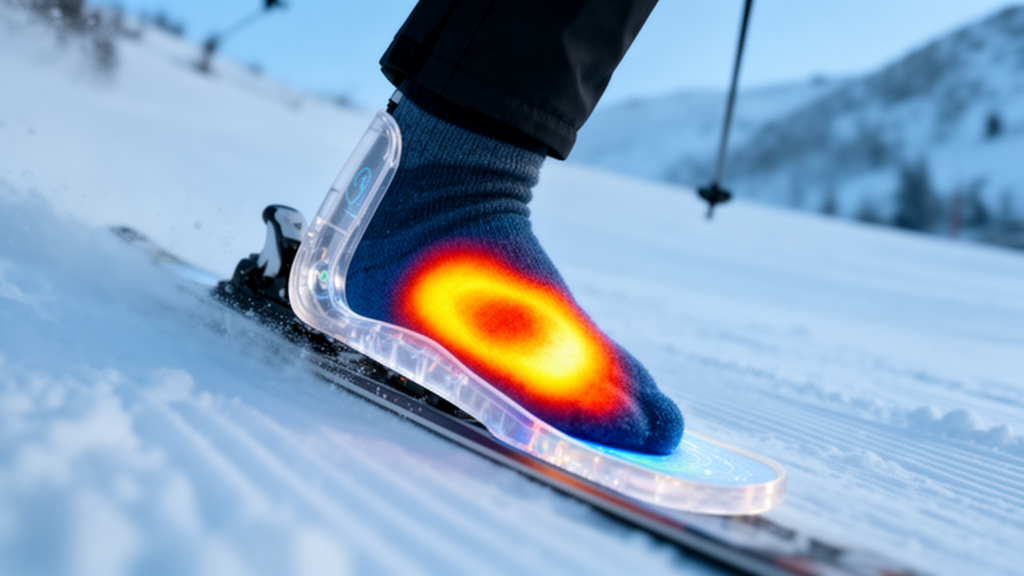
Plantar-pressure distributions recorded during simulator-based skiing training can help distinguish some levels of experience, according to a study of 27 participants using a deep-learning image classifier. The system separated beginner and novice participants with moderate discrimination, but it was less successful when identifying intermediate skiers. The results suggest that foot-pressure patterns contain information related to skiing experience, while also showing that the method is not yet a definitive assessment of proficiency.

Researchers transformed weight-shift measurements from the participants into images and used a YOLO11-based classifier to assign them to three operational groups: beginner, novice and intermediate. These groups were defined by self-reported skiing exposure rather than independently validated measures of technical ability. To test whether the model could classify participants it had not previously encountered, the team used leave-one-participant-out cross-validation, repeatedly training on data from some participants and testing on the excluded individual.

At the session level, the classifier achieved an accuracy of 0.667, a macro-F1 score of 0.489 and balanced accuracy of 0.524. These measures indicated moderate discrimination between the beginner and novice groups but limited generalization to the intermediate group. Because the study involved only 27 participants and based its experience labels on self-reported exposure, the findings establish feasibility rather than demonstrate a reliable general-purpose measure of skiing skill. The researchers also identified larger sample sizes and independently validated skiing-skill criteria as requirements before objective proficiency assessment.

The team next examined whether the classifier’s outputs changed over repeated simulator sessions. This analysis included six beginner participants. Fixed participant-dependent models were trained using only each participant’s baseline data and then applied to later sessions. Mixed-effects analyses provided tentative evidence of nonlinear changes in classifier outputs across repeated training, although the findings were sensitive to the model specification and substantial variation was observed among individuals.

Eigen-CAM visualization and biomechanical analysis offered additional information about the signals used by the classifier. The visualizations highlighted distributed features in the plantar-pressure images, while the biomechanical analyses indicated that the classifier responded to distributed plantar-pressure characteristics. Together, these analyses support the technical feasibility of extracting experience-related information from simulator-derived pressure data. They do not establish that training caused measurable improvements in real-world skiing performance, because the study took place in a simulator, included a small longitudinal sample and used self-reported experience to define groups. Overall, the study shows that plantar-pressure patterns can partially characterize skiing-experience groups and that classifier outputs may vary during repeated simulator training, but more data and independently validated skill criteria are needed before the approach can serve as an objective proficiency assessment.

Subject of Research: Deep-learning classification of skiing experience from plantar-pressure distributions measured in a ski simulator

Article Title: Exploring foot pressure patterns for skiing experience classification in a simulator-based environment

Article References: Ono, S., Atsumi, R., Kanai, H., & Koike, H. (2026). Exploring foot pressure patterns for skiing experience classification in a simulator-based environment. Scientific Reports. https://doi.org/10.1038/s41598-026-76341-y

Image Credits: AI Generated

DOI: 10.1038/s41598-026-76341-y

Keywords: plantar pressure, skiing experience, deep learning, YOLO11, ski simulator, cross-validation, biomechanics, skill classification, longitudinal training, Exploring, foot, pressure

Cite Scienmag News

Blake Davidson. (October 22, 2026). Plantar pressure patterns offer a partial window into skiing experience. Scienmag. https://scienmag.com/plantar-pressure-patterns-offer-a-partial-window-into-skiing-experience/

Blake Davidson. "Plantar pressure patterns offer a partial window into skiing experience." Scienmag, 22 October 2026, https://scienmag.com/plantar-pressure-patterns-offer-a-partial-window-into-skiing-experience/. Accessed 20 November 2026.

Blake Davidson. "Plantar pressure patterns offer a partial window into skiing experience." Scienmag. October 22, 2026. https://scienmag.com/plantar-pressure-patterns-offer-a-partial-window-into-skiing-experience/

Tags: biomechanicschallenges in classifying intermediate skierscross-validationcross-validation in skiing experience studiesdeep learningdeep learning classification of skiing experiencedistinguishing beginner and novice skiersExploringfootfoot-pressure image transformationlimitations of plantar pressure analysis for skill assessmentlongitudinal trainingmachine learning for skiing skill levelsplantar pressurePlantar pressure patterns in skiingPressurepressure distribution and skiing expertisesimulator-based skiing training analysisski simulatorskiing experienceskill classificationusing weight-shift measurements to evaluate skiing proficiencyYOLO-based skiing proficiency assessmentYOLO11
Share26Tweet16
Previous Post

Sacrococcygeal teratoma with mixed malignant transformation during TNF-α inhibitor therapy

Next Post

Interpretable machine learning for identifying cost drivers of inpatient traditional Chinese medicine services in a tertiary hospital in China

Related Posts

Child Care Pressures Spur Female Entrepreneurship Across Urban China via Reduced Compensation
Technology and Engineering

Child Care Pressures Spur Female Entrepreneurship Across Urban China via Reduced Compensation

November 20, 2026
Indirect Green Walls Cut Indoor Peak Temperatures in Arid Residential Building
Technology and Engineering

Indirect Green Walls Cut Indoor Peak Temperatures in Arid Residential Building

November 20, 2026
Copper Bismuth Oxide Nanostructures Deliver High Performance in Asymmetric Supercapacitor Electrodes
Technology and Engineering

Copper Bismuth Oxide Nanostructures Deliver High Performance in Asymmetric Supercapacitor Electrodes

November 20, 2026
Drone LiDAR Structural Data Combined with Point Cloud Color Improves Konjac Biomass Tracking
Agriculture

Drone LiDAR Structural Data Combined with Point Cloud Color Improves Konjac Biomass Tracking

November 20, 2026
New Model Tracks Competitive Information Spread in Social Networks
Technology and Engineering

New Model Tracks Competitive Information Spread in Social Networks

November 20, 2026
Fuzzy Queuing Model Optimizes Ship Traffic Scheduling at Three Gorges Project
Technology and Engineering

Fuzzy Queuing Model Optimizes Ship Traffic Scheduling at Three Gorges Project

November 20, 2026
Next Post
Interpretable machine learning for identifying cost drivers of inpatient traditional Chinese medicine services in a tertiary hospital in China

Interpretable machine learning for identifying cost drivers of inpatient traditional Chinese medicine services in a tertiary hospital in China

  • Mothers who receive childcare support from maternal grandparents show more optimized

    Mothers who receive childcare support from maternal grandparents show more parental warmth, finds NTU Singapore study

    27656 shares
    Share 11059 Tweet 6912
  • University of Seville Breaks 120-Year-Old Mystery, Revises a Key Einstein Concept

    1061 shares
    Share 424 Tweet 265
  • Bee body mass, pathogens and local climate influence heat tolerance

    682 shares
    Share 273 Tweet 171
  • Researchers record first-ever images and data of a shark experiencing a boat strike

    546 shares
    Share 218 Tweet 137
  • Groundbreaking Clinical Trial Reveals Lubiprostone Enhances Kidney Function

    531 shares
    Share 212 Tweet 133
Science

Embark on a thrilling journey of discovery with Scienmag.com—your ultimate source for cutting-edge breakthroughs. Immerse yourself in a world where curiosity knows no limits and tomorrow’s possibilities become today’s reality!

RECENT NEWS

  • Wild Custard Apple Leaf Size and Chemistry Vary Across Ghana Ecologies
  • Prospective i-PARiHS Framework Guides Heart Valve Program Redesign at Canadian Hospital
  • Zanubrutinib Outperforms Older BTK Inhibitors in B Cell Lymphoma Meta-Analysis
  • Child Care Pressures Spur Female Entrepreneurship Across Urban China via Reduced Compensation

Categories

  • Agriculture
  • Anthropology
  • Archaeology
  • Athmospheric
  • Biology
  • Biotechnology
  • Blog
  • Bussines
  • Cancer
  • Chemistry
  • Climate
  • Earth Science
  • Editorial Policy
  • Marine
  • Mathematics
  • Medicine
  • Pediatry
  • Policy
  • Psychology & Psychiatry
  • Science Education
  • Science News
  • Social Science
  • Space
  • Technology and Engineering

Subscribe to Blog via Email

Enter your email address to subscribe to this blog and receive notifications of new posts by email.

Join 5,151 other subscribers

© 2026 Scienmag - Science Magazine

Welcome Back!

Login to your account below

Forgotten Password?

Retrieve your password

Please enter your username or email address to reset your password.

Log In
No Result
View All Result
  • HOME
  • SCIENCE NEWS
  • CONTACT US

© 2026 Scienmag - Science Magazine

Discover more from Science

Subscribe now to keep reading and get access to the full archive.

Continue reading

