Undergraduate students in an evolutionary ecology course no longer need live plants, a greenhouse, or even a physical laboratory to take part in authentic scientific research.
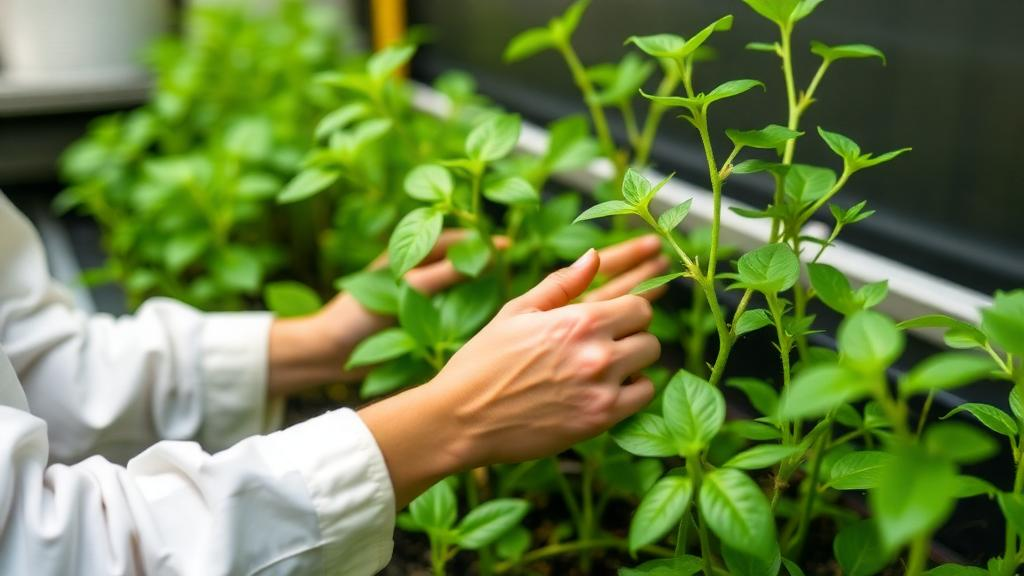
The research question at the heart of the course remained unchanged throughout the transition: how do mutations affect plant traits across different environments? Students in the original format grew and measured plants, collected trait data by hand, and analyzed the results as part of a genuine research program. In the digital version, students work with plant images instead of living specimens, using widely available software to gather standardized measurements and test hypotheses about mutation effects on phenotype. The authors emphasize that the biological content, the replicated experimental design, and the act of generating new knowledge all survived the migration from bench to screen.
A central conceptual contribution of the paper is a precise definition. The authors define a DCURE as a CURE with a substantial digital component in data collection and data analysis, while still meeting the established criteria for a CURE laid out by Auchincloss and colleagues in CBE Life Sciences Education in 2014. Those criteria include the use of scientific practices, data analysis, collaboration, and the creation of knowledge that is new beyond the classroom. Crucially, the authors draw a line that is often blurred in discussions of pandemic-era teaching: digital is not the same as online. Digital refers to the use of software and computational tools, whereas online refers to the mode of course delivery. A DCURE, they argue, can therefore be run in person, in a hybrid arrangement, or fully online, a distinction with practical consequences for instructors designing courses.
The transition was driven initially by necessity. When the COVID-19 pandemic closed laboratories and limited access to physical research spaces, faculty across the network had to find ways for students to continue learning and doing research without plants on the bench. Rather than treating the digital pivot as a temporary emergency measure, the team reframed it as an opportunity to develop an accessible, long-term approach in STEM education. Through an iterative refinement process, the student experience was shifted from live plants in the classroom into a plant image-based format, and the resulting model was documented in enough detail that other educators can reproduce it.
The technical core of the DCURE is deliberately modest in its software requirements. Spreadsheet software in the form of Excel supports data organization, and in more upper-division courses the statistical environment R is integrated for analysis. This choice of accessible, low-cost or no-cost tools matters for equity: students at institutions without specialized equipment can perform the same measurements as students at well-resourced research universities, provided they have computers and internet access. The authors report that the integration of these tools facilitated accurate and efficient data collection and analysis, and that students demonstrated adaptability and technical proficiency, suggesting in the authors’ observation that software environments can provide research experiences comparable to traditional laboratory CUREs.
The effort took place within unPAK, a collaborative network of faculty who run undergraduate research on the effects of mutations on phenotypes in plants. The networked structure of the project shaped both the challenges and the solutions. Because instructors at different institutions implemented the course simultaneously, the team invested heavily in instructor support. Workshops were used to communicate instructional materials and resources, and a community of practice was established so that instructors could share solutions and refine the curriculum together. According to the authors, this support structure provided a strong foundation for implementing the DCURE and helped ensure that the quality of research, instruction, and student engagement remained high across participating campuses.
The transition was not frictionless. The authors are candid about the difficulties encountered along the way. Technical problems, including software compatibility issues and the learning curve associated with new digital tools, required ongoing adjustments and support from both the instructional team and the students. Keeping students motivated and engaged in a computer-based environment demanded innovative instructional strategies and continuous feedback mechanisms. Interestingly, the authors frame these difficulties not as failures of the digital format but as an inherent part of scientific research itself, noting that they resemble the experiences of students and instructors embarking on any new research project or unfamiliar research area.
One of the strongest arguments the authors make for the DCURE format is accessibility. Traditional CUREs, for all their documented benefits in broadening participation in science, still require something that many students lack: physical access to a laboratory, to organisms, or to a research-active campus. The digital model reduces barriers associated with laboratory access, resource limitations, and geographic constraints, particularly when a network of faculty collaborates across institutions. The authors point out that this flexibility is especially valuable for students at institutions with limited facilities and for those facing geographical, health, or logistical constraints that prevent in-person research participation, citing reports from the National Academies of Sciences, Engineering, and Medicine and related analyses of levers for change in undergraduate education.
The authors also position the specific techniques developed during the transition as broadly transferable. Software-based standardized image collection and image analysis using widely available programs such as ImageJ, they argue, set a useful standard for research methodologies with students across the STEM and especially the biology curriculum, and they cite prior applications of image-based measurement in plant science to support the approach. Because these techniques are scalable, they can be adapted to research questions well beyond plant evolutionary ecology, from any project in which morphology captured in images can be quantified. At the same time, the authors caution that the approaches taken and the challenges encountered will likely vary across different areas of STEM inquiry, so the model should be understood as a framework for refinement rather than a fixed recipe.
The broader significance the authors claim for the work is about the durability of the CURE model itself. Their conclusion is that the core principles of CUREs, namely experimental practice, data analysis, collaboration, and the creation of new knowledge, can be implemented in a networked, digital format without losing their identity. The DCURE they describe demonstrates, in their assessment, the potential for learning about evolutionary mechanisms through the analysis of digital images in a replicated experiment. Supporting materials reinforce this aim of reproducibility: all data and instructional materials generated or analyzed in the study are publicly available through the unPAK project website, and prior live-plant materials are preserved in appendices published with the Journal of Microbiology and Biology Education. For educators wondering whether a research course can survive the loss of its laboratory, the answer offered here is a qualified yes, provided that the digital tools are chosen carefully, the instructors are supported continuously, and the scientific questions are allowed to remain the center of the course.
Subject of Research: Conversion of a plant evolutionary ecology undergraduate research course into a digital, image-based research experience
Article Title: Transitioning a plant-based CURE into a DCURE: digital innovation in evolutionary ecology education
Article References: Jensen-Ryan, D., Bisner, A., Chang, C. C., Callahan, H. S., Disbrow, C. M., Enders, T., Geary, M., Lopez, L., Lowe, L. L., Weng, M.-L., Wolyniak, M. J., Wyse, S. A., Rutter, M. T., Strand, A. E., & Murren, C. J. (2026). Transitioning a plant-based CURE into a DCURE: digital innovation in evolutionary ecology education. Developmental Biology Advances, 17(1), Article 7. https://doi.org/10.1186/s13227-026-00261-1
Image Credits: AI Generated
DOI: 10.1186/s13227-026-00261-1
Keywords: CURE, DCURE, undergraduate research, evolutionary ecology, STEM education, ImageJ, digital learning, plant biology, curriculum design, course-based research, Arabidopsis, educational accessibility
Cite Scienmag News
Gavin Prescott. (October 29, 2026). Plant Research Courses Go Digital as Educators Redesign Undergraduate Science. Scienmag. https://scienmag.com/plant-research-courses-go-digital-as-educators-redesign-undergraduate-science/
Gavin Prescott. "Plant Research Courses Go Digital as Educators Redesign Undergraduate Science." Scienmag, 29 October 2026, https://scienmag.com/plant-research-courses-go-digital-as-educators-redesign-undergraduate-science/. Accessed 30 October 2026.
Gavin Prescott. "Plant Research Courses Go Digital as Educators Redesign Undergraduate Science." Scienmag. October 29, 2026. https://scienmag.com/plant-research-courses-go-digital-as-educators-redesign-undergraduate-science/