Thursday, October 29, 2026
Science
No Result
View All Result
  • Login
  • HOME
  • SCIENCE NEWS
  • CONTACT US
  • HOME
  • SCIENCE NEWS
  • CONTACT US
No Result
View All Result
Scienmag
No Result
View All Result
Home Science News

Pipe placement at a sharp bend exit reshapes downstream scour under unsteady flows

October 27, 2026
in Science News
Denise Maddox
By Denise Maddox Scienmag Editorial Profile - Mechanical Engineering
Reading Time: 3 mins read
0
Pipe placement at a sharp bend exit reshapes downstream scour under unsteady flows

Pipe placement at a sharp bend exit reshapes downstream scour under unsteady flows

65
SHARES
587
VIEWS
Share on FacebookShare on Twitter
ADVERTISEMENT

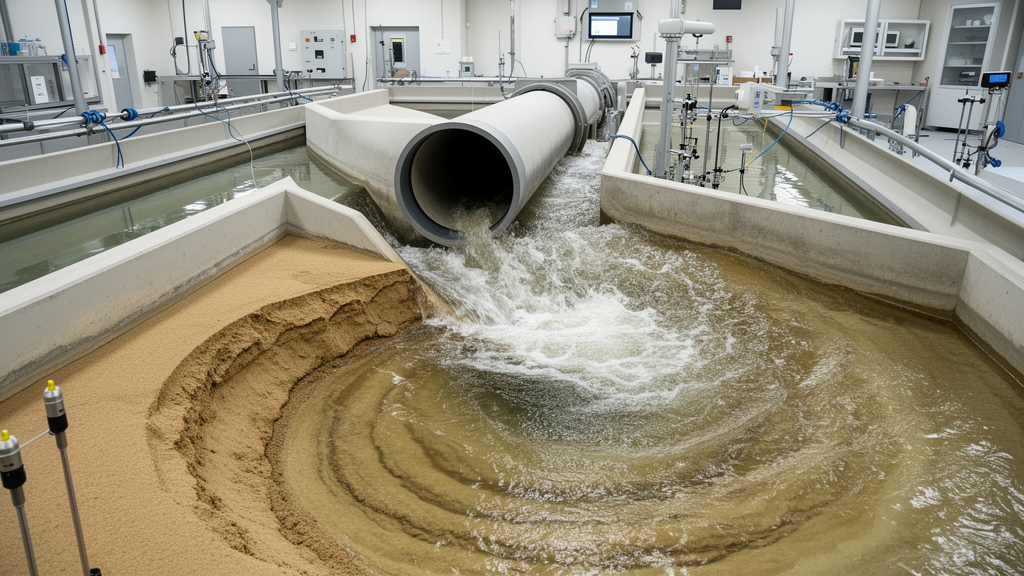
Scour around pipes that cross rivers is a major threat to the stability of these structures. Pipe failure, and the serious damage and life-threatening cutoff of vital water flows that can follow, are possible outcomes when the bed around a pipeline erodes. A new laboratory study examined what happens when a pipe is installed at the exit of a 180-degree sharp bend, focusing on how the complex flow leaving the bend shapes scour and deposition in the straight channel reach downstream.

Although many studies have looked at scour around pipes in straight channels and in bends, changes in bed topography along the straight reach downstream of a sharp bend, which is affected by the complicated flow pattern issuing from the bend, have received less attention. The researchers, led by Elaheh Barzegarpisheh with Mohammad Vaghefi and Seyed Hamed Meraji, ran flume experiments in which a pipe was placed perpendicular to the flow direction at the bend exit.

The experiments covered three pipe-installation conditions relative to the initial bed level: level with the bed, above the bed, and buried. Each configuration was tested under four different ratios of hydrograph peak timing to flood duration, so that the role of flow unsteadiness could be evaluated alongside the effect of pipe position.

To compare the cases, the team measured and analyzed the extent of scour-hole development, the maximum scour depth, the maximum deposition height, and the overall changes in bed topography in the straight reach downstream of the bend. The main focus of the research was identifying how the scour hole developed and how the maximum scour depth varied with the pipe position and the hydrograph parameters.

The findings showed that the most critical case of bed topography variations under the influence of the pipe occurred when the pipe sat level with the bed. Altering the pipe level from bed level to buried levels decreased the maximum scour and sedimentation by 37.1 percent and 38.0 percent, respectively. In other words, burying the pipe substantially reduced both the hole carved into the bed and the mound of sediment deposited downstream.

Changing the unsteady-flow parameters, by contrast, had less effect on scour reduction than the pipe’s vertical position relative to the initial bed level. This suggests that, from both an operational and hydraulic perspective, designers and engineers have a powerful lever in choosing where the pipe sits, and that placing the pipe outside the bend would be a preferable option.

The study’s authors note that the results can be used to identify the most suitable pipe installation condition in the straight reach downstream of sharp bends, to reduce scour risk, to predict bed changes, and to improve the design and protection of pipelines in river engineering projects. Because the work is based on laboratory flume experiments under controlled hydrographs, applying the specific percentages to field conditions will require care, but the relative ranking of pipe positions offers clear practical guidance.

For river engineers, the message is that the interaction between bend outflow and a crossing pipe does not stop at the bend exit: the disturbed flow continues to reshape the downstream bed, and the pipe’s elevation determines how severe that reshaping becomes. Positioning the pipe below the initial bed level emerged as the configuration that most reduced scour and sedimentation, while the timing of the flood peak within the hydrograph played a secondary role in moderating the bed changes.

Subject of Research: Experimental study of how pipe installation at the exit of a sharp bend affects scour and bed topography downstream under unsteady flow

Article Title: Investigation of the effect of outflow from a sharp bend, influenced by a pipe installed at the bend exit, on the scour pattern in the downstream straight reach under unsteady flow conditions

Article References: Barzegarpisheh, E., Vaghefi, M., & Meraji, S. H. (2026). Investigation of the effect of outflow from a sharp bend, influenced by a pipe installed at the bend exit, on the scour pattern in the downstream straight reach under unsteady flow conditions. PLOS One, 21(10), e0360062. https://doi.org/10.1371/journal.pone.0360062

Image Credits: AI Generated

DOI: 10.1371/journal.pone.0360062

Keywords: scour, river hydraulics, pipe crossing, sharp bend, unsteady flow, bed topography, sedimentation, flume experiments, river engineering, pipeline protection, Investigation, effect

Cite Scienmag News

Denise Maddox. (October 27, 2026). Pipe placement at a sharp bend exit reshapes downstream scour under unsteady flows. Scienmag. https://scienmag.com/pipe-placement-at-a-sharp-bend-exit-reshapes-downstream-scour-under-unsteady-flows/


Denise Maddox. "Pipe placement at a sharp bend exit reshapes downstream scour under unsteady flows." Scienmag, 27 October 2026, https://scienmag.com/pipe-placement-at-a-sharp-bend-exit-reshapes-downstream-scour-under-unsteady-flows/. Accessed 29 October 2026.

Denise Maddox. "Pipe placement at a sharp bend exit reshapes downstream scour under unsteady flows." Scienmag. October 27, 2026. https://scienmag.com/pipe-placement-at-a-sharp-bend-exit-reshapes-downstream-scour-under-unsteady-flows/

Tags: bed topographydownstream scour around pipelinesEffecteffects of pipe installation height on scoureffects of sharp bend hydraulics on downstream sediment depositionexperimental study of pipe placement configurationsflow dynamics and scour development under unflow-induced bed erosion in river channelsflume experimentsimpact of unsteady flows on pipeline stabilityinfluence of flow unsteadiness on bed topographyInvestigationlaboratory flume experiments on scour patternspipe crossingPipe placement at sharp bend exitpipeline failure due to bed erosion in river bendspipeline protectionriver engineeringriver hydraulicsscourscour risk assessment for river-crossing pipessedimentationsharp bendunsteady flow
Share26Tweet16
Previous Post

Millions in England May Have Undiagnosed Hypertension, Study Estimates

Next Post

AI-Designed Gene Editor Helps Rice Resist Bacterial Blight

Related Posts

New Federated Learning Aggregation Rules Keep AI Training Stable When Client Data Diverge
Technology and Engineering

New Federated Learning Aggregation Rules Keep AI Training Stable When Client Data Diverge

October 29, 2026
Faith-based practices linked to mental health literacy and psychiatric morbidity in Türkiye
Psychology & Psychiatry

Faith-based practices linked to mental health literacy and psychiatric morbidity in Türkiye

October 29, 2026
Brain activity changes in transgender women with gender dysphoria linked to childhood trauma, genes and neurotransmitters
Medicine

Brain activity changes in transgender women with gender dysphoria linked to childhood trauma, genes and neurotransmitters

October 29, 2026
Oral health problems common during active cancer treatment, survey finds
Cancer

Oral health problems common during active cancer treatment, survey finds

October 29, 2026
Plants Can Pull Carbon From Soil Through Their Roots, Tracer Study Shows
Earth Science

Plants Can Pull Carbon From Soil Through Their Roots, Tracer Study Shows

October 29, 2026
Macrophages Talk to Tumor Cells Through SPP1-CD44 to Foster Chemotherapy Tolerance in Nasopharyngeal Carcinoma
Cancer

Macrophages Talk to Tumor Cells Through SPP1-CD44 to Foster Chemotherapy Tolerance in Nasopharyngeal Carcinoma

October 29, 2026
Next Post
AI-Designed Gene Editor Helps Rice Resist Bacterial Blight

AI-Designed Gene Editor Helps Rice Resist Bacterial Blight

  • Mothers who receive childcare support from maternal grandparents show more optimized

    Mothers who receive childcare support from maternal grandparents show more parental warmth, finds NTU Singapore study

    27656 shares
    Share 11059 Tweet 6912
  • University of Seville Breaks 120-Year-Old Mystery, Revises a Key Einstein Concept

    1061 shares
    Share 424 Tweet 265
  • Bee body mass, pathogens and local climate influence heat tolerance

    682 shares
    Share 273 Tweet 171
  • Researchers record first-ever images and data of a shark experiencing a boat strike

    546 shares
    Share 218 Tweet 137
  • Groundbreaking Clinical Trial Reveals Lubiprostone Enhances Kidney Function

    531 shares
    Share 212 Tweet 133
Science

Embark on a thrilling journey of discovery with Scienmag.com—your ultimate source for cutting-edge breakthroughs. Immerse yourself in a world where curiosity knows no limits and tomorrow’s possibilities become today’s reality!

RECENT NEWS

  • New Federated Learning Aggregation Rules Keep AI Training Stable When Client Data Diverge
  • Faith-based practices linked to mental health literacy and psychiatric morbidity in Türkiye
  • Brain activity changes in transgender women with gender dysphoria linked to childhood trauma, genes and neurotransmitters
  • Oral health problems common during active cancer treatment, survey finds

Categories

  • Agriculture
  • Anthropology
  • Archaeology
  • Athmospheric
  • Biology
  • Biotechnology
  • Blog
  • Bussines
  • Cancer
  • Chemistry
  • Climate
  • Earth Science
  • Editorial Policy
  • Marine
  • Mathematics
  • Medicine
  • Pediatry
  • Policy
  • Psychology & Psychiatry
  • Science Education
  • Science News
  • Social Science
  • Space
  • Technology and Engineering

Subscribe to Blog via Email

Enter your email address to subscribe to this blog and receive notifications of new posts by email.

Join 5,151 other subscribers

© 2025 Scienmag - Science Magazine

Welcome Back!

Login to your account below

Forgotten Password?

Retrieve your password

Please enter your username or email address to reset your password.

Log In
No Result
View All Result
  • HOME
  • SCIENCE NEWS
  • CONTACT US

© 2025 Scienmag - Science Magazine

Discover more from Science

Subscribe now to keep reading and get access to the full archive.

Continue reading