


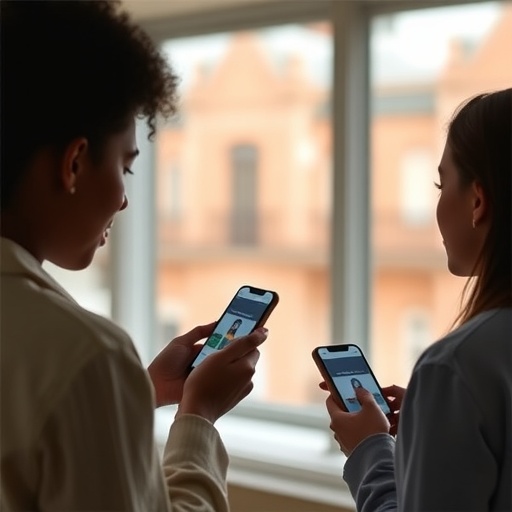
A new pilot study of high school students in New Jersey is drawing attention to an increasingly visible intersection of adolescent health, beauty culture and social media: the possibility that online engagement is helping shape how frequently young people use personal care products, and therefore how often they may encounter the chemicals those products contain. Published in the Journal of Exposure Science & Environmental Epidemiology, the study by Eskenazi? Wait, authors Barrett, Getz, Whitted et al. examines personal care routines among adolescents and explores whether patterns of social media use are linked to product exposure during a stage of rapid biological development.
Personal care products include far more than cosmetics. Shampoos, conditioners, soaps, lotions, deodorants, sunscreens, fragrances, hair-straightening products, makeup and skincare preparations can all contain substances used to preserve, scent, stabilize or alter the texture of a formula. Some ingredients are classified as endocrine-disrupting chemicals because they can interfere with hormonal signaling in laboratory or epidemiological research. Commonly studied examples include certain phthalates, parabens, phenols and fragrance-related compounds. Exposure does not automatically mean harm, but repeated daily use can produce a pattern of frequent, low-level contact that researchers consider important to measure, particularly in children and teenagers.
Adolescence is a scientifically significant period for exposure research because the body is undergoing substantial hormonal, metabolic and developmental change. The endocrine system regulates puberty, reproduction, growth, metabolism and many aspects of brain development. During this period, external chemicals that interact with hormonal pathways may be more consequential than they would be at another point in life, although the effects of any individual ingredient depend on dose, duration, route of exposure and biological susceptibility. Personal care products can create several exposure routes at once: chemicals may be absorbed through the skin, inhaled from sprays or powders, transferred from hands to the mouth, or released into indoor air and household dust.
The New Jersey pilot study focuses on a modern driver of product use that is difficult to capture through traditional exposure surveys. Social media platforms have transformed the way adolescents encounter beauty advice, product reviews and grooming trends. Short videos can make a multi-step skincare routine appear normal, necessary and attainable within seconds. Influencers and advertisers may also blur the boundary between personal recommendation and paid promotion, while algorithmic systems repeatedly deliver content that reflects a user’s previous interests. The result can be rapid circulation of trends, from specialized acne products to cosmetic fragrances and elaborate haircare routines, even when users have limited information about ingredient safety or product necessity.
The researchers’ central question is not simply how many products teenagers use, but whether social media engagement is associated with the intensity and variety of those routines. A pilot study of this kind is designed to identify patterns, test questionnaires and determine whether a larger investigation is feasible. It can help researchers learn which products adolescents remember using, how often they apply them, where they obtain information about them and whether different forms of online activity correspond with different exposure profiles. Because the study is exploratory, its findings should be interpreted as evidence of possible relationships rather than definitive proof that social media causes increased product use.
That distinction is essential in environmental epidemiology. A cross-sectional study, in which information is collected at one point in time, can reveal that two behaviors occur together but generally cannot establish which came first. Teenagers who already have a strong interest in cosmetics may seek out more social media content, while social media content may encourage them to buy and apply more products. Other factors, including age, gender, household income, peer influence, cultural practices, skin conditions and access to retail products, could affect both online behavior and personal care routines. Researchers therefore use pilot data to identify potential confounding variables that should be measured and controlled in future studies.
The study also highlights a technical challenge in exposure assessment: product use is not the same as chemical dose. Two adolescents may report using “lotion” every day, yet the amount applied, the product formulation, the area of skin covered and the specific ingredients may differ substantially. Exposure scientists may combine questionnaires with product inventories, ingredient databases, chemical analysis or biological monitoring. Biomonitoring can involve measuring metabolites in urine, for example, but such measurements often reflect recent exposure and may not identify the exact product responsible. A carefully designed study must therefore connect behavior, product composition and biological measurements without overstating what any single source of data can show.
The findings arrive amid growing concern about the normalization of adult-oriented skincare routines among younger users. Dermatologists have warned that unnecessary or aggressive use of active ingredients can irritate developing skin, damage the skin barrier or trigger allergic reactions. From an environmental health perspective, repeated product use may also increase cumulative contact with fragrance compounds, preservatives and plastic-associated chemicals. This does not mean that adolescents should abandon basic hygiene or avoid all cosmetics. Rather, the emerging research supports practical strategies such as using fewer products when possible, selecting fragrance-free formulations for sensitive skin, reading ingredient labels and treating influencer advice as marketing or opinion rather than medical guidance.
For researchers, the New Jersey results may provide a foundation for larger and more detailed studies across different schools and communities. Future work could track students over time to determine whether changes in social media exposure precede changes in product use. It could also compare platform types, distinguish passive viewing from active participation, record sponsored content exposure and examine whether targeted advertising influences purchasing decisions. Repeated urine sampling or other biomonitoring approaches could help estimate whether shifts in personal care habits are reflected in internal chemical concentrations. Researchers may additionally investigate how schools, parents, healthcare providers and platforms can deliver reliable information without stigmatizing normal adolescent interest in appearance.
The broader message is that digital culture has become part of the exposure environment. Social media is not itself a chemical source, but it can influence which products people buy, how often they use them and how quickly routines spread. By bringing online behavior into the study of environmental health, the pilot research points toward a more realistic model of adolescent exposure—one that combines biology, consumer products, advertising, peer networks and technology. As beauty trends move at viral speed, scientists are beginning to ask a precise public-health question: when a routine becomes popular online, what else is being absorbed along with it?
Cite Scienmag News
Ophelia Keating. (August 17, 2026). Pilot Study Examines Personal Care Use, Social Media Engagement Among NJ Students. Scienmag. https://scienmag.com/pilot-study-examines-personal-care-use-social-media-engagement-among-nj-students/
Ophelia Keating. "Pilot Study Examines Personal Care Use, Social Media Engagement Among NJ Students." Scienmag, 17 August 2026, https://scienmag.com/pilot-study-examines-personal-care-use-social-media-engagement-among-nj-students/. Accessed 4 September 2026.
Ophelia Keating. "Pilot Study Examines Personal Care Use, Social Media Engagement Among NJ Students." Scienmag. August 17, 2026. https://scienmag.com/pilot-study-examines-personal-care-use-social-media-engagement-among-nj-students/


