


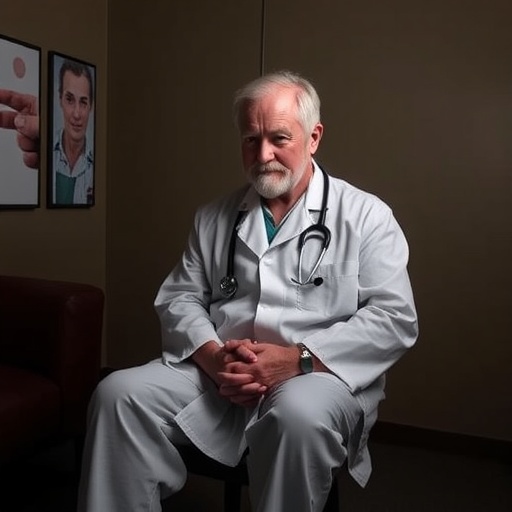
In contemporary healthcare discourse, the pivotal role of physicians is being revisited through the lens of humanism and empathy. In their latest article, Marsaa and Kalluri argue with powerful conviction that the essence of a physician’s duty transcends medical expertise; it is fundamentally entrenched in the profound commitment to alleviating suffering caused by illness. The notion that healthcare is not merely a science but a fundamentally human endeavor is gaining traction, prompting an examination of how compassion and ethical considerations shape patient care.
For centuries, the perception of healthcare has often been dominated by technological advancements and strict adherence to clinical protocols. While these elements are undeniably vital, the authors elucidate a glaring oversight in contemporary practice: the emotional and psychological dimensions of suffering. In an era defined by rapid medical innovations, the soul of medicine—the compassion that binds doctor and patient—must not be relegated to the background. The authors contend that focusing solely on symptoms and treatments is a disservice to patients, as it neglects the holistic view of health that encompasses emotional and psychological well-being.
The healthcare industry, as Marsaa and Kalluri emphasize, has witnessed a paradigm shift towards an increasingly transactional approach to patient care. This approach not only prioritizes efficiency but also commodifies health, often leading to interactions that feel impersonal and detached. In this clinical landscape, the critical inquiry arises: how can physicians reconnect with the inherent humanity of their practice? The authors suggest that this connection is forged through active listening and open discourse, allowing healthcare professionals to genuinely perceive and respond to the multifaceted needs of their patients.
At the heart of this conversation is the recognition that suffering is not merely a byproduct of illness but a profound experience that is often amplified by feelings of isolation and fear. For many patients, receiving a diagnosis can be disorienting and overwhelming, eliciting emotional responses that may not be adequately addressed within the confines of traditional medical consultations. The authors advocate for a re-examination of the physician-patient relationship to foster an environment where patients feel safe to express their anxieties and vulnerabilities.
Moreover, Marsaa and Kalluri highlight the importance of empathy in medical practice. They maintain that empathy is not simply an emotional response but a skill that can and should be cultivated among healthcare professionals. Evidence suggests that empathetic interactions have significant positive impacts on patient outcomes, including adherence to treatment regimens and overall satisfaction with care. The authors call for educational reforms that embed empathy training within medical curricula, thus equipping future generations of physicians with the necessary tools to address both emotional and physical suffering.
Technological advancements, while groundbreaking, pose further challenges to the humanistic approach that Marsaa and Kalluri champion. Telemedicine and artificial intelligence, though they provide accessibility and efficiency, can inadvertently strip away the personal connection that is vital in patient care. The authors argue that as the healthcare sector evolves with technology, the human touch must remain a focal point of patient interactions. They advocate for a balanced approach where technology complements, rather than replaces, the empathetic elements of treatment.
Furthermore, the pursuit of humanistic medicine is intricately linked to the concept of autonomy and shared decision-making. Patients increasingly desire to engage actively in their own care, seeking to understand their conditions and weighing their options collaboratively with physicians. This empowerment not only enhances patient satisfaction but also reinforces trust within the physician-patient relationship. Marsaa and Kalluri emphasize that embracing shared decision-making can substantially improve the therapeutic alliance and result in better health outcomes.
The authors also address potential barriers to implementing these humanistic approaches within healthcare systems. Structural constraints—such as time constraints during consultations and the pressures of insurance reimbursement models—can hinder physicians from providing the compassionate care they aspire to deliver. The healthcare community must advocate for systemic changes that facilitate environments where physicians can prioritize human connection without sacrificing the quality of care.
As the discourse around humanism in healthcare evolves, there is a growing recognition of the potential for change driven not just by physicians, but by the patients themselves. Advocacy groups and patient organizations are increasingly voicing their needs, demanding policies that promote humane treatment and compassionate care. The authors encourage physicians to actively listen to these voices and engage with patient advocates to reshape the healthcare narrative.
In conclusion, Marsaa and Kalluri present a compelling case for the reclamation of humanity within healthcare. Their call to prioritize alleviating suffering above all else resonates deeply within the current landscape of medical practice. As the industry grapples with rapid innovations and shifts towards a more clinical approach, this pivotal reminder serves as a clarion call for physicians to embody compassion, empathy, and understanding. The challenge lies not only in recognizing these values but in embedding them within the very fabric of the healthcare system for future generations.
Ultimately, the authors envision a future where the physician’s role is not merely a technician of medicine but a beacon of hope and empathy amidst the trials of illness. By reclaiming the essence of humanity in healthcare, the medical community can forge a path toward a more compassionate, patient-centered approach. This vision is not just an ideal; it is a necessity in the pursuit of better health outcomes and improved quality of life for all individuals navigating the complex realities of illness.
Marsaa, K., Kalluri, M. Reclaiming Humanity in Healthcare—The First and Most Important Role for Physicians Is to Relieve Suffering Associated with Illness.
J GEN INTERN MED (2025). https://doi.org/10.1007/s11606-025-09749-3
Cite Scienmag News
Ophelia Keating. (August 31, 2025). Physicians’ Primary Duty: Easing Patient Suffering. Scienmag. https://scienmag.com/physicians-primary-duty-easing-patient-suffering/
Ophelia Keating. "Physicians’ Primary Duty: Easing Patient Suffering." Scienmag, 31 August 2025, https://scienmag.com/physicians-primary-duty-easing-patient-suffering/. Accessed 3 September 2026.
Ophelia Keating. "Physicians’ Primary Duty: Easing Patient Suffering." Scienmag. August 31, 2025. https://scienmag.com/physicians-primary-duty-easing-patient-suffering/


