

Tuesday, October 20, 2026
Science
No Result
View All Result
  • Login
  • HOME
  • SCIENCE NEWS
  • CONTACT US
  • HOME
  • SCIENCE NEWS
  • CONTACT US
No Result
View All Result
Scienmag
No Result
View All Result
Home Science News Medicine

Physician’s narrative essay links conversations about patients’ hobbies to more human hospital care

October 20, 2026
in Medicine
Ophelia Keating
By Ophelia Keating Scienmag Editorial Profile - Health Services Research
Reading Time: 3 mins read
0
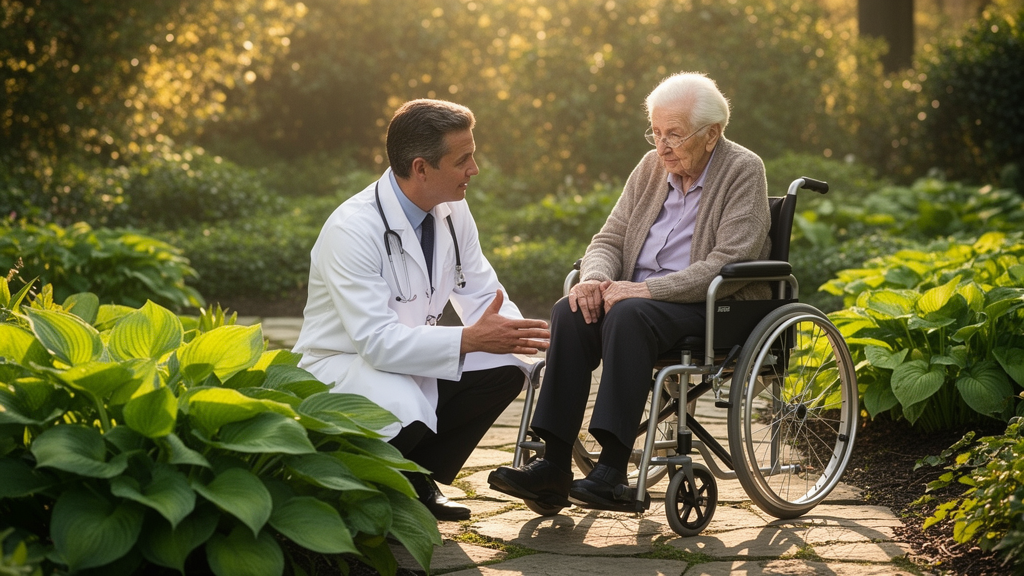
How a Simple Question About Hostas Is Changing the Way Doctors See Their Patients

How a Simple Question About Hostas Is Changing the Way Doctors See Their Patients

65
SHARES
587
VIEWS
Share on FacebookShare on Twitter
ADVERTISEMENT

A personal narrative essay in the Journal of General Internal Medicine describes how one physician’s conversations with hospitalized patients about gardening and other interests changed the way she approached clinical work. Written by Laura B. Vater, MD, MPH, the “Healing Arts” essay presents an individual experience rather than a clinical study, and it reports no methods, sample, comparative analysis or measured patient outcomes.

Vater recounts arriving for a Saturday fellowship round after an overnight stretch of answering calls. In a windowless team room, she reviewed reports, vital signs, laboratory results and orders, describing the patients behind the electronic records as feeling like “a distant echo.” The account centers on Lucy, a patient admitted for multiple myeloma treatment and preparing for transplant, whose blood counts were improving.

When Vater asked Lucy how she spent her time, Lucy answered, “In my garden.” The response led Vater to notice the hostas in Lucy’s room and to reflect on the wide-leafed shade plants that had lined the perimeter of her father’s garden. Lucy had cultivated numerous varieties, including plants with evergreen centers and celery-yellow edges, crimson stalks and tall lavender blooms expected later in the season.

The exchange also prompted Vater to describe her own family history with gardening. She recalled planting tomatoes, green beans and peppers with her father during summers in northern Minnesota, picking raspberries transplanted from his childhood home and boiling them into jam. A later visit showed a larger garden with a greenhouse, a caged blueberry patch near the woodpile and more space for growing produce.

Lucy asked what Vater enjoyed beyond her work. Instead of deflecting, Vater talked about writing a book, observing spring shrubs and changing skies, and expanding a small raised-bed garden. Lucy replied, “I have no doubt you’ll do it. One story at a time, one plant at a time.” Vater later added a sentence about hostas to Lucy’s progress note and concluded that the time spent talking with patients had more texture and color than the two-dimensional aspects of her paperwork.

During Lucy’s hospitalization, Vater said she looked forward to their conversations. At discharge, Lucy was already planning to add more hostas to her yard. A month later, when Vater visited her parents, she walked along an area where hostas covered the ground, noticing differences in leaf size and shape that she had not previously appreciated. She hoped Lucy would be well enough to enjoy her garden.

Vater began asking more patients about their hobbies and found that each person had interests beyond illness and treatment. The essay offers examples including making art from bottle caps, taking part in historical reenactments, painting landscapes, decorating homes with holiday villages, searching for gemstones, visiting decommissioned Navy ships, repairing sailboats and reading the complete works of Edgar Allan Poe. These examples remain the author’s observations; the essay does not quantify how often such conversations occurred or evaluate their effects.

The narrative also acknowledges that knowing patients as people does not remove the urgency, long hours or grief associated with medical practice. In some cases, Vater wrote, greater knowledge intensified the loss when a patient died. Nevertheless, she said that learning about patients’ lives grounded her and helped sustain her capacity to continue caring for them. She compared medicine with gardening: tending gently, listening closely and noticing what might otherwise be overlooked.

Because this is a first-person essay rather than a research report, its scope is limited to the author’s experience and the patients she discusses. It provides no protocol, intervention, control condition, statistical analysis, follow-up period or evidence that asking about hobbies changes clinical outcomes. Its reported value is reflective: the author describes how personal questions helped her see hospitalized people as individuals rather than only through diagnoses and data, closing with a memory of gathering the season’s last raspberries with her father and tasting their sweet, tangy flesh.

Subject of Research: A physician’s narrative essay on personal conversations and human connection during hospital care

Article Title: Hostas

Article References: Vater, L. B. (2026). Hostas. Journal of General Internal Medicine. https://doi.org/10.1007/s11606-026-10230-y

Image Credits: AI Generated

DOI: 10.1007/s11606-026-10230-y

Keywords: personal narrative essay, patient experience, humanistic medicine, hospital care, clinical relationships, gardening narrative, physician reflections, patient identity, Hostas, scientific research

Cite Scienmag News

Ophelia Keating. (October 20, 2026). Physician’s narrative essay links conversations about patients’ hobbies to more human hospital care. Scienmag. https://scienmag.com/physicians-narrative-essay-links-conversations-about-patients-hobbies-to-more-human-hospital-care/


Ophelia Keating. "Physician’s narrative essay links conversations about patients’ hobbies to more human hospital care." Scienmag, 20 October 2026, https://scienmag.com/physicians-narrative-essay-links-conversations-about-patients-hobbies-to-more-human-hospital-care/. Accessed 20 October 2026.

Ophelia Keating. "Physician’s narrative essay links conversations about patients’ hobbies to more human hospital care." Scienmag. October 20, 2026. https://scienmag.com/physicians-narrative-essay-links-conversations-about-patients-hobbies-to-more-human-hospital-care/

Tags: clinical relationshipsemotional connection in healthcareenhancing patient well-being through conversationsgardening narrativehealing through hobbieshospital careHostashumanistic medicinehumanizing hospital careimpact of personal interests on medical practiceintegrating patient hobbies into clinical carenarrative medicine in internal medicinepatient experiencepatient identitypatient-centered carepersonal narrative essayphysician reflectionsphysician reflections on patient interactionsphysician-patient communicationrole of gardening and hobbies in healingScientific Researchstorytelling in medical practice
Share26Tweet16
Previous Post

Perceived balance in healthcare resources strongly linked to satisfaction among rural residents in southern Anhui

Next Post

Small single-center study describes dinutuximab beta maintenance for high-risk neuroblastoma

Related Posts

Gram Stain of Aspirated Fluid Helps Emergency Doctors Rule In Flesh-Eating Infections
Medicine

Gram staining of infectious fluid shows high specificity for necrotizing soft tissue infection in a cohort study with prospective validation

October 20, 2026
Fairness Beats Facilities: What Drives Healthcare Satisfaction in Rural China’s Mountains
Medicine

Perceived balance in healthcare resources strongly linked to satisfaction among rural residents in southern Anhui

October 20, 2026
Satisfied Patients Recover Better: Nursing Care Quality Linked to Postoperative Healing
Medicine

Nursing care satisfaction linked to postoperative recovery in 131-patient cross-sectional study

October 20, 2026
China’s Disabled Elderly Still Miss Out on Home Care as Wealth Shapes Who Gets Help
Medicine

Observational survey analysis finds declining unmet home-visiting needs among disabled older adults in China

October 20, 2026
Trust, Not Just Technology: Social Networks Decide Whether Healthcare AI Succeeds
Medicine

Qualitative systematic review identifies social-capital themes in healthcare AI implementation

October 20, 2026
One in Three Resident Physicians Seeks Mental Health Care, Yet Rates Lag Behind the General Population
Medicine

Resident Physicians Had Lower Mental Health Visit Rates Than Matched Non-Physicians in Retrospective Cohort Study

October 20, 2026
Next Post
Antibody Maintenance Therapy Shows Promise for Children With High-Risk Neuroblastoma in Real-World Chinese Study

Small single-center study describes dinutuximab beta maintenance for high-risk neuroblastoma

  • Mothers who receive childcare support from maternal grandparents show more optimized

    Mothers who receive childcare support from maternal grandparents show more parental warmth, finds NTU Singapore study

    27656 shares
    Share 11059 Tweet 6912
  • University of Seville Breaks 120-Year-Old Mystery, Revises a Key Einstein Concept

    1061 shares
    Share 424 Tweet 265
  • Bee body mass, pathogens and local climate influence heat tolerance

    682 shares
    Share 273 Tweet 171
  • Researchers record first-ever images and data of a shark experiencing a boat strike

    546 shares
    Share 218 Tweet 137
  • Groundbreaking Clinical Trial Reveals Lubiprostone Enhances Kidney Function

    531 shares
    Share 212 Tweet 133
Science

Embark on a thrilling journey of discovery with Scienmag.com—your ultimate source for cutting-edge breakthroughs. Immerse yourself in a world where curiosity knows no limits and tomorrow’s possibilities become today’s reality!

RECENT NEWS

  • Gram staining of infectious fluid shows high specificity for necrotizing soft tissue infection in a cohort study with prospective validation
  • Case-control study finds altered metal levels, oxidative stress and inflammation in spinal cord injury
  • Small single-center study describes dinutuximab beta maintenance for high-risk neuroblastoma
  • Physician’s narrative essay links conversations about patients’ hobbies to more human hospital care

Categories

  • Agriculture
  • Anthropology
  • Archaeology
  • Athmospheric
  • Biology
  • Biotechnology
  • Blog
  • Bussines
  • Cancer
  • Chemistry
  • Climate
  • Earth Science
  • Editorial Policy
  • Marine
  • Mathematics
  • Medicine
  • Pediatry
  • Policy
  • Psychology & Psychiatry
  • Science Education
  • Science News
  • Social Science
  • Space
  • Technology and Engineering

Subscribe to Blog via Email

Enter your email address to subscribe to this blog and receive notifications of new posts by email.

Join 5,150 other subscribers

© 2025 Scienmag - Science Magazine

Welcome Back!

Login to your account below

Forgotten Password?

Retrieve your password

Please enter your username or email address to reset your password.

Log In
No Result
View All Result
  • HOME
  • SCIENCE NEWS
  • CONTACT US

© 2025 Scienmag - Science Magazine

Discover more from Science

Subscribe now to keep reading and get access to the full archive.

Continue reading