

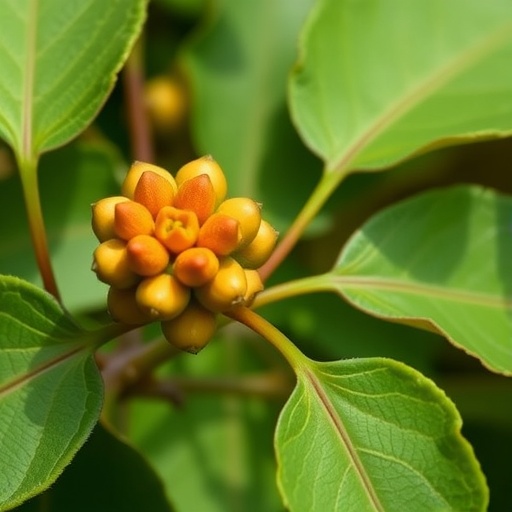
In the relentless pursuit of novel cancer therapies, recent findings have illuminated a promising botanical ally in the fight against liver cancer. A groundbreaking study spearheaded by researchers Bangalore Ramachandra and M. Perumal has unveiled that the medicinal plant Phyllanthus niruri significantly enhances apoptotic processes in Huh-7 liver cancer cells while also demonstrating profound protective effects against chemically induced liver carcinogenesis. This therapeutic potential is intricately linked to modulation of the Hippo-YAP signaling pathway, a critical regulator of cellular proliferation and apoptosis. The implications of this research could mark a pivotal shift in how hepatocellular carcinoma, a notoriously aggressive and treatment-resistant malignancy, is approached globally.
Hepatocellular carcinoma (HCC) represents one of the leading causes of cancer-related mortality worldwide. Traditional treatments frequently fall short due to chemo-resistance and late-stage diagnosis, driving an urgent need for clinically viable agents that can interrupt carcinogenic processes at molecular and cellular levels. Phyllanthus niruri, a tropical herb long valued in traditional medicine, is increasingly drawing scientific attention because its bioactive compounds exhibit various pharmacological effects, including antiviral, antioxidant, and anti-inflammatory properties. Prior to this study, the specific molecular mechanisms behind its anticancer capacities were elusive, limiting translational applications.
The researchers utilized Huh-7 cells, a human hepatoma cell line widely regarded as a model for investigating liver cancer biology and therapeutic screening. By administering Phyllanthus niruri extracts to these cells, they documented a marked upregulation of apoptosis—the programmed cell death essential for eliminating malignant cells. This enhancement of apoptotic mechanisms addresses one of the fundamental hallmarks of cancer: the evasion of cell death. Importantly, the treatment did not exhibit overt cytotoxicity in normal liver cells, suggesting a potential therapeutic window.
Delving deeper into the molecular framework, the study focused on the Hippo-YAP pathway, an evolutionarily conserved signaling cascade pivotal in regulating organ size, tissue regeneration, and tumorigenesis. Dysregulation of this pathway often results in unchecked cell proliferation and tumor development. The Hippo pathway exerts its tumor-suppressive effects by phosphorylating and inactivating the Yes-associated protein (YAP), which otherwise translocates to the nucleus to activate oncogenic transcription programs. Remarkably, exposure to Phyllanthus niruri restored Hippo pathway activity, thereby suppressing YAP’s oncogenic functions.
To validate the in vitro findings, the team employed a diethylnitrosamine (DEN)-induced hepatocarcinogenesis model in rodents. DEN is a potent chemical carcinogen that mimics the human scenario of liver cancer initiation and progression. Animals pretreated with Phyllanthus niruri displayed significantly reduced tumor burden and histopathological improvements, underscoring the extract’s chemopreventive role. Tissue analysis corroborated the reinstatement of Hippo signaling and increased apoptotic indices in treated subjects, offering compelling evidence for translational relevance.
This study’s methodological rigor is noteworthy; using a combination of cell viability assays, flow cytometry for apoptosis quantification, Western blotting for protein expression, and immunohistochemistry, the research team painted a comprehensive picture of Phyllanthus niruri’s bioactivity. The multi-modal approach reinforced the reliability of the data and allowed for detailed mechanistic insights that extend beyond conventional observations of herbal anticancer effects.
What sets this research apart is its bridging of traditional knowledge and modern molecular oncology. Phyllanthus niruri has been used in various cultures for centuries to treat ailments ranging from kidney stones to hepatitis. However, this investigation translates empirical use into scientifically validated mechanisms, offering a scaffold for developing derived pharmacological agents. As natural products continue to serve as invaluable resources for drug discovery, integrating traditional plant extracts with molecular pathway exploration enhances the potential for breakthroughs.
Moreover, targeting the Hippo-YAP axis is emerging as a highly attractive strategy given its centrality in cancer biology. YAP overexpression is implicated in numerous malignancies beyond HCC, including breast, lung, and pancreatic cancers. Thus, unraveling how Phyllanthus niruri constituents modulate this pathway opens avenues for combinatorial regimens or adjuvant therapies that amplify current treatment efficacy while mitigating side effects.
Despite these promising insights, challenges remain before clinical implementation can be realized. The complexity of plant extracts necessitates identifying specific active compounds responsible for the therapeutic effects. Additionally, pharmacokinetics, bioavailability, and potential toxicity in humans require extensive evaluation through clinical trials. The pleiotropic nature of the Hippo-YAP pathway also demands thorough assessment to prevent unintended perturbations in normal tissue homeostasis.
This research adds momentum to the paradigm shift towards harnessing nature-derived compounds as multitargeted therapeutics. By decoding how Phyllanthus niruri orchestrates apoptosis and tumor suppression through molecular circuitry, the study offers a template for future investigations aiming to integrate phytochemicals into conventional oncology frameworks. These findings rekindle hope that harnessing inherent biological pathways can create safer, more effective treatments for liver cancer, a malignancy with limited curative options.
In an era dominated by high-throughput genomics and synthetic drug design, this work reminds us of the enduring wisdom embedded in plant biology. Understanding the crosstalk between ancient remedies and cutting-edge molecular pathways could catalyze the next generation of cancer therapeutics that are both biologically nuanced and clinically transformative.
As the scientific community continues to explore the Hippo-YAP pathway’s complexity, the identification of natural products capable of fine-tuning this signaling axis without detrimental effects is desperately needed. Phyllanthus niruri emerges as a beacon, illuminating potential pathways towards this goal. Further research focusing on isolating active constituents and testing efficacy in diverse cancer models could help translate these preclinical successes into tangible patient benefits.
This study’s implications resonate beyond hepatocarcinogenesis, proposing a versatile platform where traditional herbal medicine intersects futuristic molecular oncology. The convergence of these fields has the capacity to not only expand therapeutic arsenals but to reshape preventive strategies addressing cancer initiation at its earliest stages.
In conclusion, the compelling evidence that Phyllanthus niruri potentiates apoptosis in liver cancer cells while mitigating chemically induced tumorigenesis via Hippo-YAP pathway modulation propels this plant into the spotlight of oncological research. The harmonious blend of apoptosis induction and oncogenic pathway inhibition establishes a dual-action mechanism, potentially overcoming treatment resistance and contributing to improved survival outcomes.
As future studies refine our understanding and translate bench discoveries into bedside applications, the promise of Phyllanthus niruri as a natural, mechanism-based anticancer agent stands poised to redefine therapeutic landscapes, particularly in hepatocellular carcinoma, offering renewed hope to patients worldwide.
Subject of Research: Phyllanthus niruri’s effect on apoptosis and hepatocarcinogenesis via Hippo-YAP pathway modulation.
Article Title: Phyllanthus niruri potentiates apoptosis in Huh-7 cells and mitigates diethylnitrosamine-induced hepatocarcinogenesis via Hippo-YAP pathway modulation.
Article References: Bangalore Ramachandra, A., Perumal, M. Phyllanthus niruri potentiates apoptosis in Huh-7 cells and mitigates diethylnitrosamine-induced hepatocarcinogenesis via Hippo-YAP pathway modulation. Med Oncol 43, 112 (2026). https://doi.org/10.1007/s12032-025-03209-y
Image Credits: AI Generated
DOI: https://doi.org/10.1007/s12032-025-03209-y


