

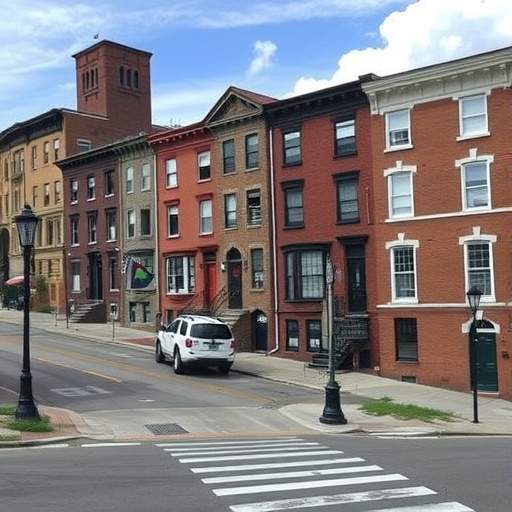
In recent years, gentrification has become a pressing issue within urban planning and neighborhood dynamics. A transformative process, gentrification alters neighborhood identities and demographics, typically leading to increased property values and evictions of long-standing residents. As cities continue to evolve, researchers and urban planners are increasingly seeking innovative methods to monitor and manage the socioeconomic impacts of gentrification in order to inform policy and decision-making. One landmark initiative has emerged from Drexel University, where researchers are utilizing advanced computer vision techniques to track and identify signs of gentrification in the rich and diverse urban landscape of Philadelphia.
The research team at Drexel University is pioneering a computer vision program that leverages deep learning models to discern visual markers indicative of gentrification. This program marks a significant advancement in urban studies as it aims to objectively quantify the phenomena often relegated to qualitative descriptions. By examining thousands of historical and contemporary images alongside construction permit records, the researchers crafted a method that combines qualitative insights with quantitative analysis to identify the shifting visual landscape caused by gentrification.
Urban environments vary significantly in their architectural styles, construction practices, and historical contexts. As such, the visual indicators of gentrification can differ widely from one location to another. Traditional methods of identifying gentrification often rely on anecdotal evidence and subjective interpretations from community members and urban planners. In light of these challenges, the Drexel team sought to develop a robust and systematic approach to identifying markers of gentrification. They conducted extensive focus groups in several Philadelphia neighborhoods to glean insights and observations from residents who experience the change firsthand.
Drawing from these community insights, researchers compiled a comprehensive list of 16 distinctive architectural traits that align with “new-build” gentrification. This list includes features such as modern building facades, variations in building height, and the presence of distinctive materials or design elements that deviate from the traditional aesthetic of the neighborhoods. These traits serve as visual signifiers that reflect the socio-economic dynamics at play in shifting neighborhoods, providing the foundational data needed to train machine learning models.
To build a solid training dataset, the researchers meticulously labeled over 17,000 historical images featuring Philadelphia neighborhoods from the years 2009 to 2013. They paired these images with more recent photographs taken between 2017 and 2024, indicating whether the areas displayed signs of gentrification or not. This extensive dataset allowed the machine learning model, specifically the ResNet-50 architecture, to learn and identify subtle variations that typify gentrification across various regions. The ultimate goal of this project is not only to create a cutting-edge identification tool but also to equip urban planners and community advocates with the means to address residents’ concerns about displacement and socio-economic shifts.
As the algorithm was trained on the labeled data, it was capable of extracting over 1,040 unique data points, capturing the myriad visual indicators of new-build gentrification. In subsequent tests, the machine learning program demonstrated an impressive 84% accuracy in identifying neighborhoods undergoing gentrification. The researchers also conducted comparative analyses against existing construction permit records, revealing a strong correlation between the model’s predictions and documented trends, thereby reinforcing the reliability of the machine learning approach as a predictive tool.
The implications of this research extend far beyond the focus on identifying gentrification alone. The transparency and methodological rigor embedded in the development of this program serve as vital components in addressing concerns about perceived biases often associated with machine learning models. As urban planning increasingly leans on data-driven methodologies, it is crucial that these systems remain accountable to the communities they impact. Researchers are aware of the potential pitfalls inherent to the “black box” nature of machine learning, where the rationale behind algorithmic predictions may remain opaque, leading to unintended consequences.
To foster enhanced accountability, the Drexel team actively sought to articulate the processes behind their model’s training methodology. By elaborating on the data collection, labeling procedures, and community engagement methods that shaped their research, they aim to diminish bias and enhance the ethical application of technology in urban studies. This approach not only bolsters confidence in the model but also advocates for a future of inclusive urban policymaking that leverages community knowledge alongside sophisticated technological advancements.
With urban landscapes continually evolving, this pioneering work by the researchers at Drexel University heralds a new era in the intersection of technology and urban sociological studies. As cities face mounting pressures from rapid growth and urban transformations, understanding the implications of gentrification becomes paramount. Their exploration into using machine learning for gentrification mapping opens new avenues for research-driven urban interventions and community empowerment.
In conclusion, the intersection of community engagement and advanced machine learning presents transformative potential for urban planners and municipalities grappling with the challenges of gentrification. This ground-breaking research underscores the importance of building interdisciplinary bridges between technology, social sciences, and community knowledge to foster sustainable and equitable urban development. With sustainable methodologies and transparent analysis, researchers can help communities navigate the complexities of gentrification, preserving the social fabric of neighborhoods while fostering development that benefits all residents.
Subject of Research: Developing a machine learning model to map new-build gentrification
Article Title: Developing a Machine Learning Model to Map New-Build Gentrification: A Mixed-Methods Approach
News Publication Date: 30-Jan-2026
Web References: PLOS One
References: DOI: 10.1371/journal.pone.0341844
Image Credits: Drexel University


