

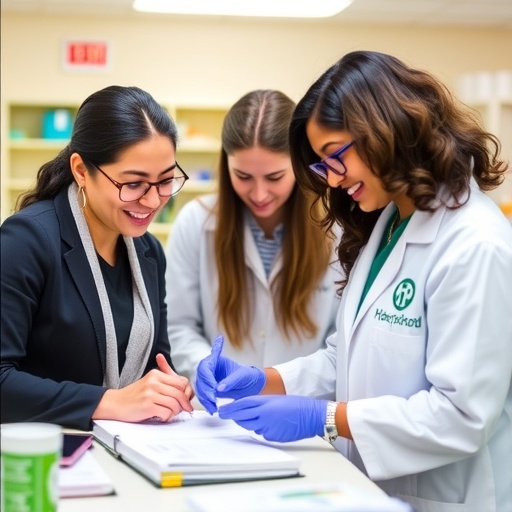
Active learning is transforming the landscape of pharmacy education, shifting the paradigm from traditional passive methods to engaging, participatory experiences. A recent study led by Sletvold et al. delves into this transformative journey, examining pharmacy students’ perceptions and experiences with active learning methodologies. This important research, published in BMC Medical Education, provides valuable insights into how these innovative teaching strategies can enhance educational outcomes and prepare students for future challenges in the healthcare environment.
The study highlights a growing trend within educational frameworks that increasingly endorses active learning. This pedagogical shift is driven by the need to cultivate not only theoretical knowledge but also practical, real-world skills among students. By moving away from rote memorization and lecture-based instruction, educators are fostering an environment where students can engage directly with the material, collaborate with their peers, and develop critical thinking abilities. This transition is particularly crucial within the pharmacy sector, where professionals must rely heavily on their analytical and interpersonal skills in clinical settings.
In this research, Sletvold and colleagues employed a mixed-methods approach, utilizing both qualitative and quantitative data to explore student experiences comprehensively. Surveys were administered to assess students’ attitudes toward active learning environments, while interviews allowed for deeper insights into their perceptions of the effectiveness of these teaching methods. The combination of these methodologies offers a nuanced understanding of how active learning influences students’ educational journeys.
The findings reveal a range of positive perceptions among pharmacy students regarding active learning. Many students reported increased engagement and motivation when participating in interactive curricula, indicating that these methods not only make learning more enjoyable but also more effective. Students expressed that collaborative projects, case studies, and problem-based learning exercises enabled them to apply theoretical concepts in practical contexts, thereby solidifying their understanding.
Moreover, the study underscores the importance of the role of educators in facilitating active learning environments. Instructors who embrace a learner-centered approach, guiding students through discussions and encouraging critical analysis, are pivotal to the success of active learning initiatives. The research suggests that when educators adopt these strategies, they not only improve student engagement but also help foster a culture of inquiry and lifelong learning.
However, the transition to active learning is not without challenges. The study identifies barriers such as resistance to change among faculty, inadequate resources, and the necessity for ongoing training and support for instructors. These obstacles can hinder the implementation of active learning strategies, despite their proven effectiveness. The authors advocate for institutional support to address these challenges, emphasizing the need for professional development and resources that empower educators to transition seamlessly to active learning frameworks.
Interestingly, while most students embraced active learning, the study found variability in experiences based on individual backgrounds and learning styles. Some students thrived in collaborative environments, while others faced difficulties adapting to the less structured nature of active learning. This highlights the necessity for educators to consider diverse learning preferences, tailoring approaches to meet the needs of all students. The research elucidates the importance of flexibility and inclusivity in teaching strategies, ensuring that every pharmacy student can benefit from active learning opportunities.
The implications of this research extend beyond pharmacy education. As healthcare continues to evolve, the skills that these students develop through active learning are crucial for their future roles within the profession. The emphasis on teamwork, communication, and critical thinking aligns closely with the demands of modern healthcare environments, where collaboration and adaptability are essential. Consequently, incorporating active learning into pharmacy curricula is not merely an educational trend; it is an investment in cultivating competent, skilled healthcare professionals.
As the findings resonate through the pharmacy education community, the call for integrating active learning methodologies will likely grow louder. Institutions that prioritize these teachings may find themselves at the forefront of educational innovation, shaping the future of pharmacy practice. In a rapidly advancing field where knowledge is constantly evolving, the ability to learn actively and adapt is invaluable.
The study by Sletvold et al. serves as a crucial reminder of the power of education to transform lives and careers. By prioritizing active learning, pharmacy educators have the opportunity to not only enhance academic outcomes but also significantly impact the quality of patient care in the future. In doing so, they play a pivotal role in nurturing a new generation of pharmacists who are well-equipped to tackle the complexities of today’s healthcare challenges.
In conclusion, the road from passive to participatory learning encapsulates a revolution in pharmacy education. The research underscores a vital shift toward environments that prioritize engagement, collaboration, and active participation. As educators and institutions embrace this shift, the future of pharmacy education looks promising—one where students are not just recipients of information but active participants in their learning journey. This evolution will undoubtedly elevate the profession, ultimately benefiting the patients they serve and the healthcare system as a whole.
Subject of Research: Active Learning in Pharmacy Education
Article Title: From passive to participatory: exploring pharmacy students’ experiences and perceptions with active learning.
Article References:
Sletvold, H., Amundstuen, L., Zeiss, D.H. et al. From passive to participatory: exploring pharmacy students’ experiences and perceptions with active learning.
BMC Med Educ (2025). https://doi.org/10.1186/s12909-025-08470-3
Image Credits: AI Generated
DOI: 10.1186/s12909-025-08470-3
Keywords: Active learning, Pharmacy education, Student engagement, Educational methodology, Collaborative learning, Healthcare training.


