


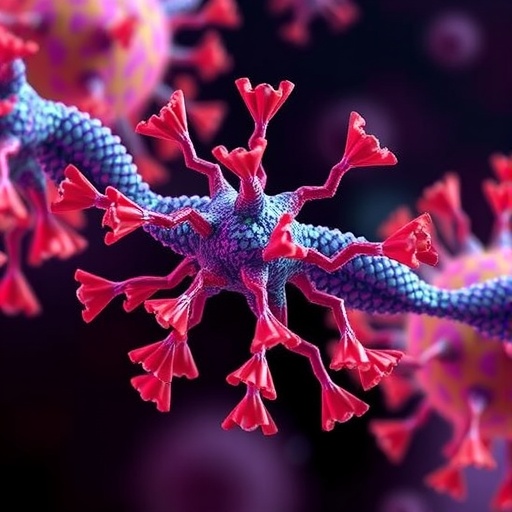
In a groundbreaking discovery poised to redefine our understanding of bacterial defense systems, researchers have unveiled a novel mechanism by which bacteria harness phage proteins in concert with their own cell division machinery to activate immunity. This new insight, detailed in a recent publication in Nature Microbiology, centers around the bacterial cell division protein FtsZ and its unexpected collaboration with a phage-derived protein, illuminating a sophisticated interplay that fortifies bacterial resilience against viral attack.
For decades, the bacterial protein FtsZ has intrigued microbiologists as a pivotal player in cell division, orchestrating the assembly of a constricting ring that enables cytokinesis. However, the revelation that FtsZ forms complexes with a phage protein to activate bacterial immunity pivots this well-studied protein into an entirely new realm of functional versatility. This dual role challenges existing paradigms that compartmentalize proteins into singular cellular duties, instead suggesting a previously hidden layer of molecular crosstalk responding dynamically to viral threats.
The study, led by a team of microbiologists including Zhang, Nadieina, and Soderstrom, deployed a combination of high-resolution microscopy, protein biochemistry, and advanced genetic tools to dissect the molecular interactions underpinning this phenomenon. Carefully engineered bacterial strains exposed to specific phages revealed that upon infection, the phage-encoded protein interacts directly with FtsZ, instigating a structural and functional shift that triggers a cascade of immune responses within the bacterial host.
At the heart of this defensive strategy lies a complex molecular choreography. The phage protein essentially co-opts FtsZ, not to facilitate cell division as traditionally understood, but to serve as a signaling platform that rallies immune factors. This repurposing represents an elegant evolutionary adaptation, whereby bacteria convert components of their essential division apparatus into sentinels and activators of immunity. Such a mechanism allows a rapid, localized response to phage invasion, enhancing survival odds in the microbial arms race.
Crucially, this finding illuminates new dimensions of bacterial immunity previously obscured by the focus on canonical defense systems such as CRISPR-Cas or restriction-modification enzymes. By integrating phage-derived proteins into their defensive repertoire, bacteria exhibit a surprising level of molecular sophistication, turning elements of the invading virus itself against it. This phenomenon also suggests a broader spectrum of host-phage interactions wherein phage proteins can serve as both tools of infection and triggers for immunity.
The structural insights garnered through cryo-electron microscopy revealed that the FtsZ-phage protein complex forms a unique supramolecular assembly at the mid-cell region. This assembly not only impedes normal cell division but also acts as a hub for recruiting and activating downstream immune effectors. This spatial organization reflects a strategic deployment of architecture to segregate immune activation precisely where viral replication typically commences, thus maximizing defensive efficacy.
On a genetic level, the study identifies regulatory elements responsive to the presence of the phage protein-FtsZ complex, leading to upregulation of immune gene clusters. These genes encode an array of antimicrobial peptides and enzymes capable of neutralizing or degrading invading phage particles. The intricate feedback loops uncovered underscore a tightly regulated immune network that balances the physiological costs of immune activation with the imperative to thwart infection.
Beyond the fundamental scientific implications, these insights open intriguing avenues for applied microbiology and biotechnology. Understanding how FtsZ and phage proteins synergize to activate bacterial immunity could inform the design of novel antimicrobial strategies that exploit or mimic this natural defense system. Synthetic biology approaches might re-engineer similar complexes to bolster beneficial microbial communities or to combat antibiotic-resistant pathogens by enhancing their innate defenses.
Moreover, the study provokes reevaluation of how phages and bacteria co-evolve, with potential consequences for phage therapy and microbial ecology. The novel defensive role of a phage protein raises questions about the evolutionary pressures shaping viral genomes and their interaction dynamics with bacterial hosts. This complex interplay likely influences microbial population structures and the stability of microbiomes across diverse environments.
From a broader biological perspective, this discovery underscores the multifunctionality of proteins traditionally assigned to singular cellular roles. The moonlighting behavior of FtsZ exemplifies nature’s resourcefulness in using existing molecular machinery to meet multiple physiological challenges. This versatility highlights the importance of considering protein functions within dynamic cellular contexts, especially under stress or infectious conditions.
Future research directions will undoubtedly focus on elucidating the precise molecular signals transmitted by the FtsZ-phage protein complex to the bacterial immune apparatus. Decoding these signals at atomic and kinetic levels could reveal novel targets for manipulating bacterial immunity. Additionally, expanding the investigation across diverse bacterial species and phage types will determine the generality of this defense mechanism and its evolutionary conservation.
In conclusion, the identification of the FtsZ-phage protein complex as an activator of bacterial immunity represents a seminal advance in microbiology. It intricately links cell division machinery with antiviral defense, refashioning our understanding of bacterial survival strategies in a virus-dominated ecological niche. As pathogens and hosts continue their endless evolutionary contest, studies like this illuminate the subtle molecular gambits that tip the scales of microbial conflicts.
This discovery not only enriches fundamental microbial biology but also beckons new scientific conversations around immune system complexity, evolutionary biology, and innovative therapeutic interventions. The integration of structural, genetic, and biochemical insights underscores a holistic approach to unraveling microbial defense, inspiring a re-imagined narrative of bacterial resilience in the face of viral adversaries.
As research delves deeper into the molecular intricacies of this system, it may pave the way for engineering bacteria with enhanced resistance or tailoring phage therapies that circumvent such defenses. Ultimately, appreciating the multifaceted roles of proteins like FtsZ advances our quest to harness and manipulate microbial processes for health, industry, and environmental stewardship.
This exciting frontier, illuminated by Zhang and colleagues, reminds us that even well-characterized proteins harbor secrets waiting to be uncovered and that bacterial immunity is far more dynamic and intricate than previously conceived. The revelations packed into this study offer a paradigm shift, urging scientists to rethink bacterial molecular biology through the lens of interkingdom molecular alliances forged in the crucible of survival.
Cite Scienmag News
Kristina Jarvis. (June 12, 2026). Phage Protein Teams with FtsZ to Boost Immunity. Scienmag. https://scienmag.com/phage-protein-teams-with-ftsz-to-boost-immunity/
Kristina Jarvis. "Phage Protein Teams with FtsZ to Boost Immunity." Scienmag, 12 June 2026, https://scienmag.com/phage-protein-teams-with-ftsz-to-boost-immunity/. Accessed 4 September 2026.
Kristina Jarvis. "Phage Protein Teams with FtsZ to Boost Immunity." Scienmag. June 12, 2026. https://scienmag.com/phage-protein-teams-with-ftsz-to-boost-immunity/


