

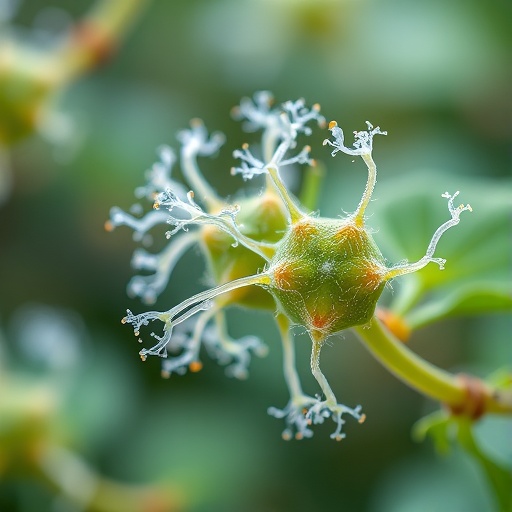
Recent investigations into the dynamics of phage-bacterium interactions have unveiled promising avenues for mitigating membrane fouling in various biotechnological applications. This is particularly important in contexts such as wastewater treatment, where membrane processes are often hindered by the accumulation of microorganisms and organic compounds on membrane surfaces. The study conducted by Zang, Zhou, and Nan sets out to explore the synergistic potential of bacteriophages—viruses that infect bacteria—in reducing this problematic fouling, ultimately enhancing membrane efficiency and longevity.
The essence of membrane fouling lies in the complex interplay of physical and biological processes, primarily driven by the presence of colloidal particles, organic matter, and microbial cells. When these foulants accumulate on the surface of membranes, they create a resistance to flow that not only decreases the permeability of membranes but also necessitates more frequent cleaning cycles and replacement of membrane materials. This leads to increased operational costs and resource wastage in industrial and municipal systems.
Bacteriophages are naturally occurring viruses that specifically target and lyse bacterial cells. Previous research has shown that phage therapy could be a potent tool in managing bacterial populations, particularly in environments where selective pressure leads to antibiotic resistance. Zang and colleagues hypothesize that the application of phages could not only curtail the growth of undesirable bacterial species but also alter the fouling behavior of biofilms that typically form on membrane surfaces, resulting in a more favorable system performance.
Investigating the specifics of this interaction, the researchers initiated a series of controlled laboratory experiments aimed at observing the effects of multiple bacteriophage strains on biofilm formation and characteristics. By deploying various concentrations of these phages into simulated membrane filtration environments, they were able to quantify the impact on both biofilm growth and fouling rates. Remarkably, results indicated a decrease in biomass accumulation on membranes treated with specific phages, showcasing not just a reduction in the quantity of bacteria but also modifications in biofilm structure.
The structural alterations in biofilms, induced by phage infection, were noteworthy. Phages tend to promote the dispersal of biofilm-forming bacteria into free-floating cells when they successfully infect and lyse their host organisms. This dispersion can be advantageous, as it reduces the dense layers of biomass that typically plague the membrane surfaces. Additionally, the released phages continue to seek out and infect other nearby bacteria, creating a beneficial feedback loop that may lead to sustained reductions in fouling over time.
Moreover, the kinetics of phage infection and bacterial response were meticulously analyzed in the study. It was observed that phages with higher infection efficiency could drastically alter the growth dynamics of targeted bacterial populations. The implications of this observation stretch beyond simply reducing membrane fouling; they suggest a biological means of manipulating microbial communities to achieve desired operational outcomes.
The research team’s findings align with the growing body of literature advocating for the integration of biological agents in wastewater treatment frameworks. The potential for bacteriophages to act as natural biocontrol agents suggests a paradigm shift in how we approach membrane technology. Many current methods, predominantly relying on chemical cleaning agents or mechanical scrubbing, could be supplemented or even replaced by these biological alternatives.
Furthermore, the long-term ecological implications of utilizing phages in biotechnological applications beg further exploration. Their specificity to bacteria implies that the chances of negatively impacting non-target organisms in the environment are minimized, a significant advantage over broad-spectrum antibiotics. As public awareness increases surrounding issues such as antimicrobial resistance, the application of phages offers an attractive, eco-friendly alternative.
Despite the promising results, several challenges remain in harnessing phage technology at a scale necessary for widespread adoption. The variability in phage efficacy against different bacterial strains necessitates tailored approaches, requiring extensive screening processes to identify the most effective phages for particular wastewater scenarios. Moreover, issues of phage stability and persistence in operational settings need to be addressed through further research.
As researchers continue to explore the intricacies of phage-bacterium interactions, the prospect of minimizing membrane fouling will likely become a focal point in environmental and engineering sciences. The insights provided by Zang and colleagues present compelling evidence suggesting that these biological interactions may play a pivotal role in shaping future innovations in water treatment technologies.
The importance of continued funding and support for such research cannot be overstated, especially as global water scarcity increases and wastewater management becomes increasingly crucial. The integration of phage therapy into established treatment methodologies not only offers a means to enhance membrane systems but also serves as a testament to the power of natural processes in solving modern engineering challenges.
As we stand on the brink of a new era in biotechnological applications, the collaboration between microbiologists, engineers, and environmental scientists will be key. Such interdisciplinary efforts can lead to groundbreaking approaches that maximize resource efficiency and sustainably tackle the pressing issues of water quality and availability.
In conclusion, the transformative potential of bacteriophages extends beyond mere membrane fouling mitigation. It ushers in a holistic view of wastewater management, where ecological principles guide technological advancements. As research in this area matures, the integration of phages into practical applications may not only revolutionize how we handle effluent but also pave the way for a more sustainable and resilient approach to water management.
The future of water treatment is undoubtedly bright with the incorporation of phage technology, potentially leading to a paradigm shift where biological solutions replace heavy reliance on chemical interventions. The research undertaken by Zang, Zhou, and Nan marks a crucial step in this journey, laying the groundwork for further exploration into the myriad of possibilities offered by bacteriophage applications within environmental systems.
As the scientific community eagerly anticipates the forthcoming advancements, the impact of such pioneering work will ripple through multiple sectors, ultimately contributing to enhanced public health and environmental sustainability across the globe.
Subject of Research: Phage-bacterium interactions and their impact on membrane fouling mitigation.
Article Title: Exploring the potential positive impact of phage-bacterium interactions on membrane fouling mitigation.
Article References: Zang, B., Zhou, H., Nan, H. et al. Exploring the potential positive impact of phage-bacterium interactions on membrane fouling mitigation. Front. Environ. Sci. Eng. 19, 139 (2025). https://doi.org/10.1007/s11783-025-2059-7
Image Credits: AI Generated
DOI: 10.1007/s11783-025-2059-7
Keywords: Bacteriophages, Membrane Fouling, Biofilm, Wastewater Treatment, Microbial Interactions, Phage Therapy, Environmental Sustainability.


