


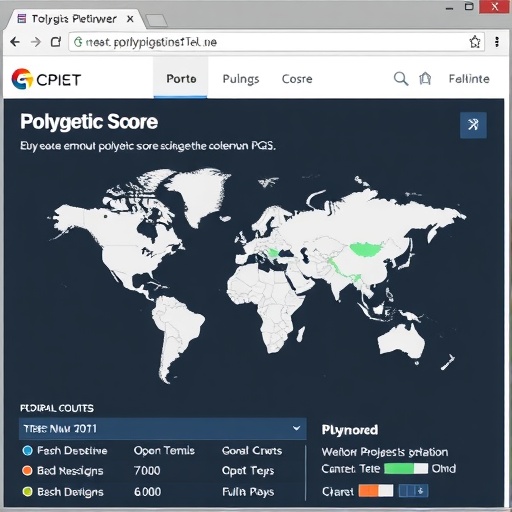
In the ever-evolving field of genomics, a significant leap has been achieved with the introduction of the PGS Browser, a novel public platform designed to transform the way researchers, clinicians, and individuals interact with polygenic scores. Polygenic scores (PGS) are quantitative measures that capture the cumulative effect of numerous genetic variants across the genome, predicting an individual’s predisposition to complex traits and diseases. This new platform promises not just accessibility but also interpretative power, enabling a personalized approach to genomic data that could reshape personalized medicine and risk assessment paradigms worldwide.
At the heart of this transformative tool lies a sophisticated integration of vast genomic datasets, advanced computational algorithms, and user-friendly interfaces. The PGS Browser aggregates polygenic scores derived from an array of large-scale genome-wide association studies (GWAS), providing an unprecedented resource where users can explore the genetic architecture of diverse traits. One of the platform’s most compelling features is its capacity to personalize polygenic risk predictions by incorporating individual genetic data with contextual healthcare analytics, bridging the longstanding gap between raw genetic information and actionable clinical insights.
Traditionally, polygenic scores have been calculated using fixed sets of genetic variants, often constrained by limited population samples or specific ancestral backgrounds. This poses significant challenges regarding the portability and generalizability of these scores across diverse populations. The PGS Browser addresses this limitation head-on by incorporating multi-ancestry datasets and advanced statistical models that recalibrate polygenic scores for diverse genetic ancestries. This opens new horizons in achieving equity in genomic medicine, ensuring individuals from underrepresented populations have access to precise, contextually relevant risk evaluations.
The technical backbone of the PGS Browser involves complex methodologies that include linkage disequilibrium (LD) adjustment, penalized regression frameworks, and machine learning techniques, all optimized for high-throughput and scalable analysis. These computational advances optimize the balance between predictive accuracy and overfitting, a persistent challenge in polygenic score modeling. By dynamically adjusting for confounding genomic features and population stratification, the platform produces risk scores that are both statistically robust and biologically interpretable.
One of the critical innovations within the platform is its interpretability module, designed to unpack the black-box nature of polygenic predictions. Users are not only presented with their personalized polygenic scores but also receive detailed visualizations and annotations explaining the contribution of key genetic loci, biological pathways involved, and potential gene-environment interactions. This level of detail empowers clinicians to make informed decisions and patients to understand the genetic basis of their risks, paving the way for targeted preventative strategies and lifestyle modifications.
From a healthcare perspective, the implications of the PGS Browser extend far beyond academic research. The platform is a strategic tool for genetic counseling, allowing healthcare providers to identify individuals at elevated risk for complex diseases such as cardiovascular disease, diabetes, and certain cancers before clinical symptoms manifest. Early identification through polygenic risk enables preemptive interventions, personalized monitoring, and tailored therapeutic approaches, underscoring a shift from reactive to proactive medicine.
Moreover, the PGS Browser operates with a commitment to transparency and reproducibility, addressing critical concerns in genetic epidemiology. All computational workflows are openly accessible, enabling peer verification and fostering collaborative improvement. The platform also integrates with existing biobank data through standardized protocols, facilitating validation studies and meta-analyses that enhance the reliability of polygenic scores across global cohorts.
A particularly noteworthy aspect of the platform is its potential role in pharmacogenomics. By correlating polygenic scores with drug response phenotypes, the browser could assist in identifying individuals who might benefit from specific medications or require dosage adjustments. This integration with personalized medicine elevates the clinical utility of polygenic scores from risk stratification to therapeutic optimization, highlighting the multi-dimensional impact of genomic data in patient care.
The PGS Browser also bridges the gap between research and public engagement. Designed with intuitive navigation and educational resources, it invites an increasingly genomically literate public to explore their genetic predispositions within a responsible and secure framework. This democratization of genetic information fosters greater awareness and empowerment while maintaining stringent privacy standards, an essential consideration in the era of big data.
In operational terms, the platform boasts scalability features capable of handling millions of individuals’ data concurrently, a necessity given the rapid expansion of genomic databases worldwide. The utilization of cloud-based infrastructures, coupled with containerized computational environments, ensures flexible deployment across various institutional settings while preserving data security and compliance with regulatory frameworks such as GDPR.
From a scientific perspective, the availability of such a public platform catalyzes the discovery of novel gene-trait associations by allowing researchers to perform systematic, large-scale analyses that correlate polygenic scores with phenotypic data. This accelerates the identification of biological mechanisms underlying complex traits, informing subsequent functional studies and therapeutic development pipelines.
Ethical considerations permeate the development and deployment of the PGS Browser. The platform incorporates informed consent modules, guidelines on interpretation limitations, and warnings against deterministic views of genetic risk. By fostering responsible use and interpretation, the platform promotes ethical standards within a field where genetic data can easily be misunderstood or misapplied.
Furthermore, the PGS Browser represents a leap forward in standardizing polygenic score methodologies. Historically, disparate scoring algorithms and variable reporting conventions have hindered comparability across studies. This unified platform offers a harmonized framework that promotes methodological consistency, enabling the scientific community to consolidate findings and build upon a shared foundation.
The cross-disciplinary collaboration manifested in the creation of the PGS Browser highlights the convergence of genetics, bioinformatics, data science, and clinical medicine. This integrative approach is crucial to addressing the complexities of polygenic risk and translating genomic insights into tangible health benefits, marking a pivotal moment in the genomics era.
Looking forward, the PGS Browser sets the stage for continuous evolution. Planned enhancements include integration with longitudinal health records, expansion of trait coverage particularly in psychiatric and neurological domains, and real-time updating as new GWAS data emerge. Such adaptability ensures the platform remains at the forefront of personalized genomics research and application.
In conclusion, the PGS Browser embodies a landmark achievement in the democratization and personalization of polygenic score analysis. By merging rigorous computational techniques with accessible design and ethical mindfulness, it empowers a broad spectrum of users to harness the predictive power of genomic data. This innovation holds transformative potential for healthcare, research, and public understanding, catalyzing a new era in precision medicine where genetic insights are personalized, interpretable, and actionable like never before.
Cite Scienmag News
Juliet Wilcox. (June 21, 2026). PGS Browser: Personalized Polygenic Score Analysis Platform. Scienmag. https://scienmag.com/pgs-browser-personalized-polygenic-score-analysis-platform/
Juliet Wilcox. "PGS Browser: Personalized Polygenic Score Analysis Platform." Scienmag, 21 June 2026, https://scienmag.com/pgs-browser-personalized-polygenic-score-analysis-platform/. Accessed 3 September 2026.
Juliet Wilcox. "PGS Browser: Personalized Polygenic Score Analysis Platform." Scienmag. June 21, 2026. https://scienmag.com/pgs-browser-personalized-polygenic-score-analysis-platform/


