


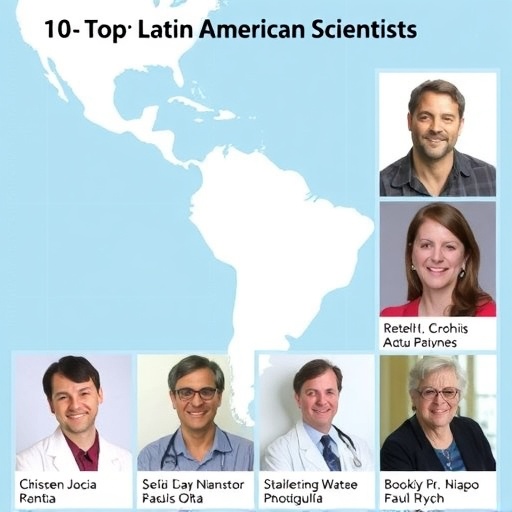
PHILADELPHIA — The Pew Charitable Trusts have officially announced the incoming cohort for their prestigious 2026 Latin American Fellows Program in the Biomedical Sciences. This select group of ten postdoctoral researchers, hailing from Argentina, Brazil, Chile, Colombia, Mexico, Peru, and Uruguay, will embark on two-year research endeavors across leading U.S. laboratories. Under the aegis of distinguished mentorship from established scientists—including alumni from Pew’s own biomedical initiatives—these fellows will undertake pioneering investigations aimed at addressing some of the most intricate biomedical challenges facing the global community today.
For over three and a half decades, Pew has exemplified commitment to fostering scientific talent from Latin America by providing essential funding and access to cutting-edge laboratories located in the United States. According to Donna Frisby-Greenwood, Pew’s senior vice president for Philadelphia and scientific advancement, this enduring program continues to fuel advances in global health by enabling early-career scientists to pursue bold research trajectories. This year’s fellows are poised to extend this legacy, making vital contributions across diverse domains such as immunology, neurobiology, infectious disease, and molecular genetics.
What sets the Pew Latin American Fellows Program apart is not only the financial support but also its strategic emphasis on long-term scientific leadership in Latin America. Fellows who opt to return to their home countries are granted additional resources to establish independent research laboratories. This symbiotic model has successfully cultivated a robust biomedical research infrastructure throughout Latin America, with nearly 70% of past participants reinvesting their expertise back into their national scientific ecosystems. This creates a sustainable platform for scientific innovation that transcends geographic boundaries, thereby enhancing biomedical capacity regionally and globally.
The 2026 class’s research projects collectively highlight the multifaceted nature of contemporary biomedical investigation. One fellow, Isabel Barón-Mendoza, Ph.D., based at Rutgers University in the laboratory of Victoria Abraira, Ph.D., explores the cellular underpinnings of tactile sensitivity linked to autism spectrum disorder (ASD). Her work dives deep into somatosensory pathways, utilizing state-of-the-art electrophysiological and molecular tools to unravel altered neural circuitries that may contribute to sensory processing anomalies in ASD.
At Harvard Medical School, Bernabé Battista, Ph.D., mentors under Monica Colaiácovo, Ph.D., to dissect the molecular machinery ensuring faithful chromosome segregation during gametogenesis. Employing advanced live-cell imaging and CRISPR-based gene perturbation, Battista’s research aims to elucidate meiotic errors that can precipitate aneuploidies and infertility. Such insights are critical for understanding reproductive biology and congenital disorders.
Meanwhile, Julia Castro, Ph.D., at the Scripps Research Institute, works in Renan V.H. de Carvalho’s laboratory to characterize immunological memory mechanisms induced by vaccination. Her focus is on long-lived plasma cells, the sustainers of durable antibody secretion. By profiling transcriptional and epigenetic landscapes of these effector cells, Castro’s research sheds light on how vaccines can be optimized to confer long-term protective immunity.
At the Johns Hopkins Bloomberg School of Public Health, Elias Barbosa da Silva-Junior, Ph.D., in Arturo Casadevall’s lab, investigates the fungal pathogen Cryptococcus neoformans and its sophisticated strategies to manipulate host cell biology. Through integrative genomic and proteomic analyses, Silva-Junior seeks to decode pathogen-host interactions that facilitate fungal persistence and immune evasion, advancing antifungal therapeutic approaches.
Other notable projects include Guilherme de Moraes Nobrega, Ph.D., at Icahn School of Medicine at Mount Sinai, who studies the temporal dynamics and strain variability of monkeypox virus infections during pregnancy, elucidating viral impacts on maternal-fetal health. Joaquin Gonzalez, Ph.D., at NYU Grossman School of Medicine, examines sleep-dependent consolidation of memories by recording neural activity patterns in rodent models, offering insights into mechanisms underlying learning and memory.
At the University of California, Berkeley’s Innovative Genomics Institute, Santiago López, Ph.D., in Jennifer Doudna’s laboratory, probes bacterial immune systems with a focus on how they sense and respond to cellular stress and damage, illuminating fundamental processes in microbial defense. At the University of Rochester Medical Center, Sandra Nakandakari-Higa, Ph.D., investigates depletion mechanisms of lung-resident memory T cells that occur rapidly post-infection, a phenomenon relevant for respiratory disease immunity.
Montserrat Olivares, Ph.D., working within Kristin Baldwin’s lab at Columbia University, explores sex-based vulnerabilities in autism by analyzing genetic and epigenetic factors that might contribute to the higher incidence observed in boys. Finally, Laura Gonzalez Garcia, Ph.D., at the Boyce Thompson Institute, contrasts RNA modification processes that influence mRNA stability in plants and humans, shedding light on conserved and divergent post-transcriptional regulatory mechanisms.
The selection of these fellows and their ambitious scientific inquiries underscores Pew’s enduring role in shaping the future landscape of biomedical discovery. Through rigorous training, collaborative mentorship, and cross-continental engagement, this program is cultivating a vibrant, interconnected network of researchers dedicated to solving biomedical puzzles with far-reaching implications for human health.
As the world faces increasingly complex health challenges, initiatives like the Pew Latin American Fellows Program exemplify how strategic investment in global scientific talent can accelerate the pace of medical breakthroughs. Through this lens, the 2026 fellows represent not only the promise of scientific innovation but also the power of international collaboration in driving progress that benefits humanity at large.
Founded in 1948, The Pew Charitable Trusts uses data-driven insight to enact meaningful change. Addressing the evolving challenges of our time, Pew emphasizes transparency and shared knowledge as cornerstones for advancing ambitious projects that foster tangible societal impact.
News Publication Date: Not specified in the original content
Web References: Not provided
References: Not provided
Cite Scienmag News
Kristina Jarvis. (June 16, 2026). Pew Backs 10 Top Latin American Scientists. Scienmag. https://scienmag.com/pew-backs-10-top-latin-american-scientists/
Kristina Jarvis. "Pew Backs 10 Top Latin American Scientists." Scienmag, 16 June 2026, https://scienmag.com/pew-backs-10-top-latin-american-scientists/. Accessed 3 September 2026.
Kristina Jarvis. "Pew Backs 10 Top Latin American Scientists." Scienmag. June 16, 2026. https://scienmag.com/pew-backs-10-top-latin-american-scientists/


