

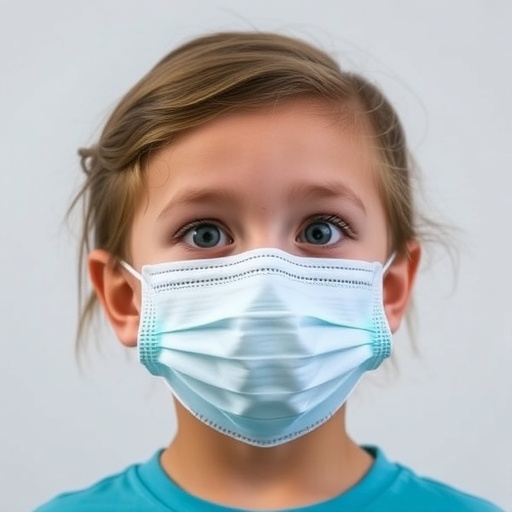
In a remarkable stride towards enhancing pediatric care, a recent feasibility study has emerged, highlighting the potential of advanced 3D data acquisition techniques for designing personalized, non-invasive ventilation masks for critically ill children. Published in the esteemed journal 3D Print Medicine, this research showcases a blending of cutting-edge technology and compassionate healthcare, promising to revolutionize the way medical equipment is tailored to the unique anatomical constraints of young patients.
The traditional approach to creating ventilation masks has often been a cumbersome process, involving the use of generic equipment that may not fit optimally for every child, particularly those in critical condition. This inadequacy can lead to discomfort and inefficient ventilation, ultimately compromising respiratory support. The study led by Pigmans et al. investigates the viability of utilizing facial 3D data acquisition techniques to fabricate custom-fit masks that align closely with the individual facial features of young patients. This personalization is not just a matter of comfort; it has the potential to substantially improve the efficacy of respiratory treatments.
One of the most significant components of this study is the methodology employed in capturing 3D facial data. Researchers used state-of-the-art 3D scanning technology that renders intricate details of a child’s face, allowing for precise measurements and a tailored fit. This non-invasive method provided a quick and efficient alternative to traditional casting techniques, which are often uncomfortable and impractical in critical situations. The rapid acquisition of 3D data supports the idea of swiftly crafting masks that can be produced on-demand, thereby addressing urgent medical needs with unprecedented efficiency.
The implications of such innovations extend beyond mere comfort. The study presents early evidence suggesting that personalized masks could lead to improvements in ventilation efficacy and patient outcomes. With the ability to create a well-fitted mask, the risk of leaks—one of the major issues in non-invasive ventilation—could be significantly reduced. Fewer leaks mean that the necessary positive pressure can be more reliably maintained, optimizing respiratory therapy for critically ill children, many of whom may be suffering from conditions requiring immediate and ongoing respiratory support.
Challenges encountered during the initial phases of this project reflect the complexities of conducting research in sensitive environments, particularly with young patients. Ethical considerations took center stage, guiding the researchers in obtaining consent from guardians while ensuring that the child’s wellbeing remained paramount. Stepping into the unknown, Pigmans et al. navigated these hurdles with care, determined to pioneer a path that could redefine pediatric care protocols in the future.
As this research unfolds, collaboration with pediatricians, respiratory therapists, and engineers will be critical. Building cross-disciplinary teams fosters an environment where ideas flourish, and innovations stem from varied expertise. The study hints at the importance of such partnerships, underscoring that the blend of clinical insight with technological advancement could yield groundbreaking solutions tailored to the needs of some of the most vulnerable patients.
The advent of 3D printing technology has already made significant waves in the medical field; however, the application of 3D data acquisition for bespoke ventilation masks represents a crucial next step in this evolution. This feasibility study acts as a proof of concept that demonstrates not only the technical capability but also the potential for implementation into standard clinical practice. If adopted widely, this approach could serve as a blueprint for developing other forms of personalized medical devices, offering a future where patient-centric care is the norm rather than the exception.
Importantly, the authors of this study are careful to frame their findings within the context of ongoing work and future steps. As they move forward, a focus on larger trials to validate these initial findings will be vital. Scaling up the research will involve examining the long-term effects of personalized ventilation masks on patient outcomes, as well as exploring the economic implications of such technology. Will the benefits justify the costs associated with implementing these personalized solutions in clinical settings? Only careful evaluation and continued innovation will provide answers to these pressing questions.
Furthermore, as the medical community continues to grapple with the realities of treating critically ill children, insights gained from this research could help shape broader standards of care. Standard protocols for intubation and ventilation can always benefit from updated practices that prioritize individualization based on real-world data rather than broad assumptions. The goal is a healthcare landscape where technology aligns harmoniously with patient needs, resulting in better care experiences and outcomes.
The potential for widespread application of this technology raises another crucial question: How can other healthcare systems and organizations across different sectors learn from this study? Education and dissemination of knowledge will be key factors in fostering an environment where such innovations are embraced. By sharing findings at conferences and through publications, Pigmans et al. can inspire other researchers to explore similar pathways in their specialties, fostering an ecosystem of continuous improvement in patient care.
As the journey of personalized non-invasive ventilation masks continues, there’s no doubt that the integration of cutting-edge technologies into clinical practice offers a hopeful prospect for the future of healthcare. This feasibility study serves not only as a confirmation of concept but as a beacon of potential, illuminating the road ahead for innovative healthcare solutions that place pediatric patients at the forefront.
In conclusion, the bridged path between technology and medical care illustrated by this research could lead to great things within the realm of pediatric healthcare, achieving the vital goal of enhancing patient comfort, safety, and outcomes. The implications of personalized non-invasive ventilation masks could set a new benchmark in respiratory therapy, paving the way for further breakthroughs and innovative practices that ensure critically ill children receive the specialized care they urgently need.
Subject of Research: Personalized non-invasive ventilation masks for critically ill children using 3D data acquisition.
Article Title: Facial 3D data acquisition in critically ill children for production of personalized non-invasive ventilation masks: a feasibility study.
Article References:
Pigmans, R.R.W.P., Goto, L., Wientjes, R. et al. Facial 3D data acquisition in critically ill children for production of personalized non-invasive ventilation masks: a feasibility study.
3D Print Med 12, 2 (2026). https://doi.org/10.1186/s41205-025-00311-9
Image Credits: AI Generated
DOI: https://doi.org/10.1186/s41205-025-00311-9
Keywords: Pediatric care, non-invasive ventilation, 3D data acquisition, personalized medicine, respiratory therapy.


