

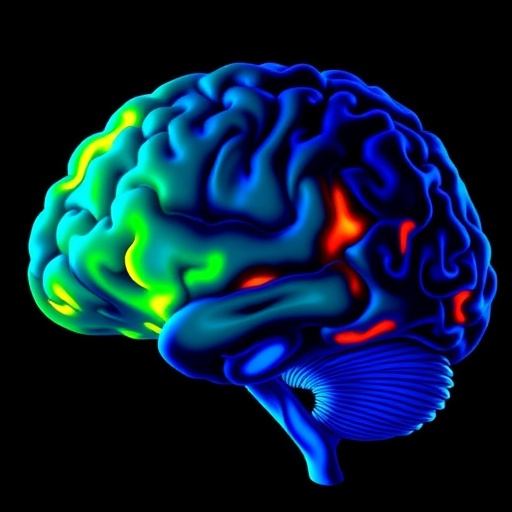
In a groundbreaking study published in Nature Communications, researchers have uncovered pivotal insights into the neural mechanisms underlying tumor-associated seizures, a challenging clinical problem frequently encountered in patients with brain tumors. The investigation reveals how aberrant neural activity in the peritumoral cortex—regions of the brain surrounding the tumor—plays a critical role in the progressive development of these seizures, shedding light on potential therapeutic targets that may alleviate this debilitating symptom.
Seizures are a common and devastating complication of brain tumors, affecting roughly 30-50% of patients diagnosed with gliomas and other intracranial neoplasms. Despite their prevalence, the precise neural alterations within the cortical regions adjacent to tumors have remained poorly understood, complicating clinicians’ ability to prevent or mitigate seizure activity without detrimental side effects. The current study fills this knowledge gap, providing a detailed exploration of the physiological changes that precipitate seizure onset and progression in peritumoral tissue.
Employing advanced electrophysiological recordings combined with sophisticated imaging techniques, the researchers meticulously mapped neural activity in animal models implanted with tumors. They found distinctive patterns of hyperexcitability and altered synaptic function in the peritumoral cortex, contrasting sharply with both tumor core regions and distant healthy brain tissue. These maladaptive changes promote an environment where spontaneous, recurrent seizures emerge and often escalate over time.
At the cellular level, key neurons within the peritumoral cortex exhibit dysregulated firing patterns, with an imbalance favoring excessive excitatory neurotransmission coupled with impaired inhibitory control. This disruption is partly driven by a maladaptive remodeling of neuronal circuits, triggered by molecular signals emanating from the tumor microenvironment. Such remodeling undermines normal cortical homeostasis, creating ectopic foci of epileptiform activity that serve as seizure generators.
Importantly, the study highlights alterations in specific neurotransmitter systems, notably glutamatergic and GABAergic signaling pathways. Elevated glutamate release and impaired GABA receptor function exacerbate cortical hyperexcitability. The researchers also observed changes in astrocytic and microglial cells, which modulate synaptic function and contribute to neuroinflammation—factors that further potentiate seizure risk in tumor-afflicted brains.
The progression from initial seizure susceptibility to chronic, recurrent epileptic events appears to be driven by a feed-forward loop where seizure activity itself promotes further molecular and cellular disturbances in the peritumoral cortex. This vicious cycle enhances neuroplastic changes that entrench seizure networks, making them increasingly resistant to conventional anti-epileptic drugs.
To unravel the temporal dynamics of seizure evolution, the team conducted longitudinal studies demonstrating that early aberrant activity in peritumoral neurons precedes gross seizure manifestation. This suggests a window of opportunity for therapeutic intervention before seizures become clinically overt. Targeting the abnormal peritumoral environment at this stage may prevent the establishment of entrenched epileptogenic circuits.
Intriguingly, the research also identifies molecular candidates that could serve as biomarkers for seizure risk evaluation in patients with brain tumors. Biomarkers derived from the altered neuronal and glial profiles might someday facilitate early diagnosis and personalized treatment strategies, optimizing seizure management without compromising antitumor therapies.
Furthermore, the study challenges existing paradigms by emphasizing the heterogeneity of seizure pathophysiology across different tumor models. Variations in tumor type, location, and genetic profile are shown to influence the nature and degree of cortical dysfunction, underscoring the need for tailored therapeutic approaches based on individual tumor biology.
From a clinical perspective, these findings emphasize the importance of integrating neurophysiological assessment in the management of brain tumor patients. Understanding the intricate interplay between tumor growth and surrounding neural circuits could improve timing and selection of interventions, including surgery, chemotherapy, radiotherapy, and neuromodulation techniques aimed explicitly at controlling seizures.
The research team advocates for the development of novel pharmacological agents that restore the excitatory-inhibitory balance in the peritumoral cortex. Experimental compounds targeting synaptic receptors or neuroinflammatory pathways show promise in preclinical trials, offering hope for more effective seizure control without exacerbating tumor progression or inducing severe side effects.
Beyond immediate therapeutic implications, this study provides a framework for future investigations exploring the intersection of oncological and neurological disorders. The concept of a tumor influencing adjacent brain networks through aberrant neural activity could extend to other neurological symptoms often found in cancer patients, such as cognitive impairment and mood disturbances.
In conclusion, this seminal work elucidates a critical mechanism by which brain tumors orchestrate maladaptive neural changes that precipitate and sustain seizure activity in the surrounding cortex. By defining the electrophysiological and molecular characteristics of the peritumoral microenvironment, the study paves the way for innovative diagnostic and therapeutic strategies that could transform the clinical landscape for patients suffering from tumor-associated epilepsy.
As these findings ripple through the neuroscience and oncology communities, they reignite hope for the millions affected by seizures linked to brain tumors. This research not only enriches our understanding of seizure pathophysiology but also ignites a path toward precision medicine innovations that promise to enhance quality of life for countless patients worldwide.
Subject of Research: Neural mechanisms underlying tumor-associated seizures, focusing on aberrant activity in the peritumoral cortex.
Article Title: Aberrant neural activity in the peritumoral cortex underlies the progression of tumor-associated seizures.
Article References:
Bouwen, B.L.J., Bolleboom, A., Tang, Y. et al. Aberrant neural activity in the peritumoral cortex underlies the progression of tumor-associated seizures. Nat Commun 16, 10846 (2025). https://doi.org/10.1038/s41467-025-66226-5
Image Credits: AI Generated


