


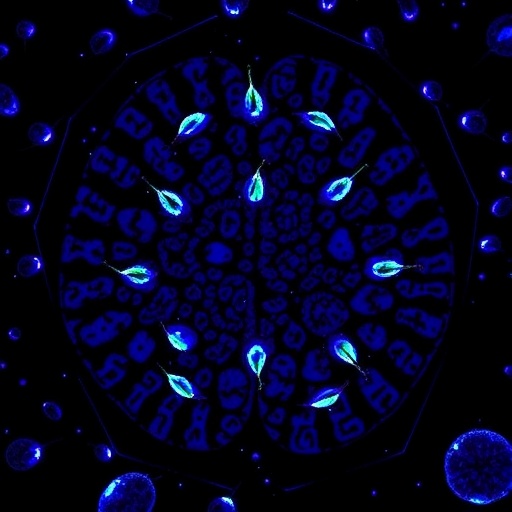
In the intricate labyrinth of the mammalian brain, one of the grand challenges facing neuroscientists is the precise classification of neurons based on their connectivity patterns. Recent advancements have made it possible to sample over 70,000 individual neurons within a millimeter-scale volume of mouse cortex, paving the way for unprecedented insights into the diversity and specialization of these cells. Yet despite the vast dataset, identifying rare neuronal subtypes remains a formidable task, owing largely to their infrequent occurrence and the painstaking process of axonal proofreading. This challenge becomes even more acute when connectivity itself must inform subclass identification, a process that traditionally demands enormous manual effort and expert interpretation.
Breakthrough research has now demonstrated a powerful approach that harnesses the fine nuances of perisomatic structures—ultrastructural features surrounding the cell body—to efficiently classify neurons, especially those rare varieties that elude conventional detection methods. By exploring the relationship between perisomatic features and connectivity profiles, researchers have uncovered compelling correlations that intersect morphology, synaptic targeting, and ultimately, cellular identity. This nuanced relationship offers a novel lens through which scientists can sift through massive neuronal datasets to locate cells defined by their distinctive synaptic arrangements.
Among the inhibitory neuron classes, chandelier cells stand out as a uniquely identifiable rare type with a remarkable axonal specialization: the formation of synapses exclusively onto the axon initial segment (AIS) of excitatory pyramidal neurons. This connectivity pattern has been documented across multiple species, including monkeys, cats, rats, and mice, establishing chandelier cells as a specialized regulator of neuronal excitability and circuit dynamics. Traditionally, confirming the chandelier identity of cells demands meticulous mapping of their synaptic outputs, a process complicated by the rarity of these cells in large populations and the technical hurdles of tracking axonal arbors.
Leveraging a single, rigorously proofread chandelier cell as a reference, the research team employed a computational strategy to probe the high-dimensional perisomatic feature space. They isolated the 20 nearest neighbor neurons in this complex feature landscape, subsequently scrutinizing their connectivity profiles. Encouragingly, sixteen of these neighbors exhibited hallmark connectivity consistent with chandelier cells, confirmed by their axonal morphology characterized by distinctive vertical chains of synapses and, more importantly, by the unique targeting of the AIS. Such adjacency in feature space translated to remarkable specificity, as random sampling of other inhibitory interneurons failed to identify any chandelier cells, highlighting a significant enrichment that surpassed the threshold of statistical chance.
The researchers further refined their method by quantifying synaptic targeting relative to the soma, leveraging angular distribution metrics as a spatial proxy for AIS innervation. This innovative analytical framework enabled straightforward detection of chandelier connectivity without exhaustive manual annotation. Synapses positioned at particular angular ranges relative to the pyramidal soma accurately flagged AIS contacts. Heat maps and angular histograms vividly illustrated how chandelier neurons distinctively cluster their synapses in this perisomatic domain, a feature sharply contrasting with other inhibitory neurons that lacked this targeted synaptic architecture.
This methodology’s robustness was underscored in a subsequent exploratory phase, where researchers sought neurons characterized by a less understood connectivity profile. They identified a rare interneuron innervating specific pyramidal subclasses—namely, the 5P-NP pyramidal neurons in layer 5—that themselves are low in abundance and receive sparse synaptic input. Targeting this cell type, the team again extracted the 20 nearest neighbors from the perisomatic feature space. Remarkably, thirteen of these neighbors shared the same pronounced output preference to 5P-NP neurons, signifying a highly significant enrichment against a background of randomly selected interneurons. This successful application fortifies the premise that perisomatic ultrastructural features can serve as reliable guides to uncovering novel and rare neuronal types distinguished by their synaptic connectivity.
At the heart of this approach lies an integrative pipeline combining high-resolution morphological imaging, computational embedding techniques such as Uniform Manifold Approximation and Projection (UMAP), and rigorous statistical validation. By translating complex, multidimensional perisomatic data into searchable and interpretable feature spaces, neuroscientists gain a formidable tool for classifying neuronal taxonomy beyond classical gene expression or electrophysiological profiles. These fine structural details reflect not only cell identity but also their functional roles within microcircuits, bridging morphology and connectivity in unprecedented ways.
The implications of this work ripple beyond cell classification. Chandelier cells, for instance, have been implicated in modulating cortical excitation-inhibition balance, with deviations linked to neurological disorders such as epilepsy and schizophrenia. Improved ability to reliably detect and study these cells opens new frontiers for understanding disease mechanisms and developing targeted interventions. Similarly, the identification of interneurons with selective target specificity deepens our grasp of circuit-level computations driving sensory processing and cognition, potentially inspiring new avenues for bioinspired neural network designs.
Moreover, the ability to dramatically streamline the search for rare cells offers practical advantages for large-scale connectomics projects, where the volume and complexity of data threaten to overwhelm traditional analysis methods. Automated or semi-automated classification pipelines based on perisomatic ultrastructure promise to accelerate the pace of discovery and democratize access to detailed circuit maps, enabling researchers across disciplines to harness neuronal diversity in their investigations.
Critically, the use of perisomatic features preserves key spatial and synaptic information that is often lost in transcriptomic or bulk electrophysiological approaches. The spatial arrangement of synapses, proximity to soma, and structural motifs of axonal branches collectively capture functional nuances integral to cortical computation. As such, this work underscores the importance of multimodal characterization strategies that embrace morphology, connectivity, and molecular identities to assemble a holistic picture of brain circuits.
As this method gains traction, it could pave the way for comprehensive atlases that catalogue neuronal diversity through combined ultrastructural and connectivity fingerprints. These reference maps would provide invaluable benchmarks for developmental studies, comparative neuroanatomy, and translational research exploring heterogeneity in health and disease. Ultimately, perisomatic ultrastructure might prove to be a universal hallmark that delicately indexes the identity and function of millions of neurons woven into the mammalian cortex.
This innovation exemplifies how convergence between neuroanatomy, computational modeling, and statistical rigor can unlock hidden patterns within bewilderingly complex data. By using minuscule structural details around cell bodies as beacons, neuroscientists can now navigate dense neuronal forests to spotlight rare cell types that have long evaded categorization. As more datasets and sophisticated algorithms emerge, the horizon near where neuron classification becomes routine and richly informative comes into clearer focus.
In conclusion, the exploration of perisomatic ultrastructural features not only illuminates the cellular taxonomy of the cortex but also endows the neuroscience community with powerful tools to unravel the architecture of brain circuits. This work signals a paradigm shift toward leveraging minute anatomical cues to decipher the cellular building blocks of cognition and behavior, promising transformative insights into the brain’s inner workings.
Cite Scienmag News
Cassandra Pierce. (April 14, 2025). Perisomatic Ultrastructure Distinguishes Mouse Cortex Cells. Scienmag. https://scienmag.com/perisomatic-ultrastructure-distinguishes-mouse-cortex-cells/
Cassandra Pierce. "Perisomatic Ultrastructure Distinguishes Mouse Cortex Cells." Scienmag, 14 April 2025, https://scienmag.com/perisomatic-ultrastructure-distinguishes-mouse-cortex-cells/. Accessed 3 September 2026.
Cassandra Pierce. "Perisomatic Ultrastructure Distinguishes Mouse Cortex Cells." Scienmag. April 14, 2025. https://scienmag.com/perisomatic-ultrastructure-distinguishes-mouse-cortex-cells/


