

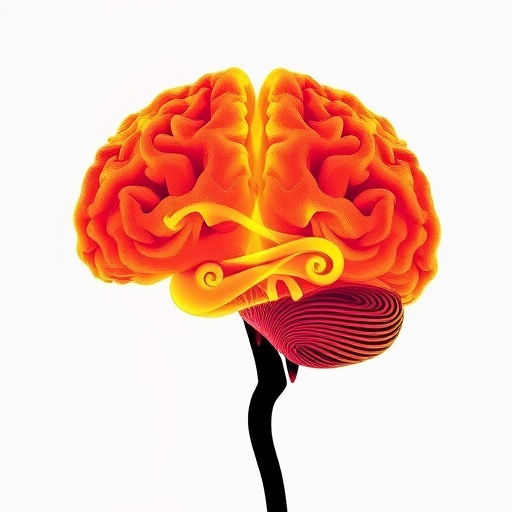
In a groundbreaking study poised to reshape our understanding of schizophrenia, researchers have unveiled compelling evidence linking peripheral inflammation to cognitive deficits in drug-naive patients through a complex neural mechanism involving hippocampal-thalamo-visual circuitry dysfunction. This revelation opens new avenues for both diagnosis and treatment, highlighting the crucial role of the body’s immune response in affecting brain function in psychiatric conditions.
Schizophrenia, traditionally characterized by symptoms such as hallucinations, delusions, and disorganized thinking, has long baffled neuroscientists due to its multifaceted pathology. Cognitive impairments, often overlooked, significantly impact patients’ quality of life and functional outcomes. Until now, the mechanistic underpinnings of these cognitive deficits remained elusive, particularly in individuals who have not yet been exposed to antipsychotic medications, which themselves can influence brain function.
The study, led by Gou, Ma, Jia, and their colleagues, meticulously focused on drug-naive schizophrenia patients to eliminate confounding factors related to pharmacological treatments. By doing so, the team aimed to isolate the intrinsic pathophysiological mechanisms driving cognitive dysfunction from medication effects, providing a clearer picture of the disease’s natural biology.
Central to the findings is the role of peripheral inflammation—a state where immune activity outside the brain exerts systemic effects that influence neurological processes. Using advanced imaging modalities combined with sophisticated molecular analyses, the researchers identified elevated inflammatory markers in the bloodstream of drug-naive schizophrenia patients. These markers correlated strongly with disturbances within specific brain circuits critical for cognition.
The hippocampus, thalamus, and visual cortex form a triad of interconnected brain structures vital for memory formation, sensory integration, and higher-order processing. The hippocampus orchestrates memory encoding and retrieval, the thalamus functions as a relay center modulating sensory inputs, and the visual cortex processes visual information fundamental for environmental interaction. Dysfunction across this integrated network had not been fully elucidated in the context of schizophrenia-related cognitive deficits prior to this study.
By applying functional magnetic resonance imaging (fMRI) and diffusion tensor imaging (DTI), the research team delineated impaired connectivity and reduced synaptic integrity within the hippocampal-thalamo-visual pathways. These disruptions correlated with peripheral inflammatory status, suggesting a direct mechanistic link where systemic immune challenges propagate to brain circuit dysfunction.
At the molecular level, the authors propose that circulating cytokines and other inflammatory mediators penetrate the blood-brain barrier or alter its permeability, triggering neuroinflammatory cascades within critical neural hubs. This neuroinflammation compromises synaptic plasticity and neuronal communication, leading directly to observed cognitive impairments in attention, working memory, and executive function.
This novel framework reframes schizophrenia’s cognitive symptoms as not solely intrinsic brain defects but as consequences of dynamic neuroimmune interactions. Such insights challenge the traditional neurocentric view, emphasizing the importance of systemic factors in psychiatric disease manifestation and progression.
Of particular translational value, this study suggests that early therapeutic interventions targeting peripheral inflammation could mitigate cognitive decline in schizophrenia. Anti-inflammatory agents, immunomodulators, or lifestyle modifications aimed at reducing systemic inflammation might complement existing antipsychotic regimens or serve as preventive strategies in high-risk, drug-naive individuals.
Moreover, the identification of peripheral inflammatory biomarkers associated with hippocampal-thalamo-visual circuit dysfunction offers clinicians potential tools for early diagnosis and monitoring disease progression. Biomarkers detectable through minimally invasive blood tests could revolutionize personalized medicine approaches in schizophrenia care.
Importantly, the research underscores the hippocampus’s vulnerability to inflammatory insults, highlighting its central role in the pathophysiology of cognitive deficits. Future exploration of molecular pathways within this structure might reveal additional therapeutic targets, such as microglial activation states or neurotrophic factor modulation.
The study also underscores the relevance of the thalamus in filtering and modulating sensory information, suggesting that its dysfunction contributes to both cognitive impairments and sensory-perceptual abnormalities common in schizophrenia. Understanding how peripheral inflammation alters thalamic function could provide insight into the broader neurobiological disturbances characteristic of this disorder.
Visual cortex involvement in cognitive dysfunction presents a novel angle that has received less attention. Disruptions here may affect visual processing speed and integration, impairing tasks reliant on visual working memory and perception. This highlights the multi-sensory nature of cognitive deficits in schizophrenia and the need for comprehensive treatment modalities.
Intriguingly, these findings raise questions about the temporal sequence and causality between peripheral inflammation and circuit dysfunction. Is inflammation an initiating event triggering neurocircuit alterations, or does it exacerbate preexisting vulnerabilities? Longitudinal studies will be critical to disentangle these dynamics and determine therapeutic windows.
The research methodology itself represents a significant advance, combining systemic immunological assessments with cutting-edge neuroimaging to map pathological changes across functional brain networks. Such integrative approaches exemplify the future of psychiatric neuroscience, where bridging peripheral and central nervous system data becomes standard practice.
Overall, this landmark study by Gou and colleagues fundamentally enhances our understanding of schizophrenia’s cognitive dimension. By establishing a clear link between peripheral inflammation and neural circuit dysfunction, the authors open fresh perspectives for interventions aimed at improving cognition and quality of life for patients worldwide. The implications extend beyond schizophrenia, potentially illuminating inflammatory contributions to cognitive decline in other neuropsychiatric disorders.
As the global burden of schizophrenia continues to rise, with cognitive deficits representing a formidable challenge, these findings offer a beacon of hope. Enhanced diagnostics, novel anti-inflammatory strategies, and targeted remediation of hippocampal-thalamic-visual networks could transform patient outcomes. The integration of immunology and neurocircuitry stands as a promising frontier in the quest to unravel and treat the complex pathogenesis of cognitive dysfunction in mental illness.
Subject of Research: Cognitive deficits in drug-naive schizophrenia mediated by peripheral inflammation and hippocampal-thalamo-visual circuitry dysfunction.
Article Title: Peripheral inflammation mediates cognitive deficits in drug-naive schizophrenia through hippocampal-thalamo-visual circuitry dysfunction.
Article References:
Gou, N., Ma, Q., Jia, M. et al. Peripheral inflammation mediates cognitive deficits in drug-naive schizophrenia through hippocampal-thalamo-visual circuitry dysfunction. Schizophr (2026). https://doi.org/10.1038/s41537-025-00719-6
Image Credits: AI Generated


