


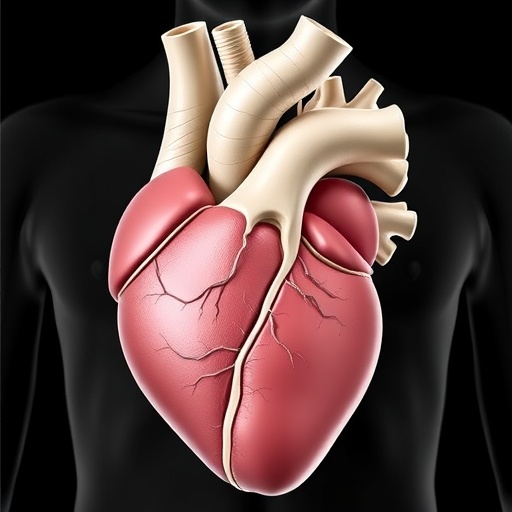
In a groundbreaking study that redefines our understanding of cardiac development, researchers have uncovered that the pericardium, the protective sac enveloping the heart, emerges as a distinct anatomical structure during heart formation. This revelation challenges long-held assumptions in developmental biology, positioning the pericardium not as a mere byproduct of surrounding tissue but as an independently specified organ with unique developmental origins. Utilizing cutting-edge imaging and molecular profiling techniques, the investigation provides unprecedented insight into the embryological timeline and cellular dynamics responsible for the pericardium’s genesis, offering profound implications for congenital heart disease research and regenerative medicine.
At the heart of this discovery lies the intricate choreography of morphogenetic events occurring during early embryogenesis. Traditionally, the pericardium has been perceived simply as a derivative of mesodermal tissues that loosely encapsulate the developing myocardium and epicardium. However, the current study reveals a discrete lineage and molecular signature that distinguish the pericardium as a specialized structure evolving concurrently but independently from the heart muscle itself. This paradigm shift invites a reassessment of how cardiac compartments are delineated and interconnected during development.
Employing state-of-the-art live imaging and lineage-tracing methodologies, the researchers followed the fate of progenitor cells in model vertebrate embryos. These high-resolution techniques made it possible to visualize, in real-time, the emergence of the pericardial layer from a primordial progenitor pool that segregates early in heart morphogenesis. The pericardial precursors, marked by unique gene expression profiles, diverge from neighboring cardiac mesodermal cells well before the full maturation of the ventricles and atria, indicating an autonomous developmental pathway.
Molecular characterization of these progenitors revealed the activation of specific signaling cascades not previously associated with pericardial development. These pathways, involving critical growth factors and transcriptional regulators, orchestrate cellular behaviors encompassing proliferation, migration, and extracellular matrix deposition. This molecular blueprint not only delineates the identity of pericardial cells but also implies potential targets for therapeutic modulation in conditions where pericardium formation is defective or compromised.
The structural formation of the pericardium as an enclosed sac in early development was observed to play a vital role in the dynamic biomechanics of the fetal heart. By creating a distinct compartment, the pericardium provides a lubricated environment that facilitates rhythmic myocardial expansions and contractions. This biomechanical function underscores the evolutionary importance of having a dedicated protective sheath, as it prevents friction and injury between the heart and adjacent thoracic structures during continuous cycles of cardiac motion.
In addition to its mechanical contributions, the study highlights emerging evidence that the pericardium acts as a signaling hub during later stages of heart development. The pericardial cells secrete paracrine factors influencing endothelial remodeling, immune cell recruitment, and myocardial maturation. This crosstalk suggests the pericardium exerts far-reaching effects beyond mere physical protection, participating in the modulation of cardiac physiology through biochemical interactions.
The independence of pericardium formation further implies specialization in the repair processes post-injury. Experimental data points to the activation of pericardial progenitor cells in response to cardiac damage, mobilizing to aid in tissue regeneration. Therapeutically harnessing these cells may open new avenues in tackling heart failure and pericarditis by promoting endogenous repair mechanisms rather than relying solely on external interventions.
From an evolutionary perspective, the identification of separately specified pericardial progenitors suggests that the partitioning of the heart’s protective layers predates complex cardiac morphologies observed in vertebrates. Comparative developmental analyses in various species indicate that the pericardium’s distinct origin is a conserved feature, illustrating a fundamental adaptation to protect an organ with incessant mechanical demands.
The profound implications of this research extend toward understanding congenital pericardial defects, which, although rare, can result in severe clinical presentations such as pericardial agenesis or constrictive pericarditis. A deeper grasp of the molecular and cellular basis for pericardial formation may enhance prenatal diagnostic approaches and inform surgical strategies with greater precision and efficacy.
Moreover, this study injects momentum into the field of tissue engineering and regenerative cardiology. With the knowledge of progenitor cell identity and lineage-specific markers, scientists are better equipped to replicate pericardial tissue in vitro, enabling the development of bioengineered cardiac implants with integrated protective layers. Such advances could revolutionize therapeutic options for patients requiring heart repair or replacement.
The methodology employed in this study, which involved integrative use of genomic, proteomic, and spatial transcriptomic tools, sets a new standard for the dissection of complex organogenesis processes. The ability to correlate gene expression profiles with precise developmental stages and anatomical landmarks provides an invaluable resource for the broader scientific community engaged in morphogenesis research.
Intriguingly, the data suggest that pericardial development may be susceptible to environmental influences, including maternal health and exposure to teratogens, underscoring the need for comprehensive studies on prenatal conditions impacting cardiac morphogenesis. Future investigations are poised to unravel the interplay between genetic programming and external factors in shaping the heart and its protective layers.
Given the vital role the pericardium plays not only in mechanical support but also in signaling, immunity, and repair, this landmark study reaffirms the complexity of cardiac development and challenges researchers to view the heart as an integrated system of multiple synergistic structures rather than a solitary muscular pump.
In conclusion, the newfound understanding that the pericardium forms as a distinct structure during heart formation represents a seminal advance in cardiovascular biology. This insight unlocks new frontiers for diagnostic, therapeutic, and regenerative approaches, heralding a future where congenital defects are prevented, and cardiac repair is enhanced through targeted manipulation of pericardial progenitors.
As the scientific community digests these findings, interdisciplinary collaborations spanning developmental biology, cardiology, bioengineering, and clinical sciences will undoubtedly emerge, working to translate this fundamental knowledge into tangible health benefits, cementing the pericardium’s vital role in cardiac wellness and disease.
Cite Scienmag News
Ophelia Keating. (September 29, 2025). Pericardium Develops as Distinct Heart Structure. Scienmag. https://scienmag.com/pericardium-develops-as-distinct-heart-structure/
Ophelia Keating. "Pericardium Develops as Distinct Heart Structure." Scienmag, 29 September 2025, https://scienmag.com/pericardium-develops-as-distinct-heart-structure/. Accessed 4 September 2026.
Ophelia Keating. "Pericardium Develops as Distinct Heart Structure." Scienmag. September 29, 2025. https://scienmag.com/pericardium-develops-as-distinct-heart-structure/


