

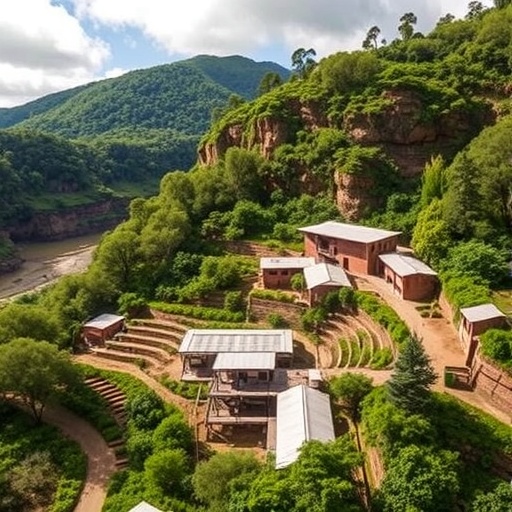
In the heart of Zimbabwe, the verdant landscapes of Penhalonga have long been a symbol of natural beauty and ecological richness. Yet, beneath this seemingly untouched surface lies a narrative of transformation driven by the relentless activities of artisanal mining. This small-scale mining, often dismissed as informal or unregulated, has dramatically altered the ecosystem and topography of Penhalonga, raising urgent questions about environmental sustainability and community well-being.
Artisanal mining in Penhalonga is not a new phenomenon, but its scale and intensity have accelerated in recent years, spurred by global demand for precious minerals such as gold. This growth has turned the mining sector into a double-edged sword — providing much-needed economic opportunities for impoverished communities, while simultaneously inflicting severe damage on the natural environment. The landscapes once dominated by dense vegetation and fertile soils now bear the scars of intensive excavation, leaving behind barren patches and altered waterways.
One of the most striking features of this transformation is the physical reconfiguration of the terrain. Artisanal miners employ rudimentary methods such as manual digging and sluicing, creating deep pits and extensive networks of tunnels that disrupt the soil structure. These excavations not only jeopardize the stability of the ground but also accelerate erosion processes, leading to sedimentation in nearby rivers and streams. The cumulative effect is a fragmented landscape where the original contours have been reshaped into a patchwork of degraded and unstable zones.
The environmental impacts extend beyond mere topographical changes. The use of mercury and other toxic substances in gold extraction has introduced hazardous pollutants into water bodies, with dire consequences for aquatic ecosystems and human health. Mercury contamination, in particular, poses a critical risk by bioaccumulating through the food chain, threatening biodiversity and the livelihoods of communities dependent on fishing and agriculture. Despite awareness campaigns, regulation and enforcement remain weak, allowing these harmful practices to persist.
In addition to chemical pollution, sediment runoff from disturbed soils contributes to the turbidity and altered chemistry of local waterways. This decline in water quality has detrimental effects on the flora and fauna that rely on clear, oxygen-rich streams. Fish populations, amphibians, and macroinvertebrates have shown signs of decline, while invasive species often exploit the disturbed habitats created by mining operations, further disrupting ecological balance.
The social dimensions of artisanal mining are complex and multifaceted. It provides critical income for vulnerable populations, including women and youth, who often have few alternative livelihood options. However, the lack of formal regulation means that working conditions are precarious, with miners facing health hazards from exposure to dust, chemicals, and potential mine collapses. Moreover, conflicts sometimes arise over land ownership and resource access, adding socio-political strain to the environmental challenges.
In response to these mounting issues, local authorities and researchers have begun to explore sustainable approaches to artisanal mining. These strategies seek to balance economic benefits with environmental stewardship by promoting safer mining techniques and rehabilitation of degraded sites. Training programs aimed at introducing less harmful extraction methods, such as gravity concentration without mercury, have shown promising results, although widespread adoption remains a challenge.
Rehabilitation efforts focus on restoring vegetation cover and stabilizing soils to reduce erosion and sedimentation. Native plant species are prioritized for reforestation projects, helping to reestablish habitats and improve carbon sequestration. These initiatives also serve as community engagement platforms, raising awareness of environmental conservation while offering alternative income through nurseries and ecological tourism.
Scientific studies underpinning these initiatives rely on advanced remote sensing technologies, geographic information systems (GIS), and field surveys to map landscape changes over time. By quantifying the extent of environmental degradation and identifying hotspots of mining activity, researchers provide critical data for policymakers and stakeholders. This evidence-based approach helps target limited resources for maximum impact and supports the development of adaptive management plans.
Despite these efforts, several obstacles hinder the path toward sustainability. The informal nature of artisanal mining limits governmental oversight and tax revenues, reducing funds available for environmental monitoring and rehabilitation. Additionally, economic pressures driven by poverty and global commodity markets incentivize miners to prioritize short-term gains over long-term sustainability. Addressing these challenges requires integrated policies that link environmental regulation with social development programs.
Climate change adds another layer of complexity to Penhalonga’s landscape transformation. Altered rainfall patterns and increasing temperatures may aggravate soil degradation and water scarcity, exacerbating the vulnerabilities of mining communities and ecosystems alike. Adaptive measures must therefore incorporate climate resilience, ensuring that mining-related interventions do not further stress fragile environmental systems.
Engagement with local communities remains crucial for any meaningful progress. Inclusive approaches that respect traditional knowledge and values can foster stewardship and collective action. Empowering local stakeholders to participate in decision-making enhances compliance with regulations and the success of conservation efforts. Moreover, partnerships between governments, non-governmental organizations, and the private sector can mobilize technical expertise and funding.
Looking ahead, the future of Penhalonga hinges on the ability to reconcile economic needs with environmental and social responsibilities. Artisanal mining will likely persist as a livelihood strategy, but without strategic interventions, the long-term costs could outweigh the benefits. Embracing innovative technologies, social empowerment, and rigorous governance frameworks can help transform this sector from a driver of degradation into a model of sustainable resource use.
The transformation of Penhalonga’s landscape serves as a microcosm of global challenges associated with small-scale mining. It highlights the intricate interdependencies between nature, society, and economy in resource-rich regions under pressure. As the world seeks to meet mineral demands for a sustainable future, understanding and mitigating the impacts of artisanal mining is paramount to preserving both human and ecological health.
In essence, the story of Penhalonga is one of resilience and urgency. It underscores that the pursuit of economic development, especially in marginalized regions, need not come at the expense of the environment. With informed policies, community participation, and scientific innovation, it is possible to safeguard landscapes and livelihoods for generations to come, turning the tide of destruction into a pathway for restoration and prosperity.
Subject of Research:
Landscape transformation and environmental impacts of artisanal mining in Penhalonga, Zimbabwe
Article Title:
Digging deep: the transformation of Penhalonga’s landscape through artisanal mining
Article References:
Mhangara, P., Matyukira, C. & Otunola, B. Digging deep: the transformation of Penhalonga’s landscape through artisanal mining. Environ Earth Sci 85, 31 (2026). https://doi.org/10.1007/s12665-025-12668-5
Image Credits:
AI Generated


