


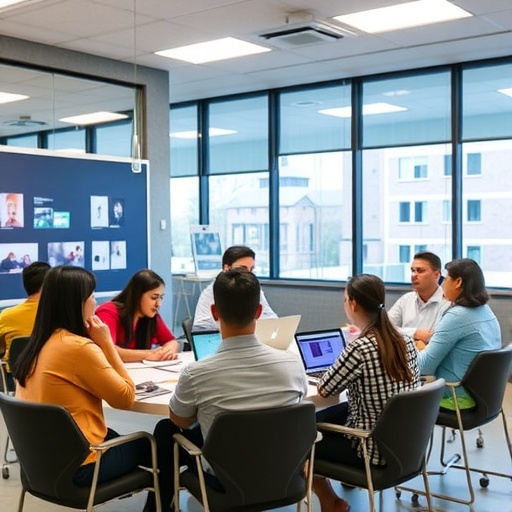
In the rapidly evolving field of education, particularly within the realm of biomedical engineering, new paradigms are constantly emerging. One such transformative approach explores the intersection between peer networks and self-regulated learning, as outlined in a ground-breaking study titled “Birds of a Feather Self-Regulate Together.” Conducted by notable researchers Luo, Tise, and Patterson, this work examines how collaborative peer interactions foster self-regulated learning environments among students pursuing a career in the ever-complex domain of biomedical engineering.
Self-regulated learning is a critical skill for students who are expected to navigate rigorous academic challenges independently. The study highlights that when peers form networks—or cohorts—they tend to self-regulate their learning in a manner that not only boosts individual performance but also enhances the collective academic experience. The implications of such findings could reshape how educational institutions structure learning environments, emphasizing the necessity for collaboration over competition.
In this research, the authors delve deeper into the mechanics of peer networks. They identify that students who frequently interact with one another—be it through study groups, online forums, or collaborative projects—are more likely to develop strategies for managing their time effectively, setting academic goals, and monitoring their own learning processes. Such networks act as support systems that propel students forward, especially during challenging coursework that is often a hallmark of biomedical engineering curricula.
Moreover, the dynamics observed within these peer networks reveal that students derive motivation from their interactions, pushing one another towards excellence. This social motivation arises from a shared understanding of the academic rigors they face, which leads to a collective stimulus encouraging each member to strive for higher academic achievements. This influence can be profound; students within supportive cohorts often report lower levels of stress and higher satisfaction with their educational experiences.
The study further emphasizes the importance of diversity within peer networks. When students collaborate with individuals who possess varying levels of expertise, backgrounds, and perspectives, the opportunities for learning and self-improvement multiply. By discussing challenging concepts with peers who approach problems differently, students develop a more multi-faceted understanding of biomedical engineering principles. This diversity of thought enriches the learning environment and creates a fertile ground for innovation and creativity.
In the context of biomedical engineering education, where interdisciplinary knowledge is paramount, leveraging peer networks becomes especially pertinent. The curriculum often encompasses a range of subjects from biology to design, necessitating collaborative learning experiences. By engaging with their peers, students can consolidate their understanding of complex concepts, especially when discussing real-world applications of their studies.
The concept of peer self-regulation through networks also dovetails with existing educational theories that advocate for experiential learning. Students are encouraged to take ownership of their learning journeys, reflecting on their performance and identifying areas of improvement. Encouraged by their peers, they engage in metacognitive practices that become essential for successful learning. These practices not only help students in their current studies but also equip them with skills crucial for their future careers in the biomedical field.
An interesting revelation from the research is the phenomenon of “social learning,” which occurs when peer interactions stimulate learner engagement and commitment to academic tasks. This intrinsic motivation leads students to pursue their studies with a sense of purpose. Such effects underline the need for educators to not only facilitate peer interactions but also to create curricular structures that inherently encourage teamwork and collaboration.
The findings from the study could lead to practical applications in educational settings, suggesting the integration of more collaborative projects in biomedical engineering programs. Educators could implement strategies that encourage formation of study groups or peer mentoring systems, thus aligning educational practices with the natural inclinations of students towards network-based learning. Learning communities can foster resilience, as students feel a sense of belonging and support, which may shield them from academic burnout.
Additionally, the results of this study raise questions on how technology can be harnessed to enrich peer networks. With advancements such as online platforms and collaborative software tools, there’s an opportunity to expand the boundaries of peer interaction beyond physical classroom spaces. Virtual study groups, online forums, and digital project collaborations can allow for greater flexibility and inclusiveness, accommodating diverse student schedules and learning preferences.
The educational implications extend beyond academic performance; fostering self-regulation through peer networks can cultivate essential life skills. As students learn to collaborate, communicate, and negotiate within teams, they imbibe skills that are crucial for their future professional careers in biomedical engineering. Such competencies do not merely aid in job acquisition but also enhance workplace functionality and innovation potential.
Overall, “Birds of a Feather Self-Regulate Together” not only contributes to the academic discourse surrounding self-regulated learning but provides actionable insights for educators seeking to innovate in their teaching methodologies. By prioritizing peer networks as a fundamental component of the educational experience, institutions can create enriched learning environments conducive to lifelong learning and professional development.
As globalization leads to increasingly interconnected professional landscapes, the ability to work collaboratively will be invaluable. This research underscores the importance of crafting educational spaces that reflect such realities, integrating peer networking as a strategic pillar in academic curricula. In doing so, the field of biomedical engineering can cultivate not only proficient engineers but also adept collaborators and innovators capable of tackling the multifaceted challenges of modern healthcare and biomedical advancements.
In conclusion, Luo, Tise, and Patterson’s work opens a new chapter in how academic institutions approach the development of self-regulated learning among students. The emphasis on peer networks highlights the collective power of collaboration in education and suggests a potential pathway to fostering more engaged, innovative, and resilient learners who are prepared to meet the demands of the biomedical engineering field.
Luo, L., Tise, J.C., Patterson, M.S. et al. Birds of a Feather Self-Regulate Together: The Intersection of Peer Networks and Self-Regulated Learning in Biomedical Engineering. Biomed Eng Education (2025). https://doi.org/10.1007/s43683-025-00170-0
Cite Scienmag News
Richard Spencer. (August 31, 2025). Peer Networks Enhance Self-Regulated Learning in Biomedical Engineering. Scienmag. https://scienmag.com/peer-networks-enhance-self-regulated-learning-in-biomedical-engineering/
Richard Spencer. "Peer Networks Enhance Self-Regulated Learning in Biomedical Engineering." Scienmag, 31 August 2025, https://scienmag.com/peer-networks-enhance-self-regulated-learning-in-biomedical-engineering/. Accessed 4 September 2026.
Richard Spencer. "Peer Networks Enhance Self-Regulated Learning in Biomedical Engineering." Scienmag. August 31, 2025. https://scienmag.com/peer-networks-enhance-self-regulated-learning-in-biomedical-engineering/


