

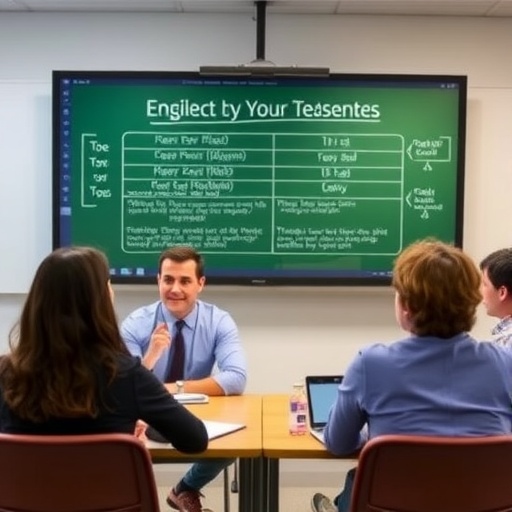
In the evolving landscape of academic conferences, the dynamics of feedback has gained significant attention. In a thought-provoking study, researchers have examined the peer feedback process for workshop presenters at academic meetings. Their inquiry highlights the importance of peer evaluations in enhancing the quality of presentations, ultimately aiming to enrich the learning experiences for both presenters and attendees alike.
The article titled “How Do You Think That Went?” presents an innovative approach to feedback, focusing specifically on the interactions among workshop presenters. This process, rooted in peer evaluation, seeks to create a constructive atmosphere for sharing insights and experiences. By fostering an environment open to candid discussions, the researchers aim to support presenters in refining their skills and receiving diverse perspectives on their work.
At the heart of this investigation is the realization that traditional forms of feedback often fall short. In many contexts, presenters receive feedback merely as a formality, lacking the depth and specificity required to drive meaningful improvements. This new peer feedback process advocates for a more engaged and interactive approach. It encourages participants to collaborate in evaluating each other’s presentations, thereby promoting a culture of continuous improvement and mutual support.
The research involved various academic meetings where different workshop formats were analyzed. Presenters were invited to not only deliver their content but also to engage with their peers in a reflective dialogue. This active participation reshaped the nature of feedback from a monologue into a dialogue, enabling richer exchanges and deeper learning experiences. The researchers documented how this shift positively impacted presenters’ confidence and willingness to share their work.
Moreover, the study employs both qualitative and quantitative methods to assess the effectiveness of the peer feedback process. By gathering data through surveys and feedback forms, the researchers were able to quantify improvements in presenter satisfaction and the perceived quality of feedback received. Presenters reported feeling more supported and encouraged, citing that this collaborative feedback model allowed them to address specific areas of concern that might have gone unnoticed in a traditional setting.
The implications of this research extend beyond mere presentation skills. The findings suggest that the peer feedback process can cultivate a stronger sense of community among participants. When scholars engage in mutual evaluation, they not only enhance their individual presentations but also contribute to a collective growth within their academic fields. This collaborative spirit is essential in fostering innovation and creative solutions to complex issues faced by the community.
A particularly striking aspect of the study is the emphasis on vulnerability in the feedback process. Allowing presenters to express their anxieties and uncertainties enables deeper connections among peers. When individuals share their struggles, they create a safe space where everyone can learn from each other’s experiences. This transparency is crucial in academic settings, where the pressure to perform can often obscure the learning opportunities available through honest dialogue.
The article further stresses the adaptability of this peer feedback process across various disciplines and academic formats. Whether in science, humanities, or social sciences, the principles of constructive feedback can universally apply. This research advocates for a broader adoption of peer evaluations as an integral component of academic culture, suggesting that institutions should prioritize such collaborative practices.
In conclusion, the study led by Dang et al. opens a new chapter in the pursuit of effective feedback within academic environments. Their findings indicate that peer feedback, when effectively implemented, can significantly enhance the learning experience for both presenters and audiences. This approach not only bolsters individual confidence but also fosters a vibrant academic community committed to ongoing growth and development.
As conferences and workshops continue to adapt to the changing tides of the academic world, the insights gained from this research provide a valuable framework for reimagining feedback processes. The authors challenge traditional norms and encourage academics to embrace peer interactions as a meaningful tool for improving the effectiveness of scholarly communication. The ripple effects of this shift could redefine academic discourse, promoting a more collaborative and supportive scholarly community across the globe.
By prioritizing peer feedback in workshop settings, institutions can take significant strides toward creating environments that champion continuous improvement and innovation. The journey toward enhancing academic presentations is not just about individual success but rather about uplifting the collective knowledge and skills of the community, setting the stage for future generations of scholars to thrive.
This study does not just add to the existing literature surrounding feedback practices; it advocates for a paradigm shift in how we perceive and implement evaluation methods in educational settings. The insights drawn from this research will likely inspire other academic institutions to rethink their feedback mechanisms, making the peer feedback process an essential practice in workshops and seminar formats.
With the academic community increasingly recognizing the value of diverse perspectives, the importance of this peer evaluation model cannot be overstated. As detailed in this compelling study, effective feedback is not merely about assessing performance; it’s about fostering an environment conducive to growth, creativity, and collaboration. The research thus provides a robust foundation for fostering academic excellence through the power of mutual support.
In light of these findings, it would be prudent for academic organizers to integrate structured peer feedback sessions into their programs. The benefits will not only enhance individual presentations but also contribute to the broader discourse of knowledge sharing in academic societies. By implementing these practices, the academic community can elevate the quality of workshops and seminars, paving the way for a more engaged and reflective scholarly environment.
Ultimately, Dang et al. have set a benchmark for future research on feedback processes, encouraging scholars to engage with innovative practices that promote growth. As we witness a shift towards more interactive forms of learning, it is essential to recognize the significant role that peer feedback plays in shaping the next generation of academic leaders.
Subject of Research: Peer feedback process for workshop presenters at academic meetings.
Article Title: “How Do You Think That Went?”: A Peer Feedback Process for Workshop Presenters at an Academic Meeting.
Article References:
Dang, K.T., Wiebe, C., Teshima, J. et al. “How Do You Think That Went?”: A Peer Feedback Process for Workshop Presenters at an Academic Meeting.
Acad Psychiatry (2025). https://doi.org/10.1007/s40596-025-02218-3
Image Credits: AI Generated
DOI: https://doi.org/10.1007/s40596-025-02218-3
Keywords: peer feedback, academic workshops, presentation skills, constructive criticism, community building.


