


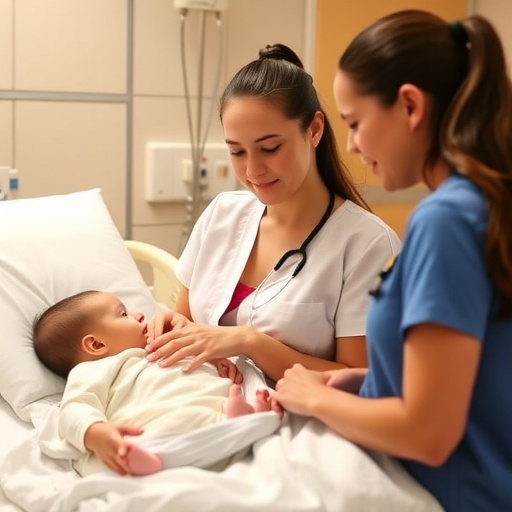
In recent years, the landscape of medical education has undergone transformative changes, particularly in the realm of practical training for burgeoning healthcare professionals. One such area that has gained notable attention is the training of midwifery students, who play a pivotal role in maternal and neonatal care. A groundbreaking study, titled “The effect of peer-assisted episiotomy repair simulation on anxiety and self-efficacy levels in midwifery students,” delves into this dynamic field, examining how innovative simulation strategies can enhance educational outcomes.
The research, conducted by Inan Kirmizigul and colleagues, presents compelling evidence that the integration of peer-assisted learning into practical skill sessions can significantly alleviate anxiety experienced by midwifery students. The study posits that anxiety, a common hurdle faced by students in high-pressure environments, can undermine self-efficacy and impede the acquisition of essential skills. By focusing on episiotomy repair—a pivotal skill for midwives—the researchers confirm that simulation training can have far-reaching benefits in building confidence and competence.
The methodology employed in this study was particularly noteworthy, as it embraced a peer-assisted learning framework, where students engage directly with one another to enhance their learning experiences. The participants were immersed in hands-on simulation exercises that mimicked real-life scenarios they would encounter in clinical settings. This approach not only created an environment conducive to learning but also fostered collaborative skills among students, preparing them for teamwork in actual practice.
Anxiety can often hinder students from fully engaging with their training. The research highlighted that past encounters with clinical skills often left students feeling ill-prepared, leading to increased levels of stress when faced with similar tasks. By utilizing simulations, the study demonstrated a marked reduction in anxiety levels among participants. Students reported feeling more equipped to handle real-world scenarios, thereby bridging the gap between theoretical knowledge and practical application.
Furthermore, the study also addresses the impact of peer-assisted learning on the students’ self-efficacy levels. Self-efficacy, defined as one’s belief in their capabilities to execute behaviors necessary to produce specific performance attainments, is paramount in healthcare education. Empowering students through a supportive peer framework not only elevates their confidence but also encourages them to take initiative in their learning processes. The findings indicate that students who engaged in peer-assisted simulation developed a stronger belief in their ability to perform complex clinical tasks.
In addition to the psychological benefits, the study underscores the importance of practical skills in midwifery. Episiotomy repair, while often a routine procedure, carries significant implications for both maternal and neonatal health. Ensuring that midwifery students are proficient in such skills can improve outcomes for mothers and infants alike. As such, this research contributes to a larger dialogue about the necessity of comprehensive training programs that prioritize both technical skills and emotional resilience.
The implications of these findings extend beyond the confines of individual training programs. They suggest that educational institutions must invest in dynamic and responsive training strategies that prioritize active learning and peer engagement. By fostering a culture that values collaboration and practical experience, healthcare education can produce not only competent practitioners but also adaptable leaders ready to tackle the challenges of modern medicine.
In response to the challenges posed by traditional didactic teaching methods, the study advocates for the adoption of simulation-based education across healthcare disciplines. The effectiveness of these methods can be recognized not only through improved clinical performance but also by assessing the psychological readiness of students to embark on their professional journeys. As the healthcare landscape continues to evolve, so too must the strategies we employ to educate future practitioners.
Moreover, this study plays a crucial role in validating the need for continued research in healthcare education methodologies. While the results presented are promising, further exploration can help delineate the specific factors that contribute to the success of peer-assisted learning models. Continuous improvement in educational practices will ultimately lead to better trained professionals who are prepared for the complexities of patient care.
As healthcare educators look to integrate these findings into practice, the inclusion of peer-assisted simulation as part of the curriculum offers a strategic advantage. Not only does it address the pressing issue of anxiety and self-efficacy in students, it also lays the groundwork for effective team dynamics in professional settings. This model could potentially enhance collaboration in clinical environments, contributing to improved patient care.
The integration of technology in education has also been highlighted throughout this research journey. Simulation platforms increasingly utilize advanced technology to simulate real-life scenarios, enabling learners to engage with their training in innovative ways. The implications of technology in shaping educational practices cannot be overstated, and as such, continued investment in these areas is essential for the future of medical education.
In conclusion, the research conducted by Kirmizigul and colleagues shines a light on urgent needs within midwifery education and the broader medical training landscape. The positive impact of peer-assisted learning on both anxiety and self-efficacy levels suggests a pathway forward that educates and empowers future healthcare professionals. As we strive to cultivate skilled midwives, embracing such methodologies will not only enhance educational outcomes but ultimately, elevate the standard of care provided to mothers and newborns alike.
In an age where patient interactions are complex and demand a high degree of professionalism, institutions must heed these findings. The future of midwifery education lies in fostering environments where learners engage with each other, simulate real-world challenges, and emerge as confident, compassionate practitioners ready to improve health outcomes for all.
Inan Kirmizigul, E., Yetiskin Erogul, G., Damsarsan, S. et al. The effect of peer-assisted episiotomy repair simulation on anxiety and self-efficacy levels in midwifery students.
BMC Med Educ 25, 1550 (2025). https://doi.org/10.1186/s12909-025-07972-4
Cite Scienmag News
Glenn Wilkins. (November 8, 2025). Peer-Assisted Simulation Reduces Anxiety in Midwifery Students. Scienmag. https://scienmag.com/peer-assisted-simulation-reduces-anxiety-in-midwifery-students/
Glenn Wilkins. "Peer-Assisted Simulation Reduces Anxiety in Midwifery Students." Scienmag, 8 November 2025, https://scienmag.com/peer-assisted-simulation-reduces-anxiety-in-midwifery-students/. Accessed 4 September 2026.
Glenn Wilkins. "Peer-Assisted Simulation Reduces Anxiety in Midwifery Students." Scienmag. November 8, 2025. https://scienmag.com/peer-assisted-simulation-reduces-anxiety-in-midwifery-students/


