

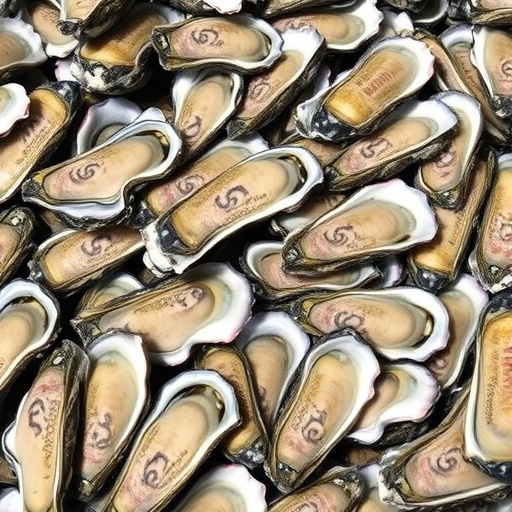
In recent years, the restoration of European flat oyster populations has emerged as a critical environmental and economic priority across various coastal regions in Europe. These bivalves are keystone species, playing a significant role in maintaining healthy marine ecosystems through water filtration and habitat formation. However, a groundbreaking study published in Communications Earth & Environment highlights a potential and hitherto underappreciated hazard associated with these restoration projects: the widespread dispersal of pathogens that can dramatically increase disease exposure and jeopardize recovery efforts. The research conducted by Schmittmann, Rath, Bean, and colleagues provides a comprehensive evaluation of how pathogen dynamics interact with restoration activities, fundamentally challenging established assumptions about oyster recovery strategies.
At the heart of this analysis lies the complex and multifaceted nature of pathogen dispersal within dynamic marine environments. The European flat oyster, Ostrea edulis, has historically suffered severe population declines due to overharvesting, habitat degradation, and disease outbreaks, including infections caused by parasites and viruses. Restoration projects often introduce hatchery-reared or wild-collected oysters into designated areas to revive stocks. However, this new work demonstrates that such interventions may inadvertently facilitate the spread of pathogenic agents, raising the exposure risk for both transplanted oysters and native biota. The authors employ an integrative approach combining field sampling, molecular diagnostics, hydrodynamic modeling, and epidemiological risk assessments to unveil the spatial-temporal patterns underpinning pathogen movement.
One of the most striking revelations of this study is the sheer extent to which pathogens can travel across oyster restoration sites via water currents and other natural transport mechanisms. By deploying extensive samplings across multiple restoration locations spanning various European coastal conditions, the research team detected elevated incidences of harmful microbial agents downstream from oyster introduction points. The fluid dynamics within these estuarine and coastal zones create a natural conveyor belt that can rapidly disseminate infectious material over large distances. This dispersion is often exacerbated by tidal forces and storms, which enhance mixing and resuspension of sediment-bound pathogens, creating hotspots of disease transmission that were previously underestimated in restoration planning.
The study further elucidates how pathogen dispersal is tightly linked to the biology and behavior of European flat oysters themselves. Oysters filter large volumes of water daily, inadvertently capturing pathogens that can subsequently multiply within their tissues and be released back into the environment. This biological feedback loop effectively amplifies the local pathogen load, increasing infection pressure at restoration sites. The work underscores the importance of understanding host-pathogen interactions within the ecological context of restoration efforts, rather than viewing introduced oysters solely as passive population units. Such insights compel a reevaluation of disease management practices, emphasizing that restoration risks must consider not only physical transplantation but also biological contagion dynamics.
To dissect these complex interactions, Schmittmann and colleagues leveraged advanced molecular tools to identify specific pathogens associated with both healthy and diseased oysters. Techniques such as qPCR and metagenomic sequencing allowed precise enumeration and characterization of microbial communities, highlighting differences in pathogen prevalence before and after restoration activities. The researchers cataloged a spectrum of bacterial and viral agents, some of which are known triggers of mass mortality events in oyster populations. This molecular epidemiology approach provided crucial empirical data, informing hydrodynamic models that projected pathogen spread pathways under various environmental scenarios.
The hydrodynamic modeling component is particularly innovative, integrating physical oceanography with epidemiological risk factors to generate predictive maps of pathogen exposure intensity at restoration sites. By inputting real-time data on tidal currents, water temperature, salinity, and oyster density, the simulations revealed how pathogen plumes could shift and concentrate over time. These predictive tools are invaluable for stakeholders, enabling proactive identification of high-risk zones and optimal timing for oyster deployments to minimize contagion. The models also stress the role of environmental variability and climate change in modulating pathogen dispersal patterns, introducing an additional layer of complexity in restoration management under future ocean conditions.
Another pivotal dimension addressed by the study is the socio-ecological implications of pathogen spread within oyster restoration frameworks. European flat oyster beds historically provide not only environmental benefits but also cultural and economic services, including fisheries and tourism. The emergence of pathogen-induced mortality can stall or reverse restoration gains, imposing significant financial losses and eroding community support for conservation programs. Therefore, the research advocates for integrated management approaches that balance ecological resilience with socio-economic sustainability, calling for enhanced monitoring and contingency plans that anticipate pathogen outbreaks.
Importantly, the authors highlight that restoration sites are not isolated ecological compartments but interconnected nodes within broader marine networks. This landscape-level perspective reveals how pathogen dynamics transcend individual restoration projects, potentially affecting adjacent natural habitats and the broader coastal ecosystem. The study raises critical concerns about “pathogen spillover,” wherein diseases originating at restoration sites could infect native oyster populations and other marine fauna, thereby amplifying ecological disruptions. Thus, the findings urge increased cooperation among restoration practitioners, marine managers, and researchers to coordinate efforts across regions and align disease mitigation strategies at ecosystem scales.
From a methodological standpoint, the study exemplifies the power of interdisciplinary science in tackling marine conservation challenges. By synthesizing oceanographic modeling, molecular biology, disease ecology, and socio-economic analysis, the research offers a holistic view of disease risks in oyster restoration. This integrative framework sets a new standard for future studies, promoting comprehensive assessments that move beyond traditional metrics of population recovery to embrace multifactorial health indicators. The approach also provides a blueprint for addressing similar challenges in other marine species restoration initiatives globally.
The implications of these findings extend beyond European flat oysters to inform general restoration ecology principles, particularly regarding disease dynamics. Restoration projects often focus on demographic reinforcements without thorough consideration of pathogen transmission pathways and interactions with environmental drivers. This study warns that neglecting these factors can lead to unintended consequences, compromising long-term success. It advocates for embedding pathogen risk analysis into restoration planning phases, integrating early disease screening, adaptive management, and habitat enhancement techniques that reduce infection susceptibility.
Given the accelerating impacts of climate change, the study’s insights concerning pathogen dispersal are ever more pertinent. Rising sea temperatures, altered salinity regimes, and increased frequency of extreme weather events can shift pathogen viability, host immunity, and water circulation patterns, reshaping disease landscapes within oyster beds. The research underscores the urgency of integrating climate resilience considerations into oyster restoration protocols, anticipating how future environmental changes might exacerbate pathogen threats. Adaptive restoration strategies that build ecosystem resilience while maintaining vigilance for emerging diseases will be essential to safeguard oyster populations.
In conclusion, this seminal research conducted by Schmittmann, Rath, Bean, and colleagues heralds a crucial paradigm shift in European flat oyster restoration science. The recognition that pathogen dispersal mechanisms intimately influence exposure risk at restoration sites calls for a recalibration of conservation strategies that traditionally emphasized demographic recovery alone. By illuminating the pathways and drivers of disease transmission, the study equips stakeholders and scientists with actionable knowledge to design safer, more effective oyster restoration programs. Protecting this iconic species—and the invaluable ecosystem services it provides—demands vigilant, interdisciplinary stewardship informed by cutting-edge research such as this.
As oyster restoration efforts scale up throughout Europe, stakeholders must heed these findings to mitigate pathogen-associated risks. Enhanced biosecurity measures, coordinated monitoring networks, and responsive management frameworks will be critical in ensuring that restoration fosters resilient oyster populations capable of withstanding pathogenic challenges. The interplay between environmental processes and biological contagion revealed in this study illustrates the intricate tapestry of marine conservation and the need for sophisticated, integrative approaches to restore and preserve our precious coastal ecosystems.
The study ultimately exemplifies how marine restoration is not merely a scientific endeavor but a complex social-ecological enterprise, where ecological health, economic viability, and community engagement must coalesce. As the world strives to rebuild marine biodiversity and human-nature connections, integrating pathogen risk assessment into restoration science represents a vital step forward—one that could redefine best practices for marine restoration worldwide and inspire similar innovations across diverse species and habitats.
Subject of Research: European flat oyster (Ostrea edulis) restoration and pathogen exposure risk
Article Title: Pathogen dispersal can lead to high exposure risk at European flat oyster restoration sites
Article References:
Schmittmann, L., Rath, W., Bean, T.P. et al. Pathogen dispersal can lead to high exposure risk at European flat oyster restoration sites. Commun Earth Environ (2026). https://doi.org/10.1038/s43247-026-03319-z
Image Credits: AI Generated
DOI: 10.1038/s43247-026-03319-z
Keywords: European flat oyster, Ostrea edulis, pathogen dispersal, marine restoration, disease ecology, hydrodynamic modeling, molecular epidemiology, coastal ecosystems, marine conservation, pathogen exposure risk


