


A major new special issue is set to spotlight one of the most consequential yet underappreciated corners of modern medicine: the science of how drugs are physically engineered and formulated into the medicines patients actually swallow, inhale, inject, or wear on their skin. The Journal of Pharmaceutical Investigation has announced a special issue titled Translational Advances in Pharmaceutical Dosage Form Development Based on Particle Engineering and Formulation Science, scheduled for publication in January 2027. The issue, led by three guest editors based in South Korea, is now open for contributions, with a submission deadline of June 30, 2026. For a field that determines whether a promising molecule ever becomes a workable therapy, the announcement represents a deliberate effort to consolidate the state of the art at a moment when formulation science is being reshaped by computational design, continuous manufacturing, and an unprecedented wave of difficult-to-formulate drug candidates.
The guest editorial team brings together researchers from three Korean universities with established programs in pharmaceutical development. Sung-Joo Hwang of Yonsei University, Min-Soo Kim of Pusan National University, and Heejun Park of Duksung Women’s University will jointly curate the issue. Their combined expertise spans the design of dosage forms, particle technology, and the translational pathway from laboratory formulation to commercial drug product. That translational emphasis is written directly into the issue’s title, and it signals a scope that goes beyond novel laboratory curiosities. The editors are seeking work that demonstrates how particle-level engineering decisions survive the journey through scale-up, regulatory scrutiny, and industrial production, which is where many technically elegant formulations historically have faltered.
The scientific rationale for the issue reflects a persistent and growing problem in drug development. A large fraction of newly discovered drug candidates, particularly small molecules emerging from high-throughput screening campaigns, exhibit poor aqueous solubility. A molecule that dissolves poorly in the gastrointestinal tract cannot be absorbed efficiently, no matter how potent it is in a cell culture dish. Particle engineering attacks this problem at its physical roots: by reducing particle size to the micron or nanometer scale, formulators dramatically increase the surface area available for dissolution; by converting a crystalline drug into an amorphous solid dispersion, they can achieve apparent solubilities far above the thermodynamic limit of the crystal lattice; and by selecting the right polymorph or salt form, they can tune dissolution behavior, physical stability, and manufacturability simultaneously. Each of these strategies trades one physical constraint against another, which is precisely why formulation science remains as much an engineering discipline as a chemical one.
The topics outlined for the special issue map this landscape in detail. The first listed theme, particle engineering approaches for solubility, stability, and bioavailability enhancement, encompasses techniques such as wet and dry milling, spray drying, supercritical fluid processing, hot-melt extrusion, and controlled crystallization. These methods are not interchangeable. Milling can introduce mechanical stress and partial amorphization that destabilize a drug over storage. Spray drying produces amorphous materials that may recrystallize unpredictably under humidity. Hot-melt extrusion requires the drug to withstand elevated processing temperatures, which rules out thermolabile compounds. The choice among these routes depends on the molecule’s melting point, thermal stability, glass-forming ability, and the target product profile, and the special issue is expected to gather comparative evidence on how such choices play out in real development programs.
A second theme extends the discussion to advanced formulation strategies across the full range of administration routes: oral, injectable, inhalable, transdermal, and other dosage forms, together with advanced drug delivery systems. Each route imposes its own particle-level demands. Inhaled medicines, for example, require particles in a narrow aerodynamic size range, typically around one to five micrometers, to deposit in the deep lung rather than being exhaled or trapped in the throat. Injectable suspensions must balance particle size against syringeability and the risk of aggregation. Transdermal systems depend on drug properties, vehicle design, and increasingly on permeation-enhancing technologies to push molecules across the stratum corneum. Oral products, still the dominant dosage form worldwide, must navigate dissolution, permeation, and first-pass metabolism in sequence. The breadth of this theme suggests the editors intend the issue to serve as a cross-route reference rather than a gathering of parallel silos, encouraging formulators in one modality to borrow from advances in another.
Solid-state characterization and control forms a third pillar of the announced scope. The solid state of a drug, whether it crystallizes in one polymorphic form or another, whether it remains amorphous, whether it forms hydrates or solvates, governs dissolution rate, mechanical behavior during tableting, and long-term stability. Regulatory agencies require manufacturers to identify and control the solid form of their active ingredients because a silent polymorphic transition during storage can alter bioavailability and, in documented historical cases, forced products off the market. Modern characterization relies on a battery of techniques including powder X-ray diffraction, differential scanning calorimetry, dynamic vapor sorption, solid-state nuclear magnetic resonance, and Raman or near-infrared spectroscopy, increasingly coupled with multivariate data analysis. Contributions that demonstrate how such measurements feed back into formulation decisions, rather than merely documenting the solid form after the fact, would align closely with the issue’s translational framing.
The fourth and fifth themes address the industrial dimension that gives the issue its distinctive character. Translational formulation science and scale-up of drug products covers the notoriously difficult passage from a bench-top process that produces a few hundred grams of well-characterized material to a commercial process producing hundreds of kilograms with identical quality attributes. Scaling a spray-drying operation, a wet-milling loop, or a granulation process changes residence times, shear profiles, and drying kinetics, and those changes can shift particle size distributions and solid-state outcomes in ways that are not always predictable from first principles. Emerging manufacturing technologies in dosage form design and commercial production, the fifth theme, points toward the technologies now reshaping that passage: continuous manufacturing lines that replace batch processing, three-dimensional printing of personalized dosage forms, and advanced coating and granulation platforms. Continuous manufacturing in particular has gained regulatory momentum because it enables real-time quality control and smaller facility footprints, and formulation scientists are still working out how unit operations designed for batch processing translate into continuous equivalents without compromising the carefully engineered particle properties of the drug.
The sixth theme, applications of Quality by Design and Process Analytical Technology in pharmaceutical formulation and manufacturing, ties the entire issue to the regulatory philosophy that now governs drug product development worldwide. Quality by Design, or QbD, asks developers to define the critical quality attributes of a product, identify the formulation variables and process parameters that control those attributes, and build a design space within which the product is guaranteed to meet its specifications. Process Analytical Technology, or PAT, supplies the real-time measurement tools, inline spectroscopy, particle sizing probes, and process models, that make such control practical rather than aspirational. Together they replace the older paradigm of testing quality into a finished batch with the modern goal of building quality into the process itself. For particle-engineered formulations, where a few degrees of drying temperature or a small shift in feed rate can alter the amorphous fraction of a product, QbD and PAT are not optional refinements; they are the enabling framework that makes sophisticated formulations manufacturable at scale with consistent quality.
The timing of the special issue is significant for reasons that extend beyond any single technology. The pharmaceutical pipeline is increasingly dominated by molecules and modalities that stress traditional formulation science to its limits: poorly soluble small molecules, high-concentration biologics that resist injection through fine needles, peptide and protein drugs that require protection from degradation, and combination products that integrate a device with a formulated drug. At the same time, the industry faces pressure to shorten development timelines, reduce manufacturing costs, and enable personalized dosing, all of which depend on formulation and manufacturing platforms that are flexible, well understood, and scalable. By framing the issue around translational advances, the editors are effectively asking contributors to demonstrate the full chain of evidence, from particle-level design through formulation strategy to controlled, scalable production, that turns a laboratory concept into a medicine that can be made reliably for millions of patients.
For researchers in pharmaceutics, particle technology, and manufacturing science, the call represents a concrete opportunity: submissions are due by June 30, 2026, with publication of the assembled issue planned for January 2027 in the Journal of Pharmaceutical Investigation. The scope, spanning solubility enhancement, multi-route delivery, solid-state control, scale-up, emerging manufacturing, and QbD and PAT applications, reads as a deliberate snapshot of where dosage form development stands and where it is heading. If the field delivers on that framing, the issue could become a widely cited reference point for the next generation of drug product development, at a time when the gap between discovering a molecule and delivering it to patients has never mattered more.
Subject of Research: A special issue of the Journal of Pharmaceutical Investigation on translational pharmaceutical dosage form development based on particle engineering and formulation science
Article Title: Special Issue: Translational Advances in Pharmaceutical Dosage Form Development Based on Particle Engineering and Formulation Science
Article References: Special Issue: Translational Advances in Pharmaceutical Dosage Form Development Based on Particle Engineering and Formulation Science. (n.d.). Original publication
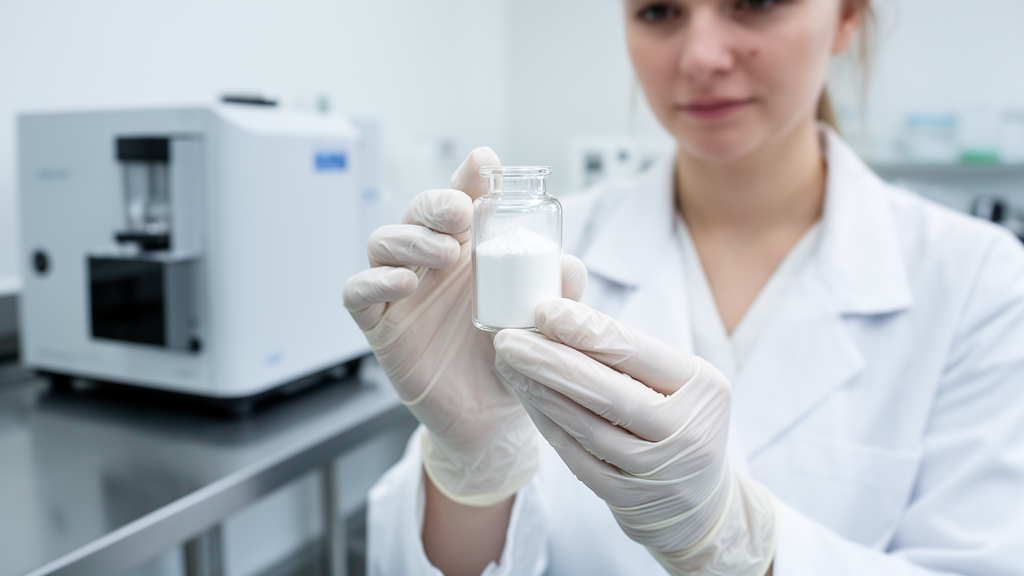
Image Credits: AI Generated
DOI: Not provided
Keywords: particle engineering, formulation science, drug delivery, solubility enhancement, solid-state characterization, scale-up, continuous manufacturing, Quality by Design, Process Analytical Technology, bioavailability, dosage forms, pharmaceutical development
Cite Scienmag News
Denise Maddox. (October 9, 2026). Particle Engineering Takes Center Stage as Pharmaceutical Formulation Science Heads Toward Translation. Scienmag. https://scienmag.com/particle-engineering-takes-center-stage-as-pharmaceutical-formulation-science-heads-toward-translation/
Denise Maddox. "Particle Engineering Takes Center Stage as Pharmaceutical Formulation Science Heads Toward Translation." Scienmag, 9 October 2026, https://scienmag.com/particle-engineering-takes-center-stage-as-pharmaceutical-formulation-science-heads-toward-translation/. Accessed 9 October 2026.
Denise Maddox. "Particle Engineering Takes Center Stage as Pharmaceutical Formulation Science Heads Toward Translation." Scienmag. October 9, 2026. https://scienmag.com/particle-engineering-takes-center-stage-as-pharmaceutical-formulation-science-heads-toward-translation/


