

Monday, October 26, 2026
Science
No Result
View All Result
  • Login
  • HOME
  • SCIENCE NEWS
  • CONTACT US
  • HOME
  • SCIENCE NEWS
  • CONTACT US
No Result
View All Result
Scienmag
No Result
View All Result
Home Science News Earth Science

Participatory case study maps coastal groundwater degradation feedbacks

October 26, 2026
in Earth Science
Violet Maxwell
By Violet Maxwell Scienmag Editorial Profile - Natural Hazards
Reading Time: 2 mins read
0
Participatory case study maps coastal groundwater degradation feedbacks

Participatory case study maps coastal groundwater degradation feedbacks

65
SHARES
587
VIEWS
Share on FacebookShare on Twitter
ADVERTISEMENT

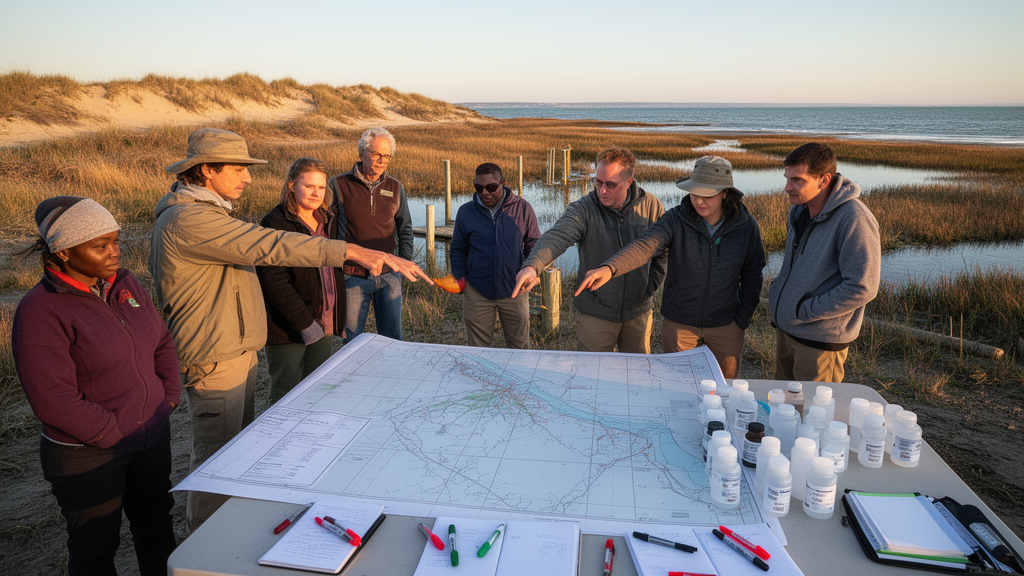
Persistent groundwater degradation in a coastal aquifer system along India’s Southwest coast is driven by reinforcing feedbacks linking population pressure, groundwater extraction, saline intrusion and declining water quality, according to a participatory case study. The researchers found that shallow freshwater can persist during parts of the year even while the combined social and hydrological system moves toward greater dependence on an increasingly vulnerable groundwater resource. The study examined how rural coastal communities perceive long-term changes in groundwater and combined that local knowledge with seasonal hydrochemical monitoring.

Its integrated framework joined three tools: Participatory Rural Appraisal, a Causal Loop Diagram and the Driver-Pressure-State-Impact-Response model, commonly called DPSIR. Participatory Rural Appraisal captured community memory of changes in groundwater conditions. The causal diagram translated those accounts into an explicit representation of interacting causes and effects, while DPSIR organized the identified drivers, pressures, states, impacts and responses into a system-level assessment.

Seasonal monitoring was then used to place community observations in a hydrochemical context. The combined analysis identified extraction, saline intrusion and deteriorating water quality as parts of a self-reinforcing sequence. Increased reliance on groundwater extraction contributed to saline intrusion and worsening water quality, and those conditions could support further dependence on groundwater.

Population pressure was also connected to this feedback structure. The case therefore links the aquifer’s physical condition with community behavior and governance responses rather than treating degradation as the result of monitoring data alone. The DPSIR synthesis also exposed a temporal mismatch: socio-hydrological pressures were evolving more quickly than institutional responses.

The study interprets this gap as a feature of the groundwater system that should be considered when diagnosing persistent stress and identifying possible leverage points for governance. Its proposed participatory socio-hydrological framework is intended to make community-held knowledge usable alongside hydrochemical evidence, especially in data-limited coastal regions. Because this was a case study, the evidence concerns one coastal aquifer system and its surrounding communities; the supplied findings do not quantify how widespread the same feedback pattern is elsewhere.

Subject of Research: Participatory diagnosis of persistent groundwater degradation in a coastal aquifer system in southern India

Article Title: Understanding persistent groundwater degradation in coastal communities through a participatory socio-hydrological framework

Article References: Nair, A. M., Anand, A. M. K., Balakrishnan, D., Nair, D. I., & Prasad, G. (2026). Understanding persistent groundwater degradation in coastal communities through a participatory socio-hydrological framework. Discover Sustainability. https://doi.org/10.1007/s43621-026-04631-6

Image Credits: AI Generated

DOI: 10.1007/s43621-026-04631-6

Keywords: groundwater degradation, coastal aquifers, saline intrusion, participatory research, socio-hydrology, community knowledge, seasonal monitoring, hydrochemistry, water governance, Southwest India, Understanding, persistent

Cite Scienmag News

Violet Maxwell. (October 26, 2026). Participatory case study maps coastal groundwater degradation feedbacks. Scienmag. https://scienmag.com/participatory-case-study-maps-coastal-groundwater-degradation-feedbacks/

Violet Maxwell. "Participatory case study maps coastal groundwater degradation feedbacks." Scienmag, 26 October 2026, https://scienmag.com/participatory-case-study-maps-coastal-groundwater-degradation-feedbacks/. Accessed 26 October 2026.

Violet Maxwell. "Participatory case study maps coastal groundwater degradation feedbacks." Scienmag. October 26, 2026. https://scienmag.com/participatory-case-study-maps-coastal-groundwater-degradation-feedbacks/


Tags: causal loop diagrams in groundwater studiescoastal aquifersCoastal groundwater degradationcommunity knowledgecommunity perception of groundwater changeDPSIR framework for environmental assessmentgroundwater degradationgroundwater extraction impactsgroundwater sustainability challengeshydrochemistryhydrological and social system feedbacksparticipatory case studyparticipatory researchparticipatory research methods in water managementPersistentrural coastal water resource managementsaline intrusionsaline intrusion in Indiaseasonal hydrochemical monitoringseasonal monitoringsocio-hydrologySouthwest Indiaunderstandingwater governance
Share26Tweet16
Previous Post

Blood test trends linked to cancer diagnoses after unexplained weight loss

Next Post

Meta-analysis links climate, motivation and knowledge to manufacturing safety behavior

Related Posts

Review maps planned behaviour research in household waste management
Earth Science

Review maps planned behaviour research in household waste management

October 26, 2026
Panel study links green bonds to lower emissions in high-capacity countries
Earth Science

Panel study links green bonds to lower emissions in high-capacity countries

October 26, 2026
Fuzzy risk assessment prioritizes ESG concerns in aluminium circular supply chains
Earth Science

Fuzzy risk assessment prioritizes ESG concerns in aluminium circular supply chains

October 26, 2026
Green HR Practices Linked to Better Well-Being in Dark Stores
Earth Science

Green HR Practices Linked to Better Well-Being in Dark Stores

October 26, 2026
Qualitative policy review identifies gaps in Malaysia’s plastics frameworks
Earth Science

Qualitative policy review identifies gaps in Malaysia’s plastics frameworks

October 26, 2026
IRET-SICA index reveals uneven resilience in 40 Central American restoration projects
Earth Science

IRET-SICA index reveals uneven resilience in 40 Central American restoration projects

October 26, 2026
Next Post
Meta-analysis links climate, motivation and knowledge to manufacturing safety behavior

Meta-analysis links climate, motivation and knowledge to manufacturing safety behavior

  • Mothers who receive childcare support from maternal grandparents show more optimized

    Mothers who receive childcare support from maternal grandparents show more parental warmth, finds NTU Singapore study

    27656 shares
    Share 11059 Tweet 6912
  • University of Seville Breaks 120-Year-Old Mystery, Revises a Key Einstein Concept

    1061 shares
    Share 424 Tweet 265
  • Bee body mass, pathogens and local climate influence heat tolerance

    682 shares
    Share 273 Tweet 171
  • Researchers record first-ever images and data of a shark experiencing a boat strike

    546 shares
    Share 218 Tweet 137
  • Groundbreaking Clinical Trial Reveals Lubiprostone Enhances Kidney Function

    531 shares
    Share 212 Tweet 133
Science

Embark on a thrilling journey of discovery with Scienmag.com—your ultimate source for cutting-edge breakthroughs. Immerse yourself in a world where curiosity knows no limits and tomorrow’s possibilities become today’s reality!

RECENT NEWS

  • Meta-analysis links climate, motivation and knowledge to manufacturing safety behavior
  • Participatory case study maps coastal groundwater degradation feedbacks
  • Blood test trends linked to cancer diagnoses after unexplained weight loss
  • EMR use reported by 88% of staff at one Addis Ababa hospital

Categories

  • Agriculture
  • Anthropology
  • Archaeology
  • Athmospheric
  • Biology
  • Biotechnology
  • Blog
  • Bussines
  • Cancer
  • Chemistry
  • Climate
  • Earth Science
  • Editorial Policy
  • Marine
  • Mathematics
  • Medicine
  • Pediatry
  • Policy
  • Psychology & Psychiatry
  • Science Education
  • Science News
  • Social Science
  • Space
  • Technology and Engineering

Subscribe to Blog via Email

Enter your email address to subscribe to this blog and receive notifications of new posts by email.

Join 5,151 other subscribers

© 2025 Scienmag - Science Magazine

Welcome Back!

Login to your account below

Forgotten Password?

Retrieve your password

Please enter your username or email address to reset your password.

Log In
No Result
View All Result
  • HOME
  • SCIENCE NEWS
  • CONTACT US

© 2025 Scienmag - Science Magazine

Discover more from Science

Subscribe now to keep reading and get access to the full archive.

Continue reading