


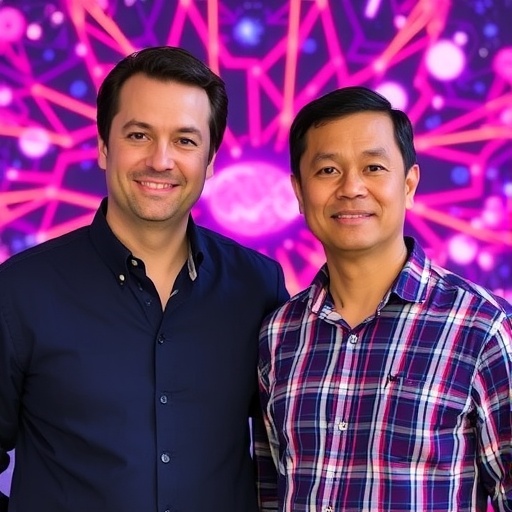
In a groundbreaking development within the realm of neuromorphic computing, Principal Investigator Maryam Parsa, an Assistant Professor of Electrical and Computer Engineering at George Mason University’s College of Engineering and Computing, alongside co-Principal Investigator Giorgio Ascoli, a Distinguished Professor of Bioengineering and Neuroscience in the College of Science, has secured significant funding from the U.S. Department of Energy. Their innovative project, titled “GAINS: Generalizable, Analog, Izhikevich-Based Neuromorphic Spintronics for Next-Generation Computing,” marks a pivotal step in the evolution of computing architectures that aim to mimic human brain processes.
The core ambition of the GAINS project is to introduce biologically realistic temporal dynamics into neuromorphic systems, resulting in platforms capable of more sophisticated and nuanced computations. This systematic incorporation of brain-inspired characteristics is expected to offer substantial advancements in the performance of computational tasks, making these systems not only faster but also more reliable and adaptable to varying conditions encountered in real-world applications. The implications of such advancements could be profound, potentially revolutionizing how machines learn from and interact with the world around them.
Through their collaborative initiative, PI Parsa, along with co-PIs from the University of Wisconsin–Madison and Northwestern University, aims to tackle the current inadequacies present in neuromorphic hardware platforms. Neuromorphic computing, a field inspired by the neural architecture of the human brain, is often limited by its inability to replicate complex brain dynamics effectively. GAINS endeavors to bridge this gap, facilitating a significant leap towards hardware that is not only efficient but adequately mirrors the intricate workings of the brain.
At the heart of GAINS is the utilization of Izhikevich-based models, which are fundamental in achieving biologically plausible neural dynamics. This modeling allows the system to harness the rich dynamism exhibited by neurons under varying stimuli and conditions, thus ensuring that the resulting neuromorphic architectures are responsive and adaptable. The project promises not just enhanced computational capabilities but also a new paradigm for energy-efficient computing solutions.
The funding awarded to Parsa and Ascoli amounts to $156,667 for the first year, launching this ambitious two-year project with a total financial backing of $500,000. As such, the resources allocated will support not only the development of cutting-edge technology but also the research needed to explore the various dimensions of brain-like computations through advanced spintronic elements. Such spintronics facilitate the merging of traditional electronics with quantum effects, potentially yielding unprecedented efficiency gains.
As we stand on the brink of a new era in computing, the GAINS initiative lays the foundation for hardware solutions that nurture the replication of essential brain functions. The transition to energy-efficient and biologically plausible computing systems is crucial for the sustainability of digital technology as we know it today. Researchers are optimistic that the outcomes of this project will contribute significantly to a spectrum of applications ranging from artificial intelligence to advanced manufacturing processes and edge computing technologies.
The influence of GAINS transcends academia, with potential ramifications for the industry at large. As businesses increasingly seek innovative ways to harness data, the ability of neuromorphic systems to offer superior privacy, robustness, and generalizability could provide a competitive edge. With enhanced computing power, organizations will be able to derive valuable insights from complex datasets, leading to more informed decision-making processes.
Moreover, this project underscores the collaborative spirit of modern scientific inquiry, bringing together experts from diverse disciplines. With co-PIs like Akhilesh Jaiswal and Pedram Khalili contributing their knowledge from different institutions, the project encapsulates interdisciplinary collaboration as a critical ingredient for success in advancing neuromorphic technologies. Such partnerships are becoming increasingly vital in a world where diverse challenges demand comprehensive solutions derived from varied expertise.
As research progresses, the team anticipates drawing insights from their work that may inspire future innovations beyond the scope of GAINS. The methodologies and findings could stimulate further exploration into the realms of cognitive computing, enhancing our understanding of how machines might emulate not just the workings of the brain but also the subtleties of human thought and behavior.
Life-like performance in computing could redefine the boundaries of what is computationally possible. The promise of GAINS lies not just in its technical prowess but in its capacity to address the ethical and operational challenges posed by advanced AI systems. By creating more intuitive and ‘human-like’ computing environments, the project also raises important questions about the implications of integrating such technology into daily life.
As interest in neuromorphic computation continues to rise, both researchers and industry leaders are keenly focused on the advancements heralded by GAINS. By addressing the dual challenge of performance and biological realism, this project has the potential to reshape not only academic research but also commercial products and services in the coming years. The future of computing could be brighter, driven by machines that think more like us.
In conclusion, Maryam Parsa and Giorgio Ascoli’s work on the GAINS project symbolizes a significant leap forward in the race to develop neuromorphic computing systems that mirror the brain’s complexity. Their endeavor promises to deliver not only enhanced computational performance but a path forward for technology that respects and replicates the intricacies of human cognition. The impact of their research will likely resonate across multiple sectors, influencing how we interact with technology in the future, and revealing new frontiers in our understanding of both computing and the human brain.
Keywords
Neuromorphic Computing, Izhikevich Models, Spintronics, Brain Dynamics, Energy Efficiency, Artificial Intelligence, Cognitive Computing, Interdisciplinary Research, George Mason University, U.S. Department of Energy.
Cite Scienmag News
Denise Maddox. (November 11, 2025). Parsa and Ascoli Explore the Frontier of Neuromorphic Spintronics. Scienmag. https://scienmag.com/parsa-and-ascoli-explore-the-frontier-of-neuromorphic-spintronics/
Denise Maddox. "Parsa and Ascoli Explore the Frontier of Neuromorphic Spintronics." Scienmag, 11 November 2025, https://scienmag.com/parsa-and-ascoli-explore-the-frontier-of-neuromorphic-spintronics/. Accessed 4 September 2026.
Denise Maddox. "Parsa and Ascoli Explore the Frontier of Neuromorphic Spintronics." Scienmag. November 11, 2025. https://scienmag.com/parsa-and-ascoli-explore-the-frontier-of-neuromorphic-spintronics/


