


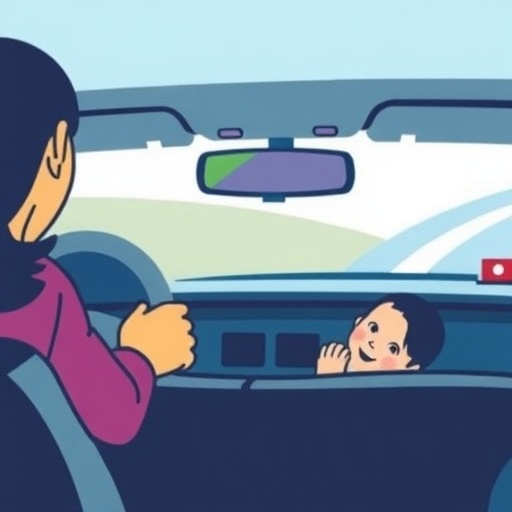
In today’s fast-paced world, where urban mobility constantly evolves, the safety of children during vehicular transit has emerged as a pivotal concern for parents and policymakers alike. Recently, a comprehensive study conducted by Fallah-Aliabadi and colleagues has brought to light the nuanced barriers and challenges faced by parents in ensuring child safety while driving. By employing qualitative content analysis, the authors delve deep into the subjective experiences of parents, revealing a wealth of insights that resonate on multiple levels of societal engagement with child safety.
One of the central findings of the study reveals that many parents harbor significant anxiety when it comes to their children’s safety inside a vehicle. This anxiety is often fueled by media portrayals of accidents and a general societal awareness of the dangers posed by road traffic. Parents frequently describe a constant mental checklist that runs through their minds as they prepare their children for any trip, highlighting the need for a multifaceted approach to alleviate these concerns.
Moreover, the study uncovers the role of environmental factors in shaping parental attitudes toward driving safety. Urban infrastructure, including the quality of roads, presence of speed bumps, and the adequacy of crosswalks, significantly influences how parents perceive the safety of traveling with their children. For instance, areas lacking proper signage or with a high density of traffic lights can foster a sense of trepidation, resulting in parents being overly cautious or, conversely, lenient due to familiarity with their surroundings.
Interestingly, cultural influences emerge as another critical dimension of the discussion in the study. Parents from different backgrounds exhibit varying beliefs about child safety in vehicles. In some cultures, there’s a traditional mindset that emphasizes resilience and independence for children, which might lead to riskier behaviors during car travel. Conversely, other cultures are heavily protective, leading to an increased focus on safety protocols, such as ensuring all passengers are buckled up or using age-appropriate car seats.
The study identifies a significant gap in awareness and understanding of child safety guidelines among parents. Many respondents expressed confusion over the various seating laws and recommendations for child restraint systems, indicating a pressing need for comprehensive educational campaigns. As parents navigate the myriad of conflicting information available, consistent messaging from authorities could mitigate misunderstandings and enhance child safety.
In examining the emotional and psychological aspects of driving with children, the researchers found that many parents experience feelings of guilt when they believe they have failed to uphold safety standards. This guilt can stem from a variety of sources, including peer comparison, societal expectations, or even personal histories related to automobile accidents. Such emotional burdens can detract from the driving experience, adding layers of stress that inherently affect parental judgment and decision-making on the road.
Another vital theme highlighted in the study is the dynamic between parental roles and responsibilities during car journeys. Often, driving is coupled with multitasking, as parents juggle the need to provide entertainment, manage disputes among siblings, and ensure that children remain secure in their seats. The resulting distractions may lead to an increased risk of accidents and can compromise the overall safety of the travel experience.
Furthermore, the politicization of child safety has introduced additional hurdles for parents. The study notes that legislative environments can be significant barriers to effective implementation of safety practices. Regulations surrounding child passenger safety can vary dramatically across regions, and inconsistent enforcement can leave parents questioning the best practices to follow. The interplay between law, culture, and individual choice becomes a complex web that can obscure the path to safe driving.
In an era where technology plays an increasingly prominent role in our lives, the influence of innovation on child safety in vehicles cannot be overlooked. Parents express excitement about advancements such as smart car seats that monitor a child’s seating position and remind parents to buckle their children in properly. However, there’s also apprehension regarding reliance on technology as a substitute for proactive safety measures and engagement.
The insights shared in the study indicate that community engagement regarding child safety could foster a more collaborative approach among parents, educational institutions, and local governments. When parents feel supported by their community, they may be more inclined to adopt best practices and advocate for improved infrastructure that prioritizes child safety. This collective action could significantly enhance safety standards, as shared experiences often serve as powerful motivators for change.
Addressing the issue of child safety while driving is not merely an individual concern; it is a public health imperative. As nations strive to lower rates of child injuries and fatalities, the insights gleaned from this qualitative analysis should inform policy-making and community-based interventions. Comprehensive strategies that integrate technological advancements, educational campaigns, and support systems tailored to parent experiences are essential.
The findings of the study by Fallah-Aliabadi et al. highlight the often-overlooked complexities surrounding child safety in vehicles. Parents navigate a myriad of challenges shaped by emotional, environmental, and cultural factors, creating an intricate web of considerations during every car ride. This deep understanding of parental perspectives is crucial for fostering a safer future for all children on the road.
As the discussion around child safety during driving continues to evolve, it becomes increasingly clear that concerted efforts from various stakeholders are necessary. Policymakers, educators, and communities must work collaboratively to demystify the myriad of challenges faced by parents. By developing integrated solutions that prioritize safety, we can create an environment where parents feel empowered and confident to protect their children during travel, ultimately creating a safer society.
Ultimately, the exploration into the barriers and challenges surrounding child safety during driving from parents’ perspectives serves to illuminate the complexities inherent in this issue. As this field of research evolves, the hope remains that actionable insights can be translated into real-world improvements that not only benefit individual families but also foster a culture of safety that resonates across all levels of society.
Fallah-Aliabadi, S., Sadeghi, S., Heydari, A. et al. Explaining barriers and challenges to child safety during driving from parents’ perspectives: a qualitative content analysis.
BMC Pediatr 25, 771 (2025). https://doi.org/10.1186/s12887-025-06006-8
Cite Scienmag News
Ophelia Keating. (October 16, 2025). Parents’ Perspectives on Child Safety While Driving. Scienmag. https://scienmag.com/parents-perspectives-on-child-safety-while-driving/
Ophelia Keating. "Parents’ Perspectives on Child Safety While Driving." Scienmag, 16 October 2025, https://scienmag.com/parents-perspectives-on-child-safety-while-driving/. Accessed 4 September 2026.
Ophelia Keating. "Parents’ Perspectives on Child Safety While Driving." Scienmag. October 16, 2025. https://scienmag.com/parents-perspectives-on-child-safety-while-driving/


