

Friday, September 4, 2026
Science
No Result
View All Result
  • Login
  • HOME
  • SCIENCE NEWS
  • CONTACT US
  • HOME
  • SCIENCE NEWS
  • CONTACT US
No Result
View All Result
Scienmag
No Result
View All Result
Home Science News Medicine

PARC model of care associated with fewer deaths among veterans post-ICU

May 20, 2024
in Medicine
Ophelia Keating
By Ophelia Keating Scienmag Editorial Profile - Health Services Research
Reading Time: 3 mins read
0
PARC model of care associated with fewer deaths among veterans
67
SHARES
613
VIEWS
Share on FacebookShare on Twitter
ADVERTISEMENT

EMBARGOED UNTIL:  10:15 a.m. PT, Monday, May 20, 2024

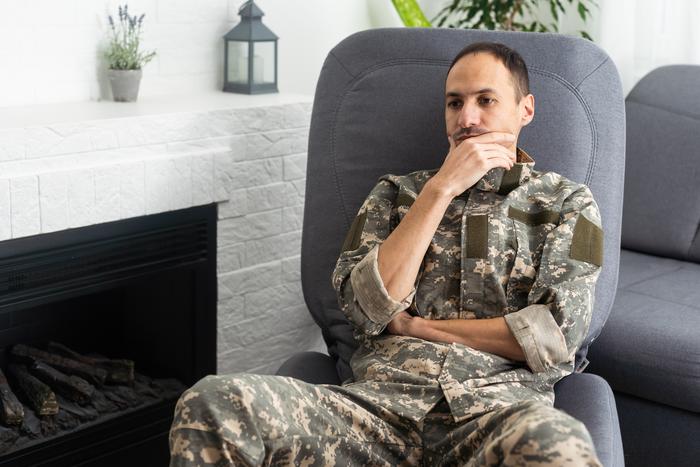
Veterans and post-ICU

Credit: ATS

EMBARGOED UNTIL:  10:15 a.m. PT, Monday, May 20, 2024

PARC MODEL OF CARE ASSOCIATED WITH FEWER DEATHS AMONG VETERANS  POST-ICU
 

Session:  B18 – Bridging Gaps to Improve Long-Term Outcomes
The Post-Acute Recovery Center: A Telehealth Care Model to Improve Patient-Centered Outcomes for High-Risk Survivors of Critical Illness

Date and Time: Monday, May 20, 2024, 10:15 a.m. PT
Location:  San Diego Convention Center, Room 32A-B (Upper Level)


ATS 2024, San Diego – Research presented at the ATS 2024 International Conference demonstrates that veterans who received care via the Post-acute Recovery Center (PARC) model after a serious illness experienced fewer deaths and more days outside of the hospital compared to those not enrolled in PARC. This model utilizes telehealth and is administered by nurse practitioners to address the complex needs of ICU survivors during their transition from hospital to home.

Hiam Naiditch, MD, MHS, a pulmonary and critical care fellow at UPMC (University of Pittsburgh Medical Center), stated, “Our findings, though preliminary, suggest that the PARC model could significantly improve transitional care, potentially lowering mortality rates and increasing hospital-free days for veterans.”

The study involved a retrospective analysis of 195 veterans at the VA Pittsburgh Healthcare System (VAPHS), assessing mortality and non-hospital days up to 90 days after discharge. Veterans were classified using the PREDICT score, with those scoring above 15 considered high-risk. These high-risk veterans who received PARC care showed a median increase of four additional days at home compared to matched controls within the same period.

These encouraging local results reflect a broader national challenge. Across all VA medical centers in 2020, nearly half of the veterans discharged after critical illnesses such as sepsis and acute organ failure met this study’s high-risk criteria, potentially facing a significant increase in post-discharge care complexity. Dr. Naiditch emphasized, “The PARC model aims to alleviate the burden of these challenges by improving continuity of care and reducing the burden of follow-up care for patients.”

Looking forward, the PARC study group, including Florian Mayr, MD, MPH, associate professor of critical care medicine, University of Pittsburgh School of Medicine and staff physician and director, PARC Program, VA Pittsburgh Healthcare System and Zachary Hahn, MD, PARC investigator and emergency medicine physician, VA Medical Center, Augusta, Maine, plans to prospectively study the PARC model in a randomized trial across several northeastern U.S. VA facilities to further evaluate its effectiveness and scalability.

For additional information on the ongoing study and future developments, please contact Dr. Hiam Naiditch, naiditchh2@upmc.edu.

###


VIEW ABSTRACT


CONTACTS FOR MEDIA:

Dacia Morris, Director, Communications & Marketing, American Thoracic Society

dmorris@thoracic.org


Allison Hydzik, Senior Director, Media Relations, UPMC

hydzikam@upmc.edu


Shelley Nulph, Acting Public Affairs Officer, VA Pittsburgh Healthcare System

shelley.nulph@va.gov


Journal

American Journal of Respiratory and Critical Care Medicine

Subject of Research

People

Subject of Research: Medicine

Article Title: PARC model of care associated with fewer deaths among veterans post-ICU

Article References: Original research article

Image Credits: AI Generated

DOI: Not provided

Keywords: Not provided

Cite Scienmag News

Ophelia Keating. (May 20, 2024). PARC model of care associated with fewer deaths among veterans post-ICU. Scienmag. https://scienmag.com/parc-model-of-care-associated-with-fewer-deaths-among-veterans-post-icu/

Ophelia Keating. "PARC model of care associated with fewer deaths among veterans post-ICU." Scienmag, 20 May 2024, https://scienmag.com/parc-model-of-care-associated-with-fewer-deaths-among-veterans-post-icu/. Accessed 4 September 2026.

Ophelia Keating. "PARC model of care associated with fewer deaths among veterans post-ICU." Scienmag. May 20, 2024. https://scienmag.com/parc-model-of-care-associated-with-fewer-deaths-among-veterans-post-icu/

Share27Tweet17
Previous Post

Webb cracks case of inflated exoplanet

Next Post

*FREE* Managing extreme AI risks amidst rapid technological development

Related Posts

Multi-modal data integration uncovers predictive biomarkers for ovarian cancer
Medicine

Multi-modal data integration uncovers predictive biomarkers for ovarian cancer

September 4, 2026
Study maps tissue-specific aging trajectories across the human body
Medicine

Study maps tissue-specific aging trajectories across the human body

September 4, 2026
Heart unloading boosts cardiomyocyte regeneration via epicardial NRG1–ERBB4 pathway
Medicine

Heart unloading boosts cardiomyocyte regeneration via epicardial NRG1–ERBB4 pathway

September 4, 2026
Countries’ traits shape health chatbot adoption worldwide, new study finds
Medicine

Countries’ traits shape health chatbot adoption worldwide, new study finds

September 4, 2026
Unattended automated blood pressure readings prove accurate in rural Africa
Medicine

Unattended automated blood pressure readings prove accurate in rural Africa

September 4, 2026
Mpox prevention practices and factors among adults in Southern Sarawak, Malaysia
Medicine

Mpox prevention practices and factors among adults in Southern Sarawak, Malaysia

September 4, 2026
Next Post
*FREE* Managing extreme AI risks amidst rapid technological development

*FREE* Managing extreme AI risks amidst rapid technological development

  • Mothers who receive childcare support from maternal grandparents show more optimized

    Mothers who receive childcare support from maternal grandparents show more parental warmth, finds NTU Singapore study

    27656 shares
    Share 11059 Tweet 6912
  • University of Seville Breaks 120-Year-Old Mystery, Revises a Key Einstein Concept

    1061 shares
    Share 424 Tweet 265
  • Bee body mass, pathogens and local climate influence heat tolerance

    682 shares
    Share 273 Tweet 171
  • Researchers record first-ever images and data of a shark experiencing a boat strike

    546 shares
    Share 218 Tweet 137
  • Groundbreaking Clinical Trial Reveals Lubiprostone Enhances Kidney Function

    531 shares
    Share 212 Tweet 133
Science

Embark on a thrilling journey of discovery with Scienmag.com—your ultimate source for cutting-edge breakthroughs. Immerse yourself in a world where curiosity knows no limits and tomorrow’s possibilities become today’s reality!

RECENT NEWS

  • Multi-modal data integration uncovers predictive biomarkers for ovarian cancer
  • Thyroid cancer mutations drive distinct dedifferentiation paths and stromal interactions
  • Study maps tissue-specific aging trajectories across the human body
  • Dalpiciclib with endocrine therapy treats HR-positive advanced breast cancer in visceral crisis

Categories

  • Agriculture
  • Anthropology
  • Archaeology
  • Athmospheric
  • Biology
  • Biotechnology
  • Blog
  • Bussines
  • Cancer
  • Chemistry
  • Climate
  • Earth Science
  • Editorial Policy
  • Marine
  • Mathematics
  • Medicine
  • Pediatry
  • Policy
  • Psychology & Psychiatry
  • Science Education
  • Social Science
  • Space
  • Technology and Engineering

Subscribe to Blog via Email

Enter your email address to subscribe to this blog and receive notifications of new posts by email.

Join 5,151 other subscribers

© 2025 Scienmag - Science Magazine

Welcome Back!

Login to your account below

Forgotten Password?

Retrieve your password

Please enter your username or email address to reset your password.

Log In
No Result
View All Result
  • HOME
  • SCIENCE NEWS
  • CONTACT US

© 2025 Scienmag - Science Magazine

Discover more from Science

Subscribe now to keep reading and get access to the full archive.

Continue reading