


A groundbreaking study led by researchers at Kindai University Faculty of Medicine has revealed a novel role for plasminogen activator inhibitor-1 (PAI-1) in the progression of age-related muscle and bone loss, with compelling evidence pointing to its sex-dependent effects. Published in the September 2025 issue of Aging-US, this research highlights the potential of PAI-1 as a therapeutic target to mitigate frailty and musculoskeletal decline in aging populations, particularly in females.
Aging is accompanied by a multitude of physiological alterations, among which sarcopenia and osteoporosis represent significant public health challenges. Sarcopenia, characterized by the gradual reduction of skeletal muscle mass and function, coupled with osteoporosis, the degradation of bone density and architecture, collectively contribute to increased morbidity, loss of independence, and higher mortality rates in older adults worldwide. The molecular mechanisms underlying these degenerative processes remain incompletely understood, complicating the development of effective interventions.
PAI-1, a serine protease inhibitor known predominantly for its regulation of fibrinolysis and blood clotting, has garnered attention due to its involvement in cellular senescence and chronic inflammation—two hallmarks of aging tissues. The study from Takashi Ohira and colleagues builds on previous insights by delineating how PAI-1 modulates musculoskeletal aging at a molecular and functional level in a mammalian model.
Employing genetically engineered mice deficient in the PAI-1 gene (PAI-1⁻/⁻), the investigators conducted a comparative analysis between young adult (6-month-old) and aged (24-month-old) cohorts of both sexes. The findings revealed that while endogenous PAI-1 expression increased significantly with chronological age across both male and female wild-type animals, the absence of PAI-1 conferred striking preservation of muscle and bone integrity exclusively in female mice.
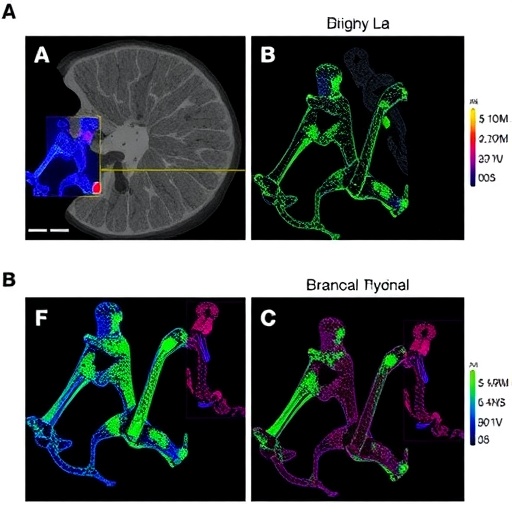
Functionally, aged female PAI-1 knockout mice maintained substantially greater muscle mass in the gastrocnemius and soleus muscles, key components of lower limb mobility, alongside superior grip strength performance when compared with age-matched controls. Cortical bone evaluations of the femur and tibia further demonstrated attenuated osteopenic changes in these knockout females, suggesting a coordinated protective effect on both muscle and bone tissues.
Interestingly, the male PAI-1⁻/⁻ mice did not exhibit comparable resistance to age-related declines, underscoring a sex-specific interaction between PAI-1 activity and the biological pathways governing musculoskeletal aging. This sex disparity introduces new dimensions to the study of age-associated degeneration, implicating hormonal or genomic factors that may modulate PAI-1’s impact.
Delving deeper into mechanisms, the research team uncovered that PAI-1 deficiency reduced inflammatory markers, including interleukin-6 (IL-6), in the systemic circulation and muscle tissues of aged female mice. IL-6 is a well-established pro-inflammatory cytokine often elevated in chronic age-related diseases, contributing to the catabolic environment that undermines tissue homeostasis. These results implicate PAI-1 as an upstream regulator of inflammatory cascades that exacerbate sarcopenia and osteoporosis.
Notably, the protective phenotype was not accompanied by alterations in muscle protein synthesis or degradation rates, nor by reductions in fibrotic tissue accumulation within muscle, suggesting that PAI-1’s deleterious effects are primarily mediated through inflammatory signaling rather than direct modulation of structural tissue remodeling or metabolism.
This study challenges conventional paradigms by positioning PAI-1 at the nexus of age-induced inflammatory and degenerative pathways, and reveals its significant role in mediating sex-dependent disparities in musculoskeletal aging. The findings may have profound implications for the development of targeted interventions aiming to preserve muscle and bone health in aging women, a demographic disproportionately affected by osteoporosis and frailty.
Given the global demographic shift toward older populations, identifying actionable molecular targets such as PAI-1 is critical. Interventions that modulate PAI-1 activity could potentially ameliorate the debilitating consequences of sarcopenia and osteoporosis, enhancing mobility, decreasing fall risk, and improving quality of life for millions of elderly individuals.
Further research is warranted to elucidate the precise molecular interactions between PAI-1, sex hormones, and inflammatory networks, as well as to explore translational strategies for pharmacological inhibition of PAI-1. Such studies could open new frontiers in precision medicine approaches tailored to sex-specific aging processes.
In summary, the research illuminates a previously unappreciated role for PAI-1 in orchestrating age-related musculoskeletal decline with marked female specificity, offering hope that modulation of this inhibitor could serve as an effective strategy to combat frailty and osteoporosis—a major advance toward healthier aging.
—
News Publication Date: 11-Sep-2025
Web References: http://dx.doi.org/10.18632/aging.206318
Cite Scienmag News
Beatrice Stafford. (October 23, 2025). PAI-1 Deficiency Shields Aging Female Mice from Muscle and Bone Degeneration. Scienmag. https://scienmag.com/pai-1-deficiency-shields-aging-female-mice-from-muscle-and-bone-degeneration/
Beatrice Stafford. "PAI-1 Deficiency Shields Aging Female Mice from Muscle and Bone Degeneration." Scienmag, 23 October 2025, https://scienmag.com/pai-1-deficiency-shields-aging-female-mice-from-muscle-and-bone-degeneration/. Accessed 5 September 2026.
Beatrice Stafford. "PAI-1 Deficiency Shields Aging Female Mice from Muscle and Bone Degeneration." Scienmag. October 23, 2025. https://scienmag.com/pai-1-deficiency-shields-aging-female-mice-from-muscle-and-bone-degeneration/


