


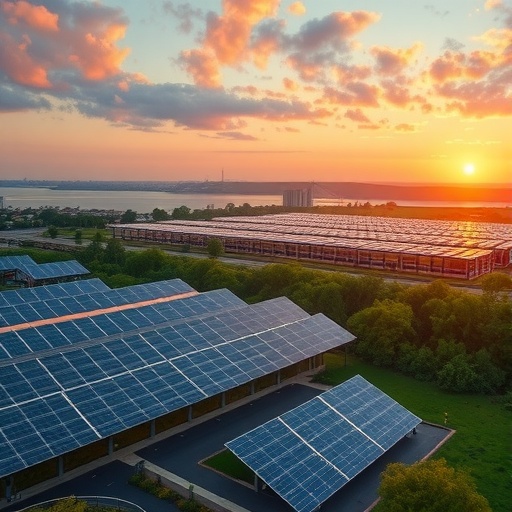
The global pivot toward renewable energy sources is widely hailed as a cornerstone of combating climate change, promising a cleaner, more sustainable future. However, beneath the sheen of technological progress lies a multifaceted challenge that threatens to undermine the equity and fairness of this transition: the labor implications. As nations accelerate ambitions to decarbonize economies, the question of how to ensure a just labor transition—one that protects workers’ rights, livelihoods, and communities—has taken center stage. In a compelling new study published in Nature Communications, Fernández Intriago, Burrow, Chakraborty, and colleagues dissect five critical obstacles hampering a fair reorientation of labor markets amidst this energy revolution. Their findings offer both a technical diagnosis and a roadmap for policymakers, industries, and civil society to align climate action with social justice.
The energy transition is not merely a matter of swapping out fossil fuels for renewable sources like wind and solar. The ramifications cascade through labor landscapes that have been shaped over decades or even centuries by existing energy paradigms. Coal miners, oil rig workers, and related industries constitute entire regions and cultures, where employment is often among the few available options. Abrupt disruption without systemic planning threatens to leave such communities bereft of economic security and social cohesion. Recognizing the labor transition as a pillar of sustainable development, the authors emphasize the urgency of integrating employment strategies within climate policies, rather than treating them as secondary or separate concerns.
One of the central technical challenges identified is the significant mismatch between the skillsets prevalent among existing fossil fuel workers and those required in the burgeoning clean energy sectors. Renewable technologies frequently demand advanced skills in digital technology, engineering, and system maintenance which may not be readily accessible to displaced workers without comprehensive retraining programs. The study highlights the need for scalable, adaptive education and vocational training systems that not only impart new technical competencies but also focus on transferable soft skills. This dual approach is essential for smoothing pathways for workers into emerging green jobs, which can be diverse and geographically dispersed.
Infrastructure considerations pose another formidable hurdle. The supply chains required for renewable energy installation and maintenance differ substantially from those underpinning fossil fuel extraction and processing. This includes the manufacturing of photovoltaic cells, wind turbines, battery storage, and grid modernization components. Transitioning labor markets must therefore accommodate shifts from mining and drilling to manufacturing and technical services — a change that requires synchronized investments in infrastructure, logistics, and human capital development. Failure to plan in an integrated and regionally sensitive manner risks creating economic voids in areas heavily dependent on fossil fuel industries.
Social dialogue mechanisms represent an often overlooked dimension in facilitating a just labor transition. The research underscores that participatory frameworks involving workers, unions, employers, and governments foster trust and produce more sustainable outcomes. The authors advocate for strengthening collective bargaining processes and social partnerships to co-design transition pathways that reflect local realities and worker priorities. Effective communication and negotiation channels can mediate conflicts arising from uncertainty and resistance while ensuring that labor protections, pensions, and social safety nets are robustly maintained during transitions.
Financial constraints and policy incoherence emerge as significant impediments in the pursuit of an equitable labor transition. Despite increasing global investments in clean energy, the allocation of financial resources toward mitigating labor impacts remains insufficient and fragmented. Subsidies, retraining funds, and social protection schemes are often disconnected or transient, diminishing their long-term effectiveness. The study calls for an integrated policy framework that embeds just transition considerations into climate finance instruments, national energy strategies, and international cooperation agendas to ensure sustained support for affected workers and communities.
A critical and complex issue pertains to the scale and speed of energy transitions relative to labor market adaptability. While rapid decarbonization may align with climate science imperatives, it risks marginalizing workers who cannot transition swiftly due to skill or locational barriers. Conversely, slower transitions may preserve jobs but compromise environmental objectives. Fernández Intriago and colleagues advocate for dynamic transition trajectories tailored to sector-specific and regional labor market characteristics, balancing environmental urgency with socioeconomic feasibility. This requires sophisticated labor market analytics, scenario modeling, and iterative policy interventions guided by empirical feedback.
The gender dimension is also a focal point of the analysis. Energy transition jobs often reflect existing structural gender inequalities, with women underrepresented in technical roles and overrepresented in precarious or informal positions. Addressing this imbalance demands proactive strategies that promote women’s participation through targeted training, anti-discrimination policies, and inclusive workplace cultures. Incorporating gender-sensitive indicators into transition policies can further ensure that the labor transition advances broader equality objectives.
Climate justice framing extends beyond national borders, as labor transitions in developing and emerging economies may face heightened vulnerabilities. The authors emphasize the importance of international solidarity mechanisms, technology transfer, and capacity building to support workers in countries where fossil fuel industries represent significant economic sectors. Aligning global climate commitments with just labor transition agendas requires multilateral coordination and the inclusion of labor perspectives in climate diplomacy.
Technological innovation itself holds dual implications for labor transitions. While advancing automation, artificial intelligence, and digital monitoring can optimize renewable energy systems, they may also displace low-skilled jobs or exacerbate inequalities within labor markets. The paper advocates for anticipatory labor policies that harness technology as a tool for job creation and upskilling rather than mere cost-cutting. Strategic partnerships between governments, academia, and industry can accelerate innovation diffusion while safeguarding worker interests.
The environmental benefits of transitioning to renewable energy are clear and compelling; however, the social dimensions are complex and require nuanced understanding. The study identifies the need for comprehensive labor market data collection and monitoring systems to track employment trends, worker well-being, and transition outcomes in real time. Such evidence bases are crucial for adaptive policymaking and ensuring that interventions remain responsive to evolving challenges.
Community ownership models and cooperative energy enterprises emerge as promising approaches to embed social equity in energy transitions. By involving local stakeholders directly in energy production and management, these models generate employment opportunities, share economic gains, and foster resilience. The authors suggest that scaling such initiatives can complement large-scale industrial transitions and anchor sustainable jobs within affected regions.
Education systems, from primary to tertiary levels, must increasingly integrate climate literacy and skills relevant to green economies. Bridging the gap between educational curricula and labor market demands is pivotal to preparing future generations for the evolving energy landscape. Policymakers are urged to incentivize cross-sector collaborations that foster experiential learning, apprenticeships, and innovation hubs that link academic training with real-world applications.
The research also explores the psychological and cultural dimensions of labor transitions. Job loss and occupational displacement can affect identity, social status, and mental health, underscoring the importance of holistic support systems, including counseling and community development programs. A just labor transition transcends mere economic metrics to encompass dignity, empowerment, and human well-being.
Finally, the COVID-19 pandemic has underscored vulnerabilities in labor markets and supply chains, reinforcing the imperative for resilient and inclusive transition strategies. The study leverages insights from pandemic recovery efforts to propose that just transitions can also serve as engines for broader social reconstruction, innovation, and sustainable development. Aligning recovery stimuli with green job creation offers a dual opportunity to address climate and labor crises concurrently.
In sum, Fernández Intriago, Burrow, Chakraborty, and their team illuminate the intricate interplay of technological, social, economic, and political factors shaping the labor realities of the energy transition. Their comprehensive identification of five key challenges—skills mismatch, infrastructure shifts, social dialogue, financial and policy barriers, and transition pacing—provides a framework to guide interventions toward sustainability and justice. This critical scholarship invites governments, industries, and civil society to commit to a labor transition that is not only inevitable but fair, inclusive, and transformative.
Cite Scienmag News
Denise Maddox. (August 14, 2025). Overcoming Five Challenges for Just Energy Transition. Scienmag. https://scienmag.com/overcoming-five-challenges-for-just-energy-transition/
Denise Maddox. "Overcoming Five Challenges for Just Energy Transition." Scienmag, 14 August 2025, https://scienmag.com/overcoming-five-challenges-for-just-energy-transition/. Accessed 4 September 2026.
Denise Maddox. "Overcoming Five Challenges for Just Energy Transition." Scienmag. August 14, 2025. https://scienmag.com/overcoming-five-challenges-for-just-energy-transition/


